Note Type
Artist's NoteNote
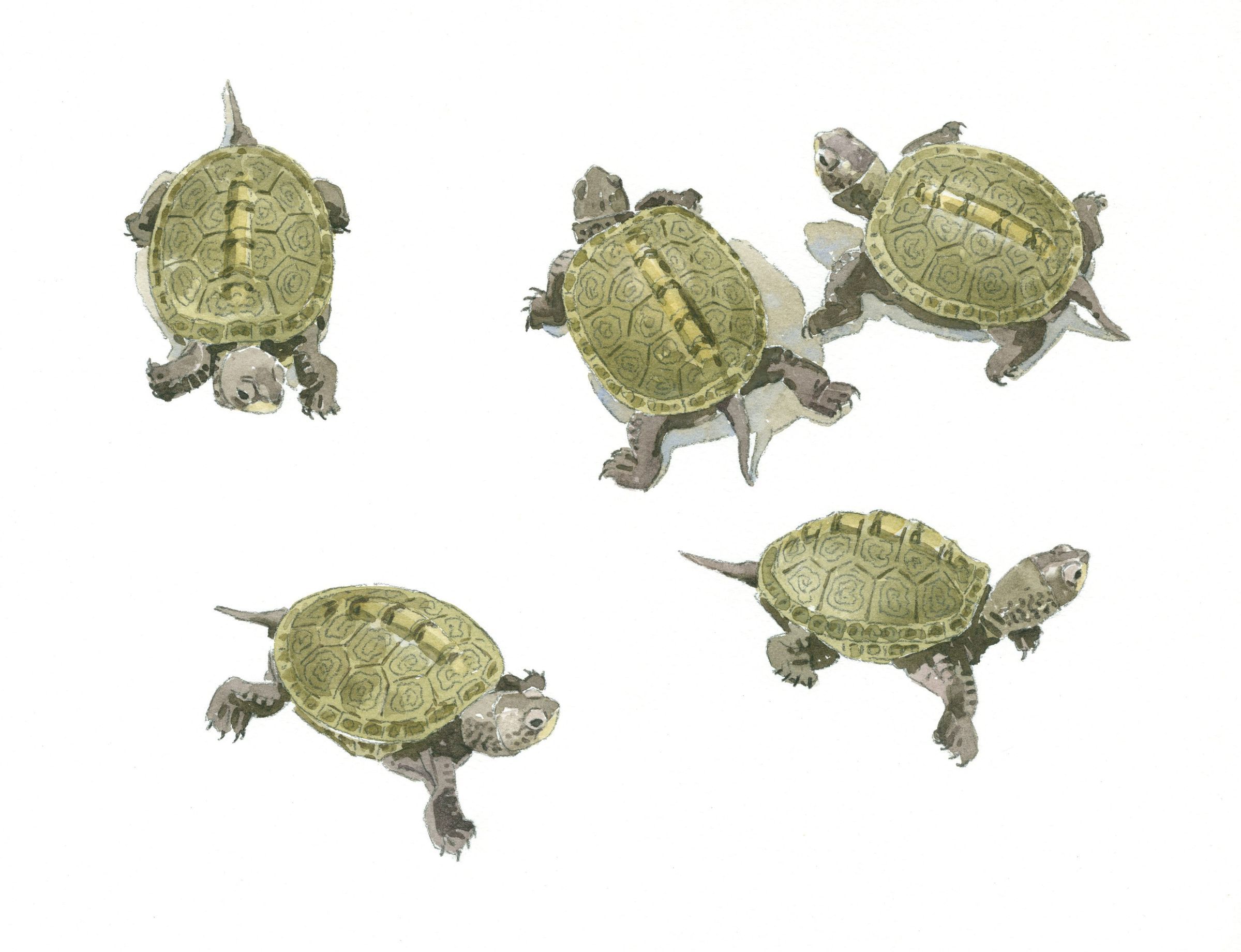
Artwork done for Van Dusen's Mass Audubon residency project.
Wellfleet Bay Wildlife Sanctuary, South Wellfleet
OUTERMOST NATURE
August 19, 2016
I've been told that Wellfleet Bay Wildlife Sanctuary hosts more visitors each year than any other Mass Audubon property. Located on the outer Cape, surrounded by portions of the Cape Cod National Seashore, and in an area which is a prime tourist destination, it's not surprising that so many people visit this 1200 acre reserve each year.
I walk the loop of the Try Island Trail, admiring the vista back over the marsh. Where the trail meets the boardwalk to the beach, I meet a group of volunteers who are monitoring Diamondback Terrapin nests. Each nest is protected by a wire enclosure, with a warning flag and a numbered metal tag, and I've encountered many of them as I walk the trails. The nest monitors watch for hatching activity, then assist the hatchlings in their first hours out of the nest. These first hours are the most precarious for the young turtles, and many are lost to predators (gulls, skunks, raccoons, foxes, etc). The volunteers place the hatchlings in Tupperware containers, taking care to keep them moist with a spray bottle, then relocate them to safer areas on the upper marsh. The first years of a diamondback terrapin's life is poorly understood, and conflicting information abounds, but most studies indicate that the hatchlings spend their first years on DRY LAND, and they DO NOT head for water after leaving the nest.�The nest monitors: Theresa Hultin, Steve Monroe and Nancy Munger, kindly allow me to watch as they assist at a hatching nest. The number of hatchlings and eggshells are carefully counted and recorded in a log, along with location of nest, time of hatching, and the depth of the nest. Theresa, the team leader, tells me that 85 terrapin nests have been located on the sanctuary this year. Each nest, if it is not disturbed by predators, will produce between 12 and 22 young turtles. The nest we are currently attending is 14 centimeters deep, and produces 16 hatchlings. �While I could not draw the hatchlings from life (doing so would expose them to too much heat and dryness), I made these drawings from digital photos taken at the nest site. The hatchlings are about 1.5" long, and perfect in every miniature detail.