Name/Title
StilettosEntry/Object ID
2022.2.3Tags
Needlework Tools, Stiletto, Dot and circle decoration, Hot needle decoration, Madras workDescription
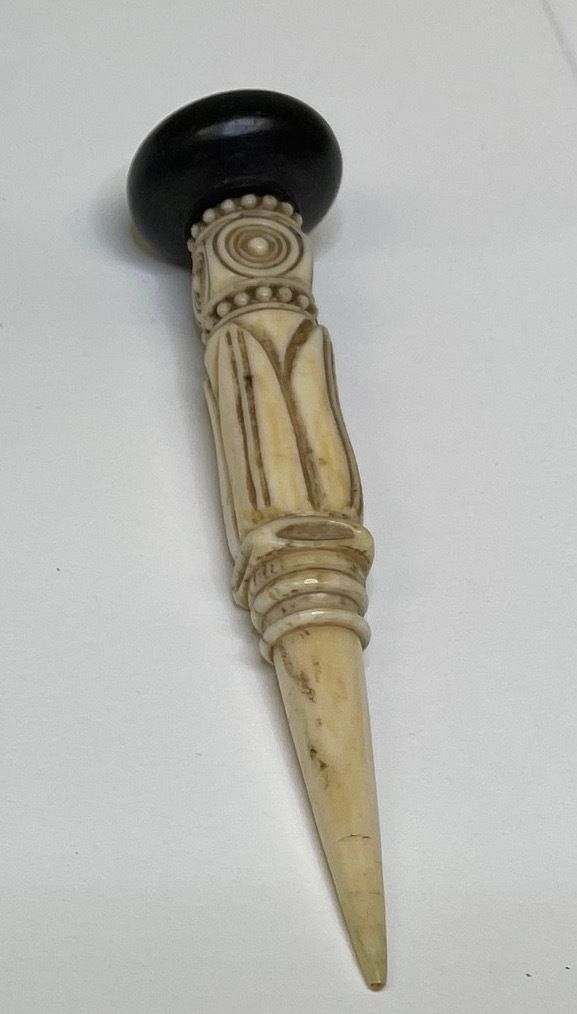
1. A carved bone stiletto with an ebony cap.
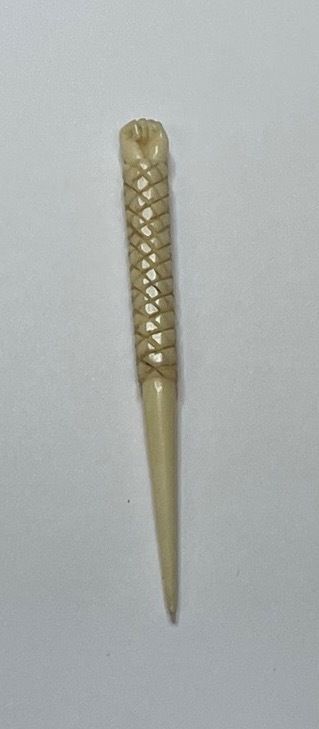
2. A carved bone stiletto with an pointed awl at one end, a cross-hatched shaft and a finely carved fist at the top
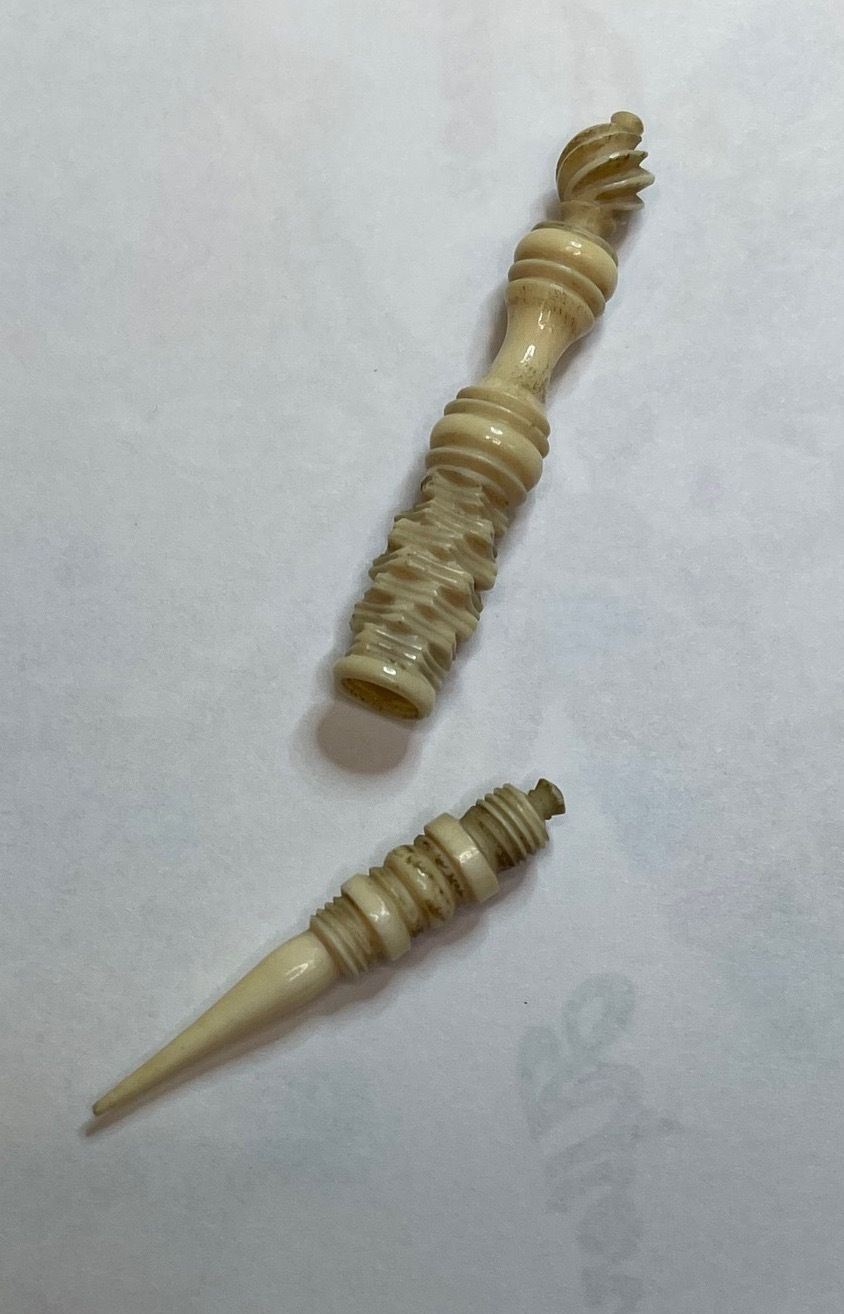
3. Carved bone with a jenga-type carving on the shaft, followed by ovals and a flame-like top with finial. When closed, the longer shaft closes over the awl and screws shut. when opened, the long shaft screws over the blunt end of the awl to create a handle.
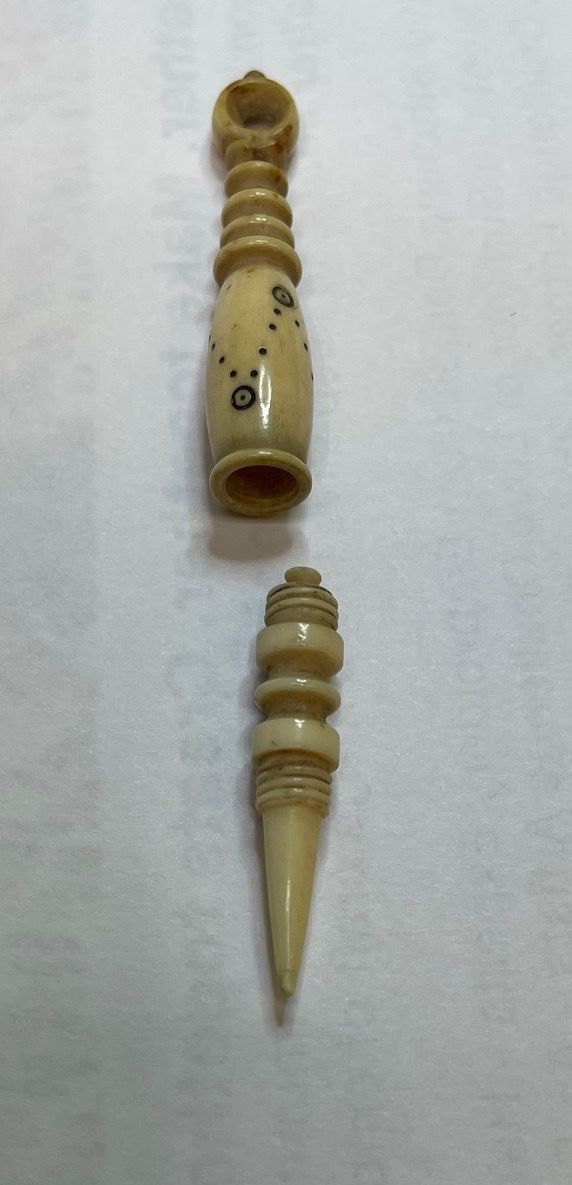
4. A bone two-piece stiletto with a pattern of 'v' shapes on the shaft with the tip of each 'v' culminating in a circle with a dot inside. The longer handle piece has a carved spindle-shape arriving at a circular hole at the top which was either to thread a ribbon or may have had a Stanhope inserted. The half with the awl screws into the handle for working, or is covered by the shaft of the handle for storage
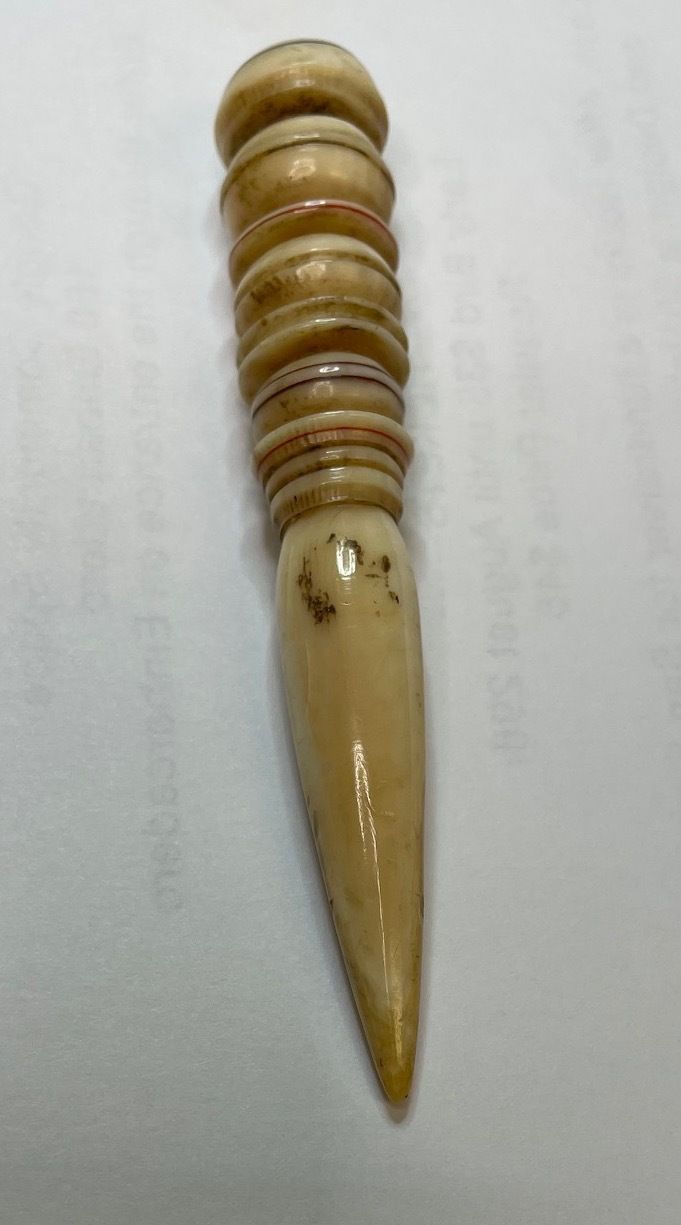
5. A bone stiletto with circular carvings increasing in size to the top with a pointed awl at the opposite end. There are deep channels between the circular carvings and some of them are embellished with either red or black lines.Context
1. Possibly one-of- a-kind
2. The carved fist is unique
3. Storage of this stiletto is nice and compact when the shaft is closed over the awl, and when opened and screwed together, makes a nice handle for the maker to use for creating holes in fabric
4. The distinctive black dots on this stiletto are called 'hot needle decoration', 'Madras work', and 'dot and circle decoration. These decorations are similar those on the ivory sewing boxes made in India of the same period in the early 19th century. This Lac decoration was originated in India and copied by the English artisans. Many different types of needlework tools were decorated in this manner
5. An unusual size in that the awl is a bit big for eyelets, and it is a bit too small to be a sailor's fid. A fid is generally made of wood or bone and is used to hold open knots and holes in canvas, and to separate the "lays" (or strands) of rope for splicing by sailor's.Collection
Needlework ToolsProvenance
Provenance Detail
Teresa Mize Needlework Tool CollectionAcquisition Method
DonationAcquisition Date
2022