Name/Title
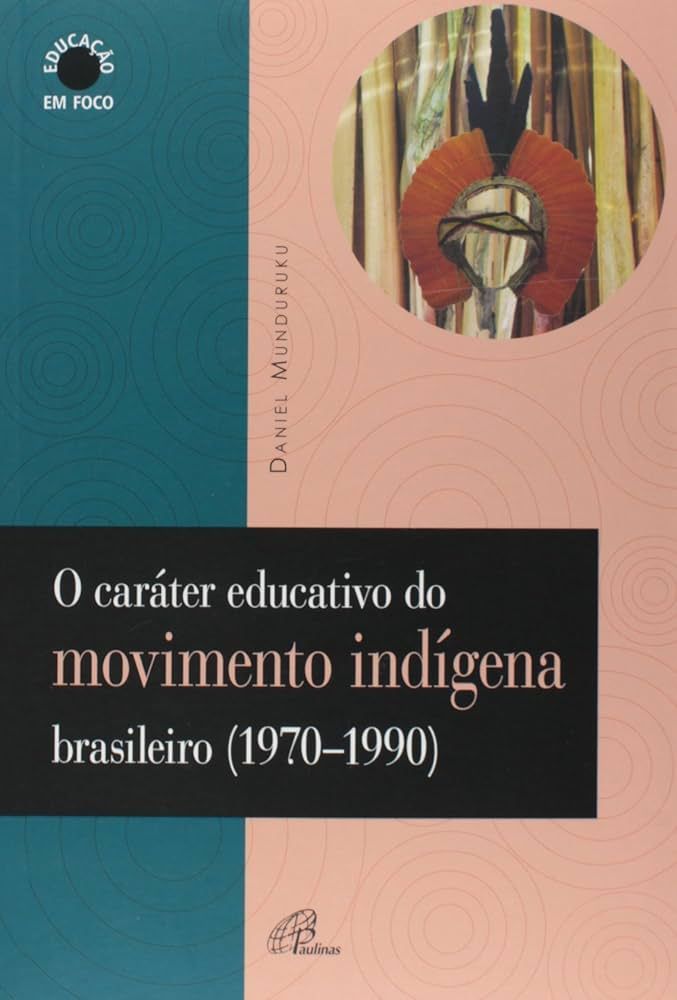
O caráter educativo do movimento indigena brasileiro (1970-1990)Description
The Character of the Brazilian Indigenous Movement, by professor and writer Daniel Munduruku, discusses how this movement was organized in the 1980s within the national historical context - a period of intense popular participation in political mobilizations in favor of democracy./nThe book focuses on the Brazilian indigenous movement from the perspective of its educational character, so that the movement is narrated from its origins as a legitimate instrument in the defense of indigenous rights and that, structured in its process of self-formation, it also served as a springboard to promote change in the way Brazilian society views indigenous peoples./nDaniel Munduruku chose to develop the theme in an epistolary style, as if he were writing a letter to his indigenous relatives. /nAlthough it is not a work of anthropological study of the indigenous movement, there are chapters that present references from anthropology, history and law./nThe book is structured in two parts: "Putting the dots on the i's" and "We are those for whom we wait". The chapters can be read independently, because they deal with non-linear content, but "they are structured to offer an organized view of a complex topic that presents itself with many faces and many possibilities for further study". Another peculiarity of the book is the fact that it "listens" to the opinions of indigenous personalities, participants in the historical process of the movement./nFor Daniel: "The Indigenous Movement is the result of the concrete action of resistance of people who, without knowing each other, left traces of solidarity. They were people who lived in different times, but their resistance allowed the new generations to survive to act incisively within Brazilian society". /nIn this movement of exchanging experiences and knowledge, something that was born to educate ended up educating.