Name/Title
The Right to LookDescription
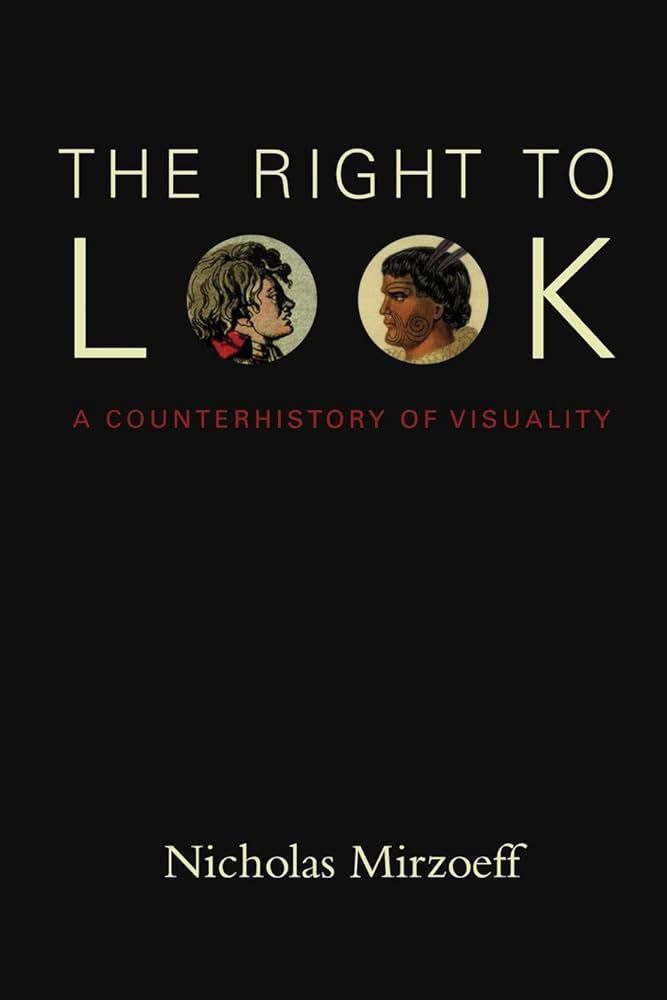
In The Right to Look, Nicholas Mirzoeff develops a comparative decolonial framework for visual culture studies, the field that he helped to create and shape. Casting modernity as an ongoing contest between visuality and countervisuality, or “the right to look,” he explains how visuality sutures authority to power and renders the association natural. An early-nineteenth-century concept, meaning the visualization of history, visuality has been central to the legitimization of Western hegemony. Mirzoeff identifies three “complexes of visuality”—plantation slavery, imperialism, and the present-day military-industrial complex—and explains how, within each, power is made to seem self-evident through techniques of classification, separation, and aestheticization. At the same time, he shows how each complex of visuality has been countered—by the enslaved, the colonized, and opponents of war, all of whom assert autonomy from authority by claiming the right to look. Encompassing the Caribbean plantation and the Haitian revolution, anticolonialism in the South Pacific, antifascism in Italy and Algeria, and the contemporary global counterinsurgency, The Right to Look is a work of astonishing geographic, temporal, and conceptual reach.
“Nicholas Mirzoeff’s The Right to Look is a passionate and magisterial intervention in the field of visual culture studies. Emphatically arguing that the human visual experience, with all its technical prostheses and metaphorical extensions, is a fundamentally ethical and political domain, Mirzoeff ranges over amazingly varied historical and geographical terrain. From the administration of the colonial plantation to missionary and military adventurism, to drone attacks and counterinsurgency flowcharts, to the latest tactics of spectacle and surveillance, everything is analyzed with a sure sense of the crucial detail and the revelatory anecdote. This is a brilliant contribution to visual culture studies, one that sets a very high standard for this emergent discipline.” — W. J. T. Mitchell, author of Cloning Terror: The War of Images, 9/11 to the Present and What Do Pictures Want?
“The Right to Look is a brilliant book—original, ambitious, and constantly surprising. Nicholas Mirzoeff is at the center of the most advanced thinking in visual culture studies, and The Right to Look is a very important project within the field. It is a genuinely postcolonial text that places visual culture studies on broad historical and political footing for the first time.” — Terry Smith, co-editor of Antinomies of Art and Culture: Modernity, Postmodernity, Contemporaneity