Name/Title
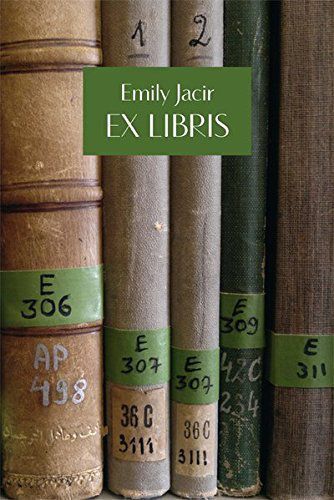
Ex LibrisDescription
Recurrent themes in Emily Jacir's practice—which spans a range of strategies including film, photography, interventions, archiving, performance, video, writing, and sound—are silenced historical narratives, resistance, movement, and exchange. Filmed in the days following the catastrophic loss of Iraq's National Library and Museum, Jacir's A Sketch in the Egyptian Museum April 24, 2003 Cairo (2003) is at once a memorial to the cultural devastation of that April and a presage. A museum guard inexpertly cleans a stone bearing a five-thousand-year-old hieroglyphic Inscription, while visitors pass by unperturbed. It is an unspectacular, laconic work, in which the dimensions of time, knowledge, and cultural heritage, represented by the ancient stone tablet, seem to have lost significance. Books, libraries, and translation recur throughout her oeuvre as in Untitled (books) (2000), Inbox (2004-05), Material for a film (2007), and stazione (2009).
Jacir's contribution to dOCUMENTA (13), ex libris (2010-12), addresses the looting, destruction, and restitution of books. A visit to the Murhard library in Kassel drew her attention to the volumes that were destroyed when the Fridericianum, housing the library of the Landgraves of Hesse-Kassel, was bombed in 1941. Manuscripts stored in the adjoining Zwehrenturm—which the bombs missed—survived. Jacir also researched the postwar period, when the region of Hesse belonged to the American zone of occupation. She concentrated in particular on the work of the Monuments, Fine Arts, and Archives officers and their efforts at the Offenbach Archival Depot, the sole archival depot in the U.S. zone, where the largest book restitution in history took place.