Note Type
Historical NoteNote
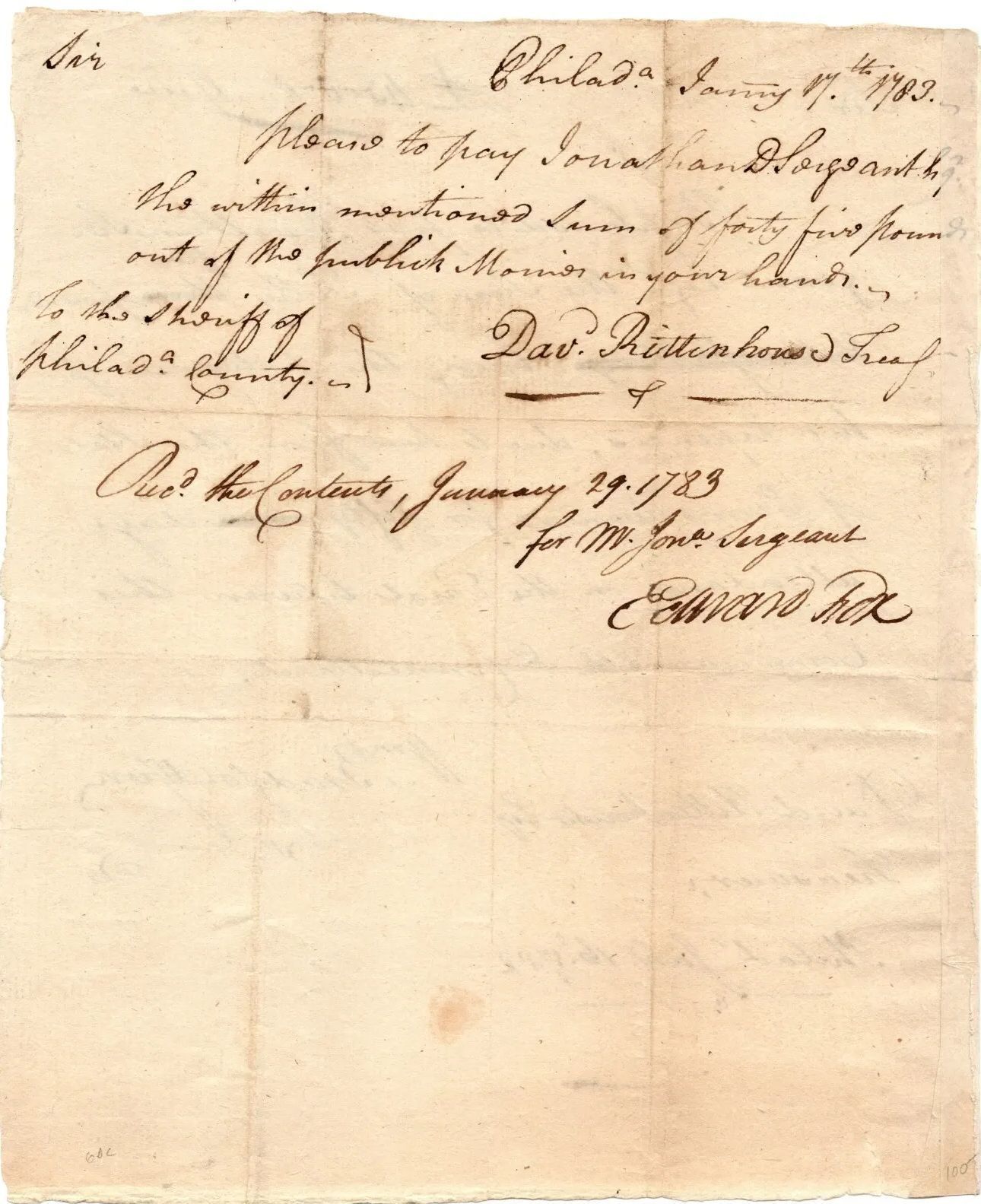
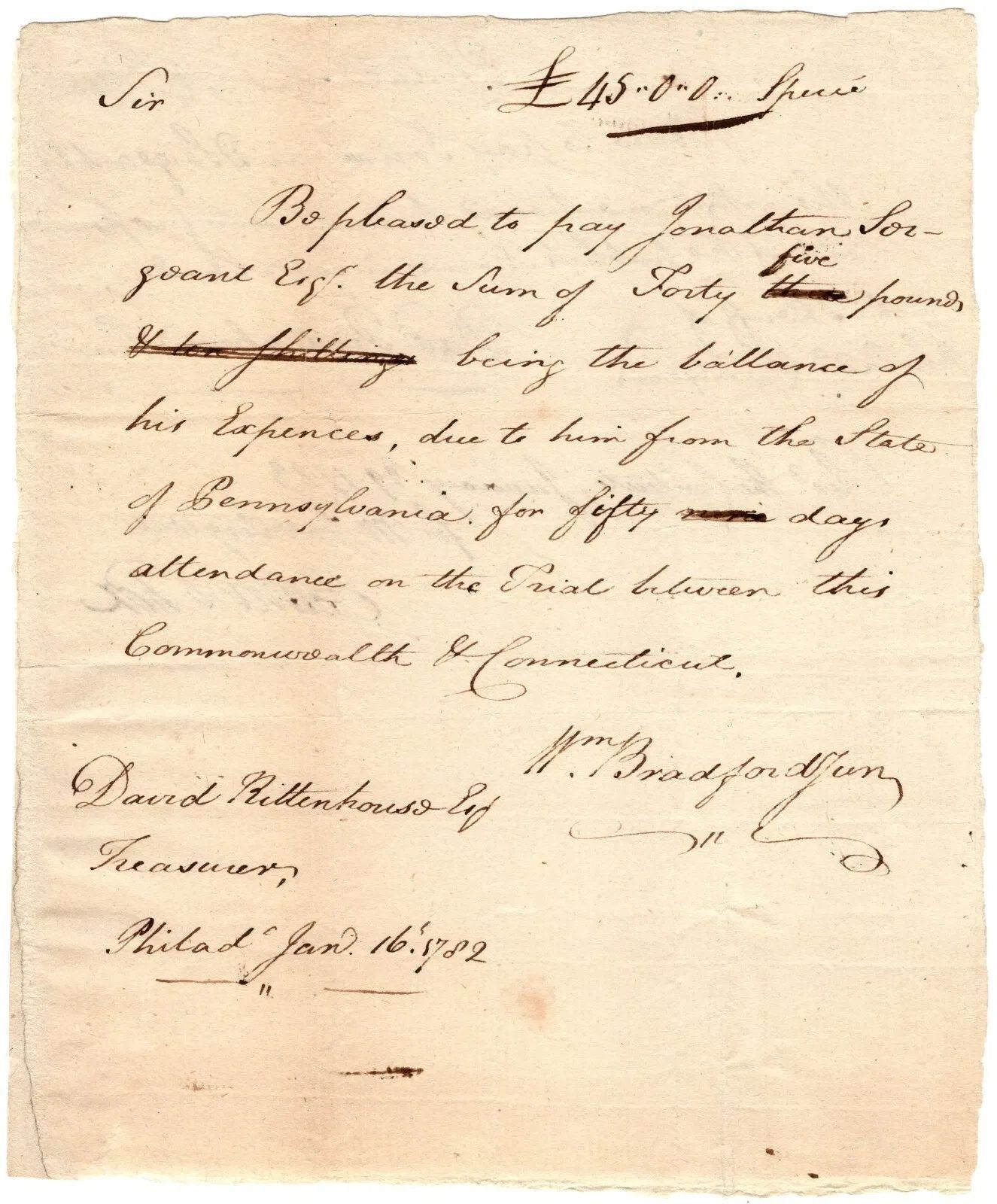
The "Trial" is the Trenton trial of 1782, the hearing that settled the long and sometimes bloody contest between Pennsylvania and Connecticut over the Wyoming Valley. It was convened under Article IX of the Articles of Confederation, which allowed Congress to form a special court of commissioners to resolve disputes between states. It is the only such court that ever reached a judgment. The commissioners sat at Trenton from November 12 to December 30, 1782, and ruled unanimously for Pennsylvania. That span is forty-nine days, which agrees closely with the "fifty days attendance" Bradford certifies here.
Pennsylvania was represented by four counsel: Bradford, Joseph Reed, James Wilson, and Sergeant. Bradford, as Attorney General, is here certifying the account of his own co-counsel a little more than two weeks after the decree.
Every name on the sheet belongs to the collection's world. Bradford was the son of William Bradford, printer of the Pennsylvania Journal and Franklin's chief Philadelphia competitor, and the great-nephew of Andrew Bradford. He later became the second Attorney General of the United States, and his 1793 Enquiry How Far the Punishment of Death Is Necessary in Pennsylvania stands beside Rush's writing on penal reform. Rittenhouse served as state treasurer from 1777 to 1789, succeeded Franklin as president of the American Philosophical Society, and became the first Director of the Mint. Sergeant had been Pennsylvania's first Attorney General. In 1788 he married Rittenhouse's daughter Elizabeth, so the treasurer is here paying his future son-in-law. Sergeant stayed in Philadelphia during the 1793 epidemic, served on the citizens' committee, and died of yellow fever that October.
Rittenhouse's decision to pass the order to the county sheriff rather than pay it himself is a small window into the state's finances at the end of the war. The payment was due in specie, and hard money was more likely to be found in the hands of county officers who collected fines, fees, and the proceeds of public sales than in the treasury itself. It still took twelve days for Sergeant's agent to collect.