Name/Title
Popper Prototype BoardEntry/Object ID
BG-2024.0386Description
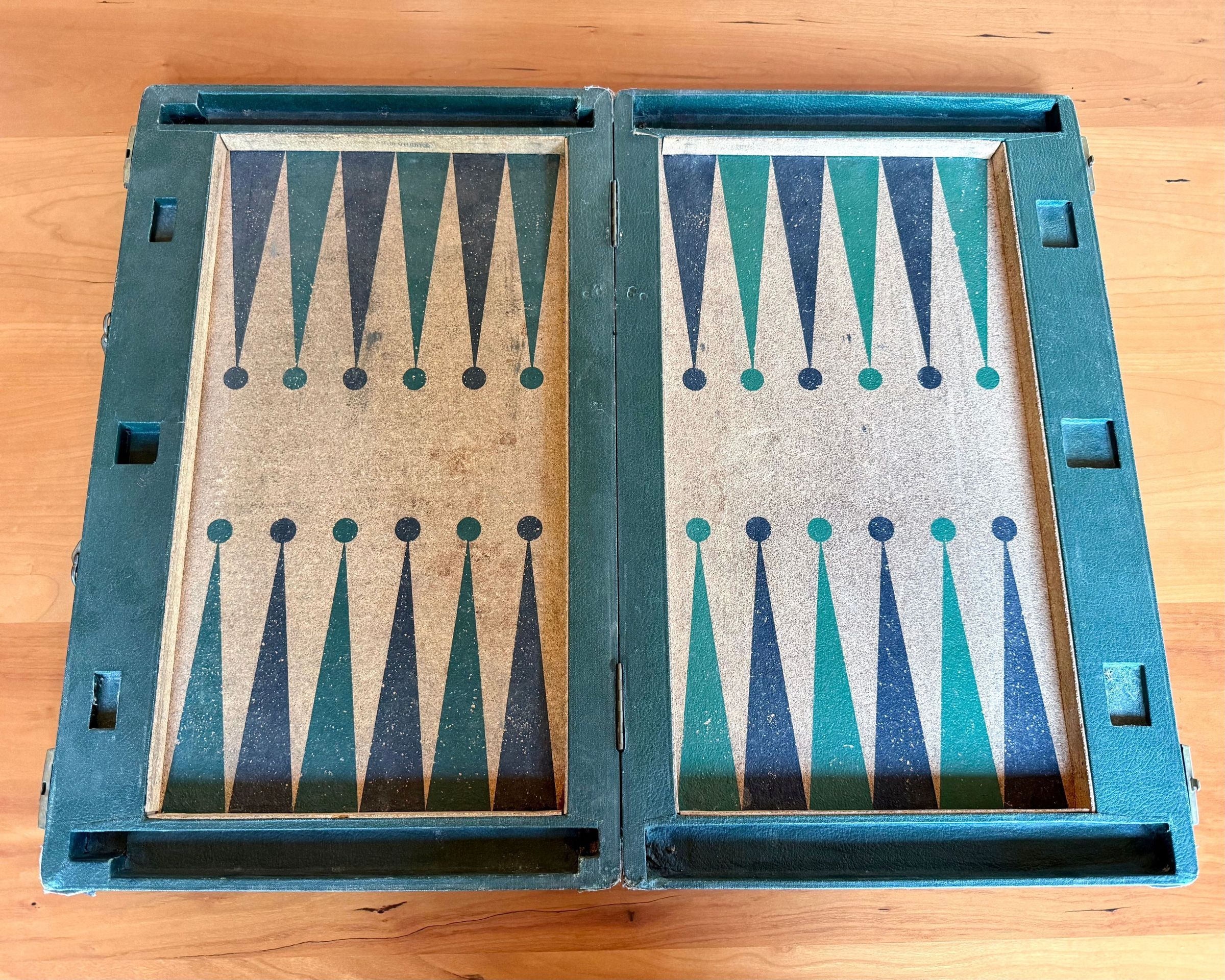
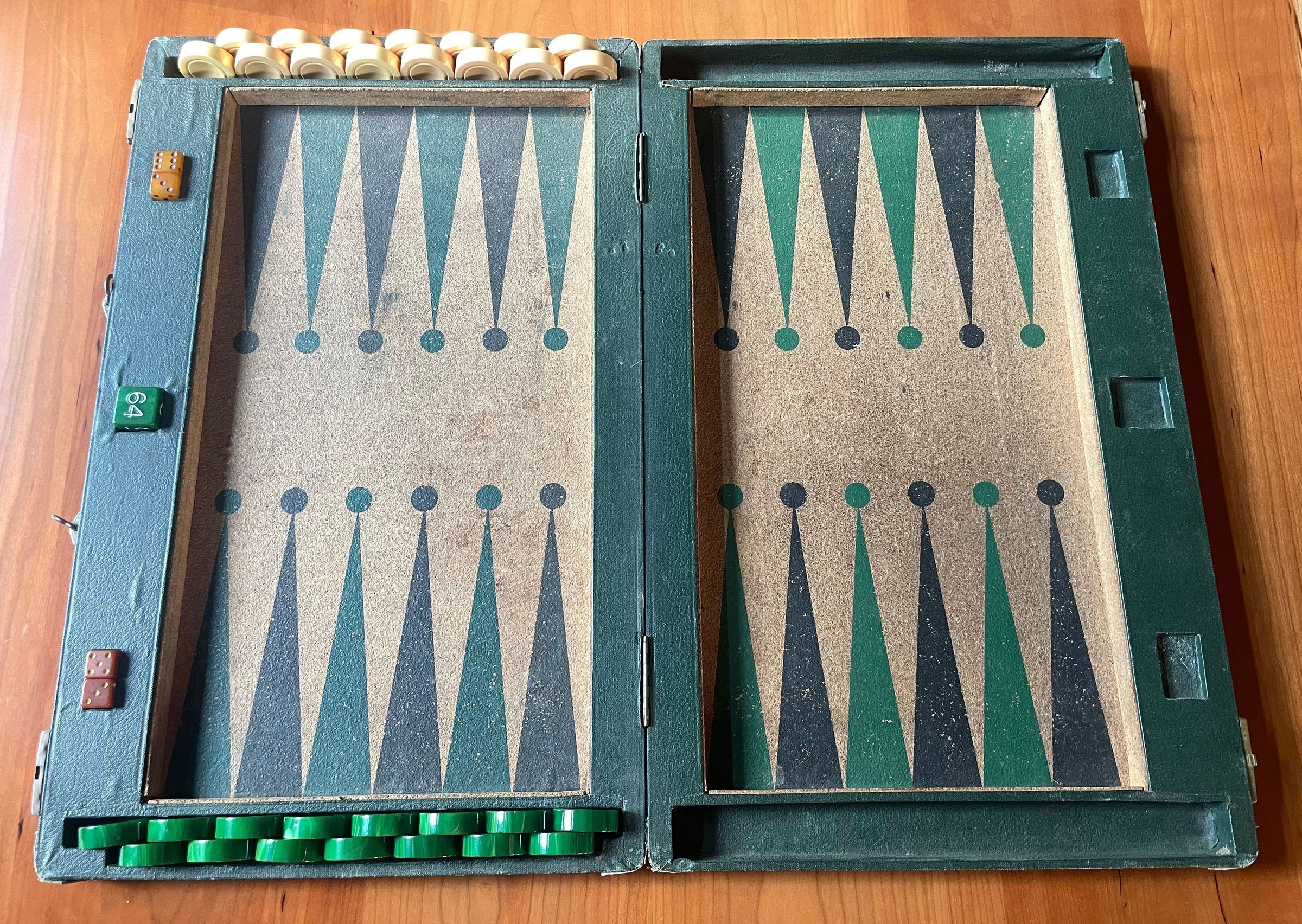
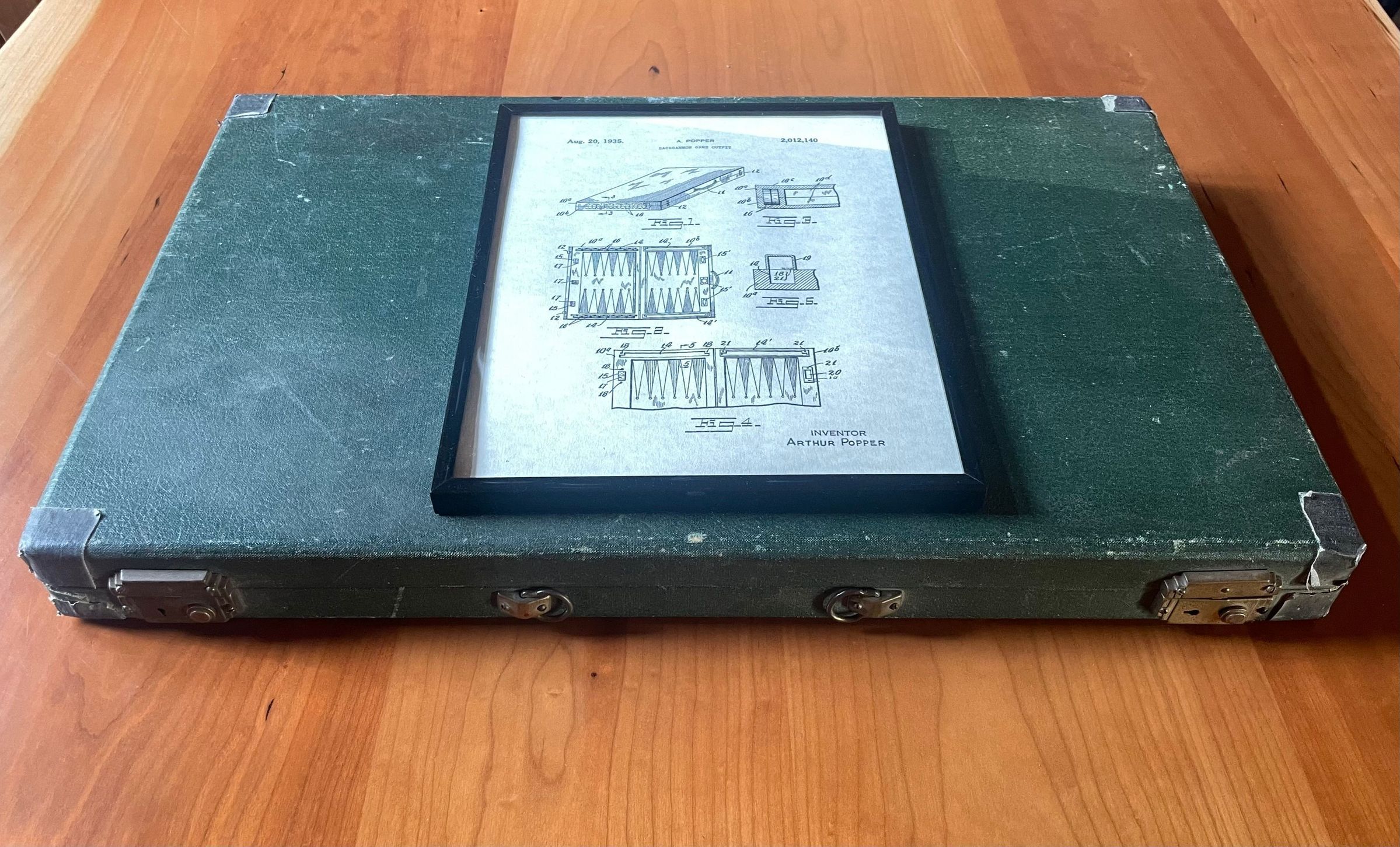
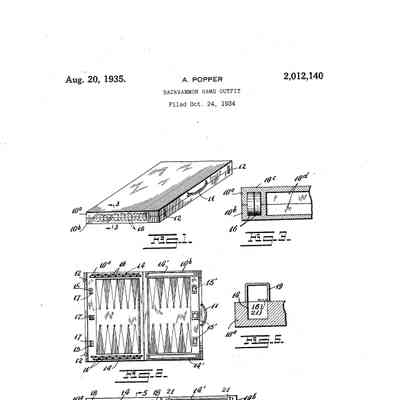
A true museum piece, this very well may be the very first board ever made with built-in compartments for the playing pieces. The tradition had been for folding boards to lack handles and lie flat for storage, with a separate box of "playing implements" resting on top. Arthur Popper successfully applied for a patent on the very concept of checker trays -- and this was the design he proposed in his patent illustration.
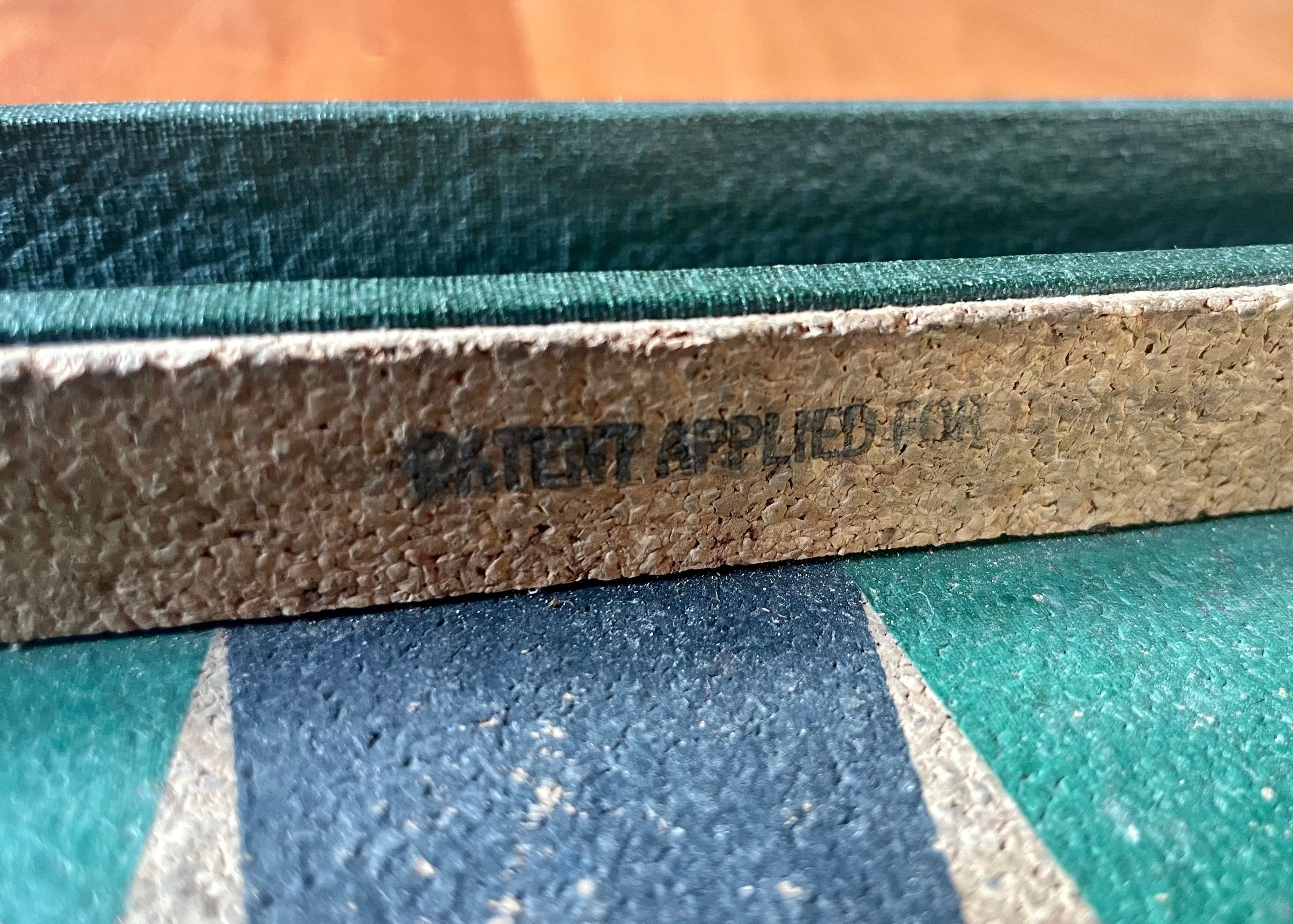
The scale of the board is intriguing, as standard 1.5" bakelite checkers fit, but do not fit snugly enough into their compartments -- and the fields, at just under 10", afford too much lateral "slop" for 1.5" checkers to play well. While it's true that many boards from the early 1930's deployed "slop-py" dimensions, it's also true that this particular design may pose a problem with no good solution, as the larger the checkers, the wider the storage compartment to has to be. This realization would have led naturally enough to the idea of putting the checker trays at the sides. However, this configuration served to illustrate the general concept for the patent, and this build bears the stamp "Patent Applied For" on the rails. Once the checkers are moved to the side, the dice of course found their way to the middle, flanking the centered doubling cube in the final AP Games design.
One further detail is worth of note: though the handle is missing, the remaining hardware is suited for a leather handle, not the bakelite style that would become a hallmark of AP Games sets once they hit their stride.Made/Created
Date made
circa 1934Time Period
Modern BackgammonOther Names and Numbers
Other Numbers
Number Type
SequenceOther Number
1934_04Dimensions
Dimension Description
Checker diameter: 1.25"
Cube size: .75"Materials
Material
BakeliteMaterial Notes
Surface: cork
Locks: deco
Case: fabric wrapColors
Color Notes
Green & Black points, cork field