Plate with Flowers and Fruit
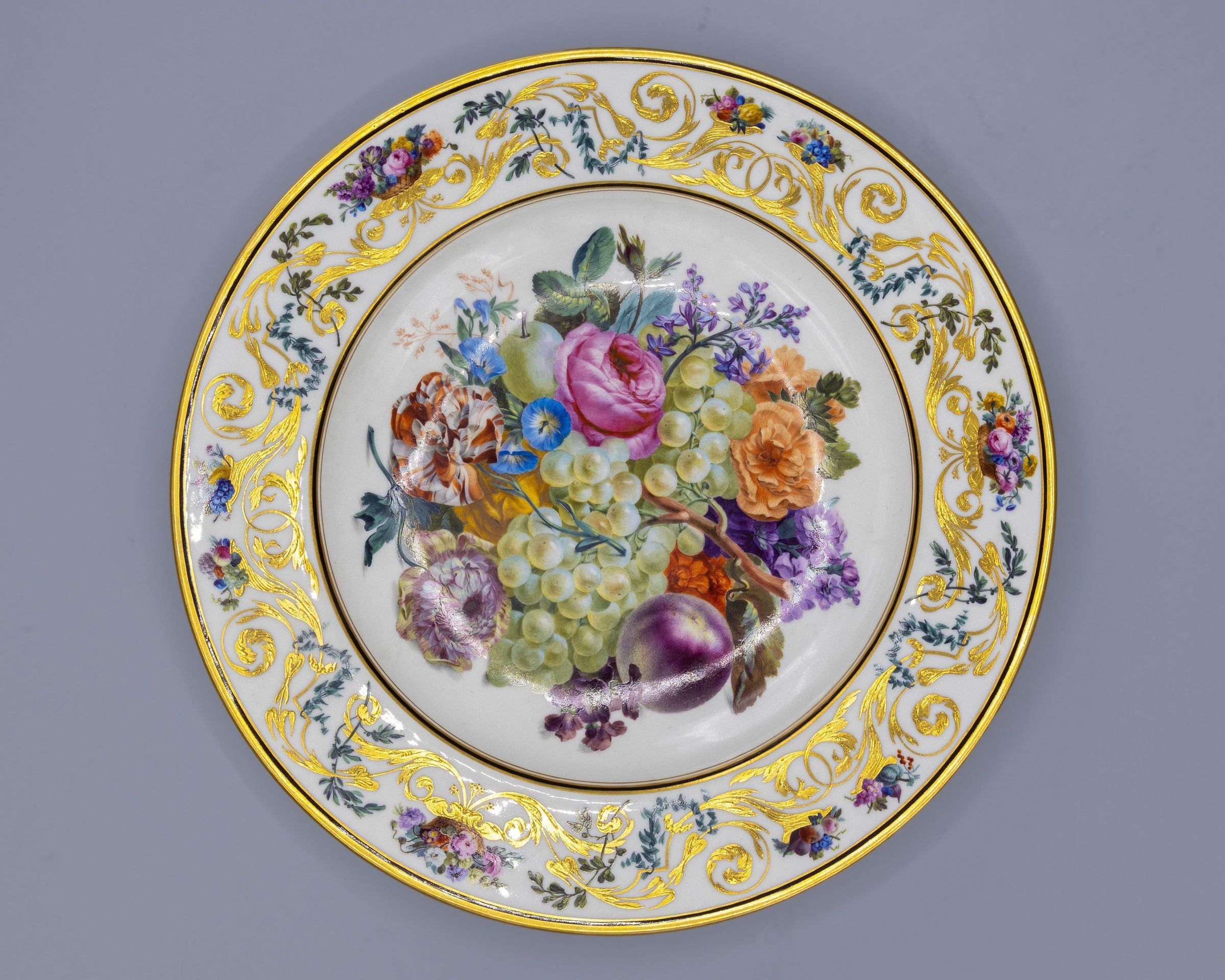
#170, Photographed by Mary Elizabeth Kulesa, 2024
Upper Surface
Name/Title
Plate with Flowers and FruitEntry/Object ID
170Category
Ceramic
Acquisition
Source (if not Accessioned)
Mrs. George W. Childs, PhiladelphiaNotes
Date: 4/9/90 Credit Line: Gift of Mrs. George W. Childs Means of Accession: Gift Source: Collection Count Diego Bouglie of Naples; Said to have belonged to Queen Carolina of Naples and Sicily, sister of Marie AntoinetteMade/Created
Artist
Royal Vienna PorcelainDate made
1795Place
City
ViennaCountry
AustriaContinent
EuropeInscription/Signature/Marks
Type
InscriptionLocation
UndersideTranscription
Royal Vienna BeehiveNotes
in underglaze blueType
InscriptionLocation
UndersideTranscription
"103."Material/Technique
Handwritten, PaintedType
MarkLocation
UndersideTranscription
"95"Material/Technique
StampType
MarkLocation
UndersideTranscription
"61"Material/Technique
StampDimensions
Height
1-1/2 inDiameter
9-1/2 inMaterial
Hard paste porcelainProvenance
Notes
Gift to the collection from Mrs. Emma Peterson Childs in 1911. Originally bought by George W. Childs in 1868 from the collection of Count Diego Bouglie of Naples. Said to have belonged to Queen Maria Carolina of Naples.Exhibitions
Gilded Masters: Royal Viennese Porcelains
Curator Pick of the Month