Salt-Glazed Stoneware Jug
Ceramic

Object ID: 591

Drexel Founding Collection

Salt-Glazed Stoneware Jug

Category

Ceramic

Acquisition

Notes

Credit Line: Donor Unknown Means of Accession: gift

Made/Created

Artist

Unidentified

Place

State

Pennsylvania

Country

United States

Continent

North America

Dimensions

Height

10-1/2 in

Diameter

7 in

Materials

Stoneware, salt glaze, cobalt

Exhibitions

Fired Works: Ceramics from Around the World

Interpretative Labels

Label Type

Exhibition Label

Label

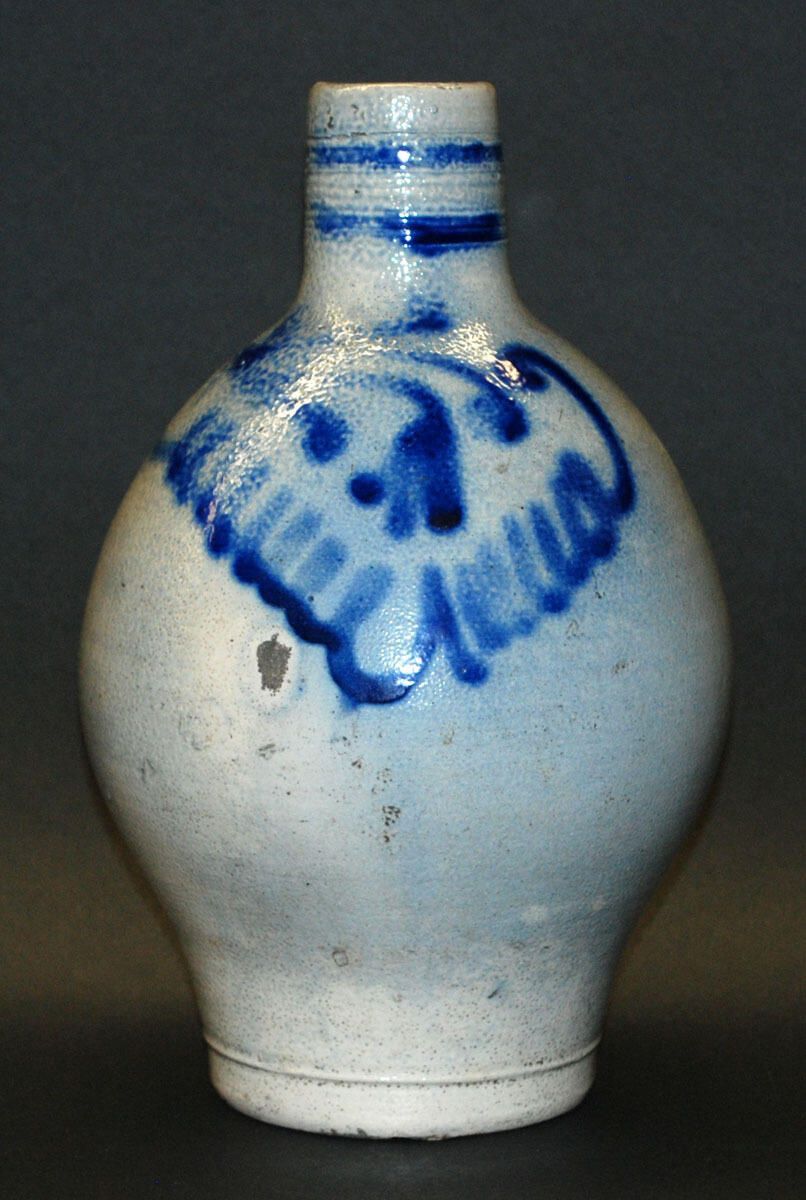
Salt-glaze stoneware were some of the first American-made ceramics marked by their manufacturer. This new development was a sign of the increasing status of ceramics in the United States. These two jugs are typical examples of this medium with the gray body and cobalt blue

General Notes

Note

Salt glazed stoneware is created by throwing salt into the kiln when it reaches peak temperature. The salt separates into chloride vapor and sodium oxide, which coats the surface of the vessel reacting with the body to create a thin, glassy glaze. Characteristics of salt glazed stoneware are they are typically gray or brown, the color of the clay body, and the glaze has a pitted or orange peal texture. The technique was first found on German medieval stonewares and was later picked up by England in the 17th century. (Trench, Materials & Techniques in the Decorative Arts, 2000)