A Hundred Aspects of the Moon Series: Midnight Moon at Mount Yoshino
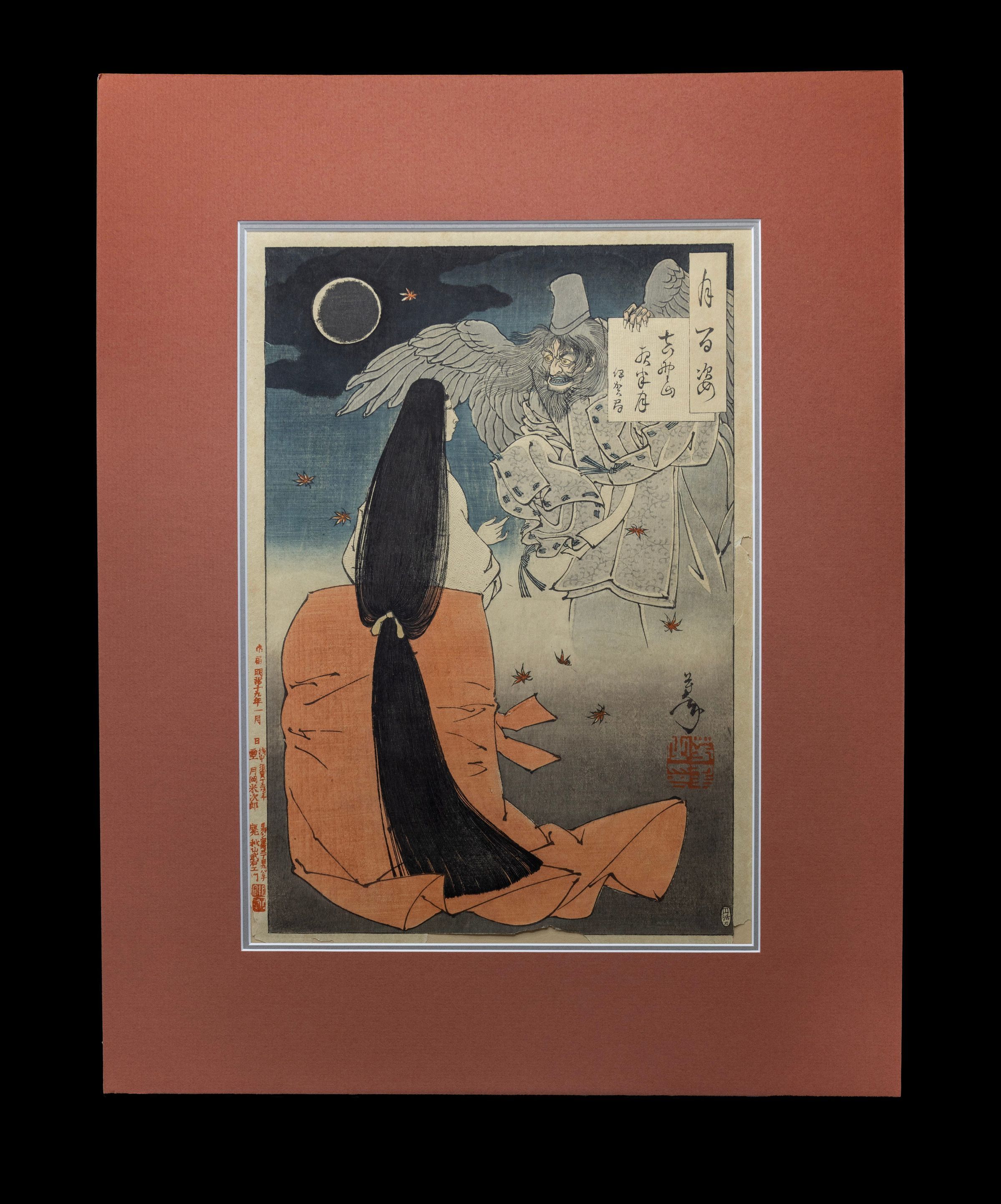
#2056, Photographed by Mary Elizabeth Kulesa, 2023
Recto
Name/Title
A Hundred Aspects of the Moon Series: Midnight Moon at Mount YoshinoEntry/Object ID
2056Category
Print
Acquisition
Source (if not Accessioned)
James W. Paul, Jr., PhiladelphiaNotes
Date: 1969 Credit Line: Gift of James W. Paul, Jr. to the Drexel Library then transferred to The Drexel Collection Means of Accession: Transfer Source: James W. Paul, Jr. Donated to the Drexel Library 1906-1907Made/Created
Artist
Tsukioka YoshitoshiDate made
1886Place
Country
JapanContinent
AsiaInscription/Signature/Marks
Notes
Publishing company, Akiyama BeumonDimensions
Height
13-1/8 inWidth
8-7/8 inExhibitions
Curator Pick of the Month
Arts of Asia: Selections from The Drexel Collection
Pictures of the Floating World: Ukiyo-e Woodblock Prints
Prints from the Drexel Collection: From Hogarth to Hiroshige to Rauschenberg