Name/Title
Japanese Butsudan, c. 1890sEntry/Object ID
2025.96.1Description
Acc. No. 25.96.1
Subject Category: Citizens of Alameda; Ethnic Groups - Japanese
Date or Period: c. 1890s
Object: Butsudan (house votive altar)
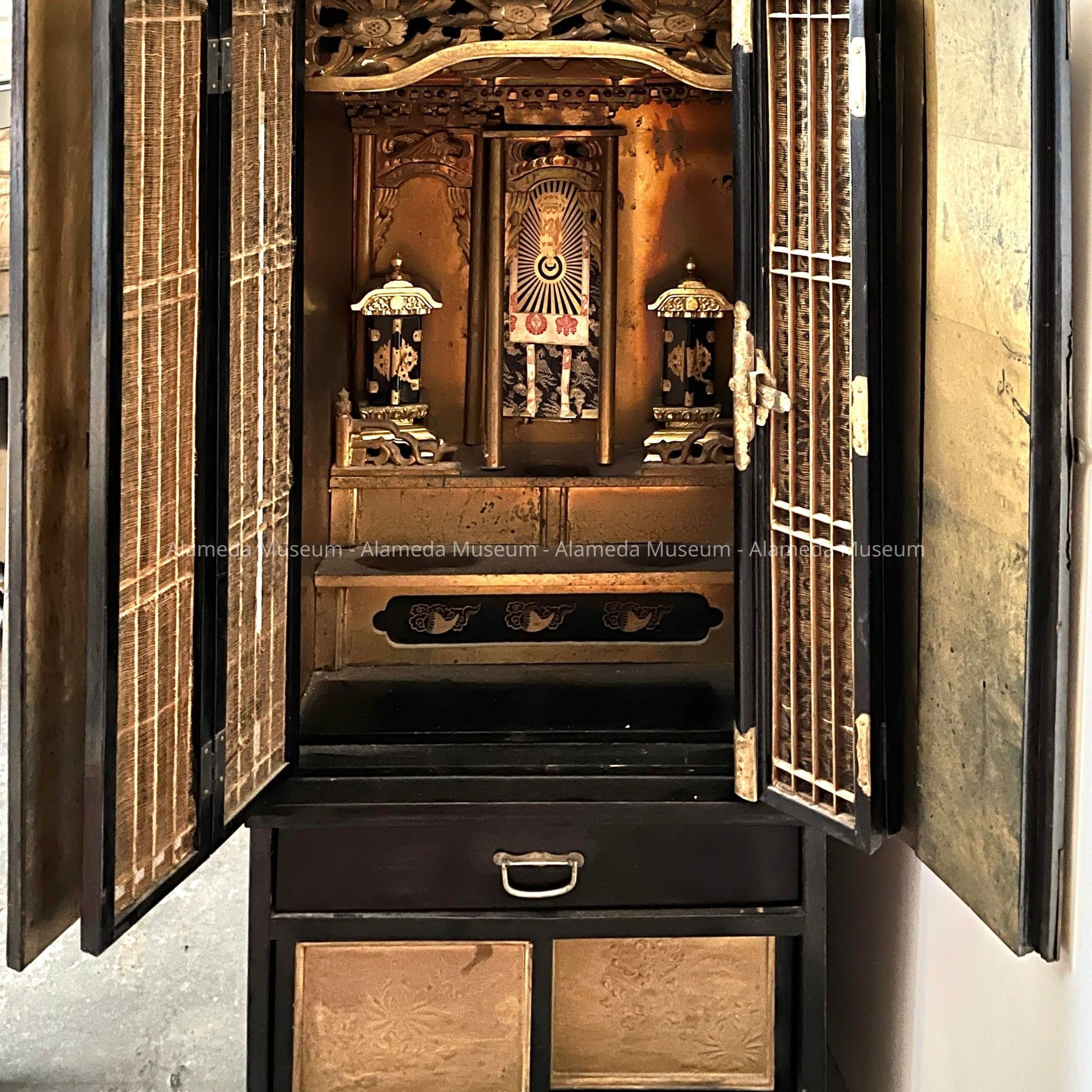
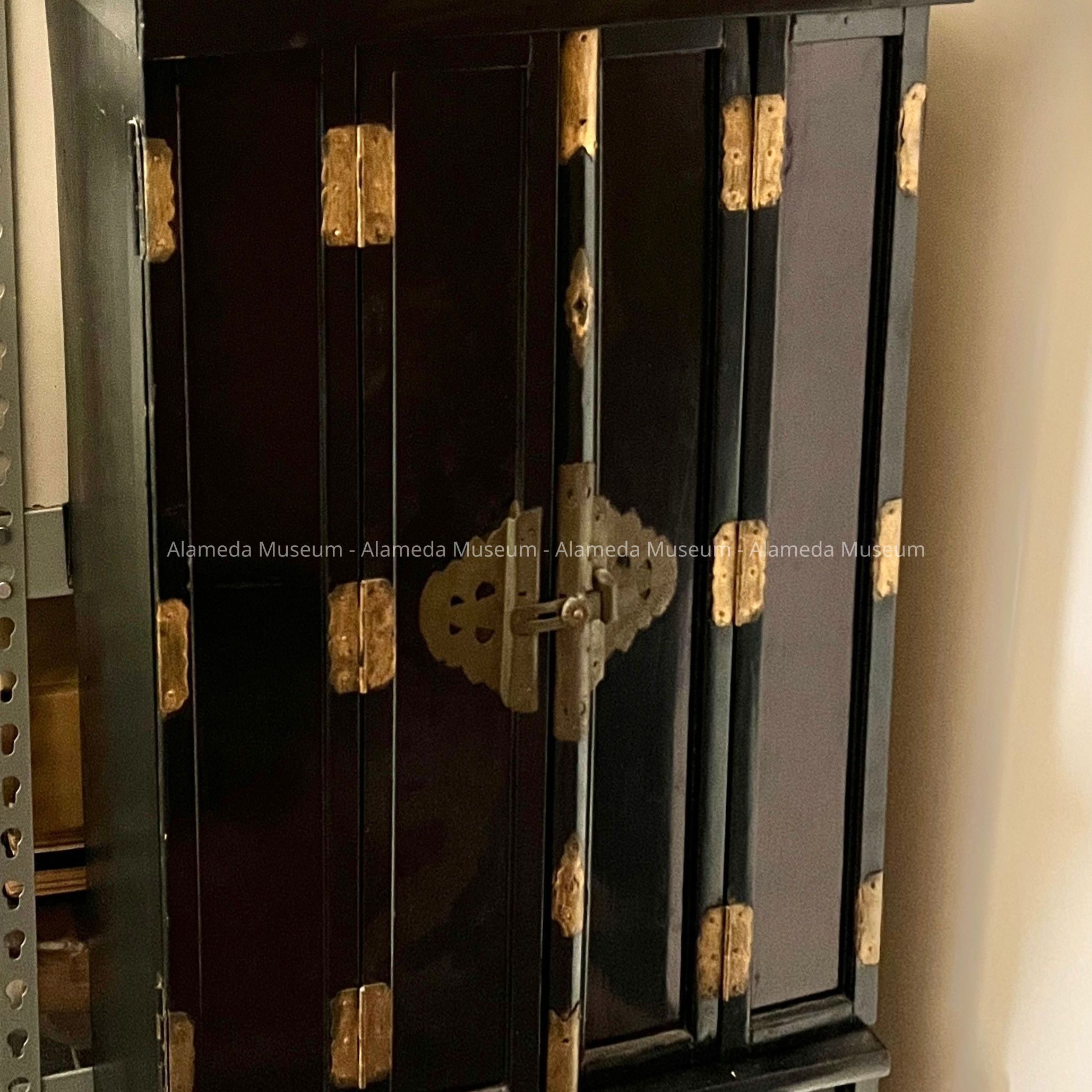
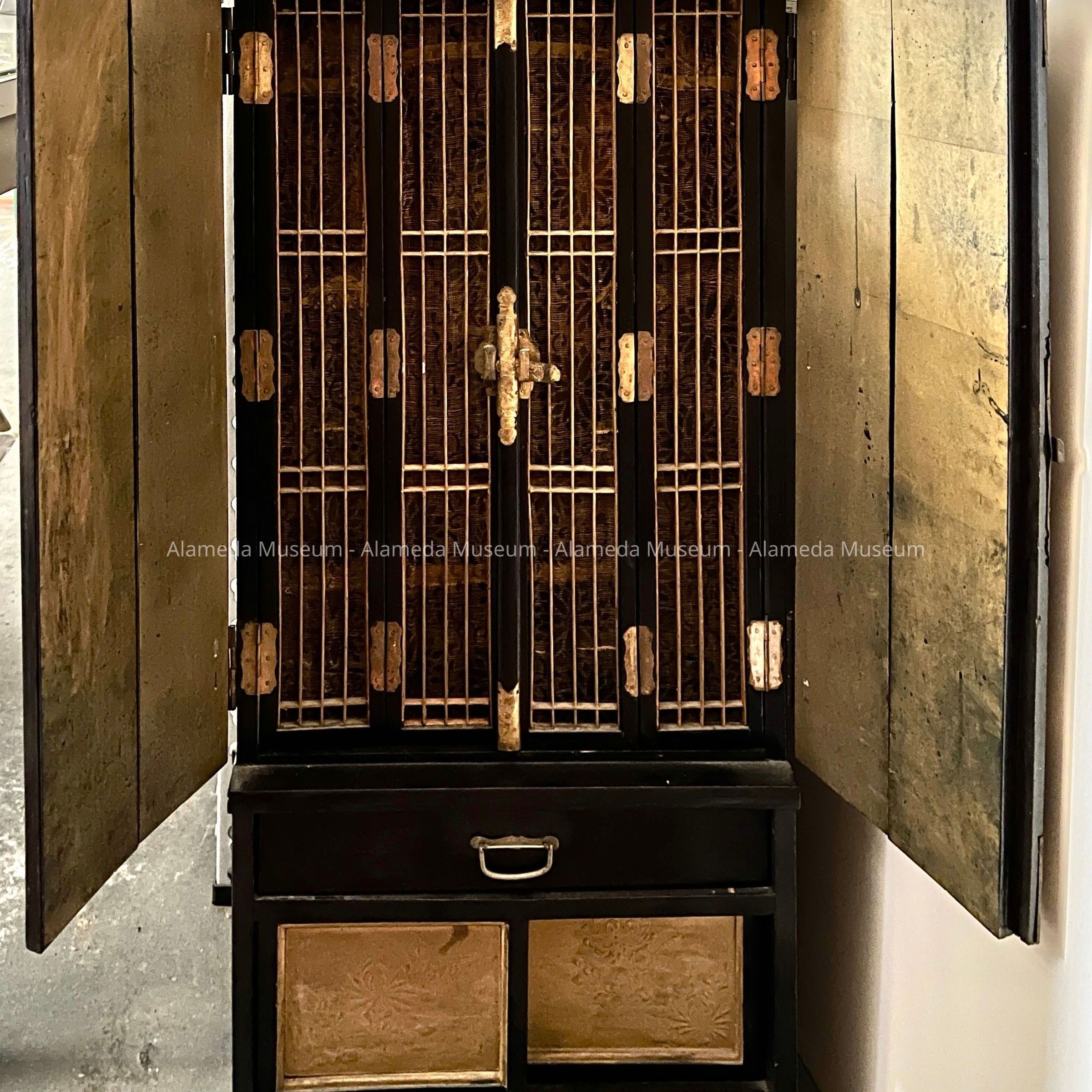
Description: a cabinet, laquered black, with two two folding doors with elaborate decorative brass hinges and locking mechanism, under which is a small drawer with brass pull, and under that a compartment closed with two sliding panels, which have embossed designs. The folding doors are painted gold on the inside.
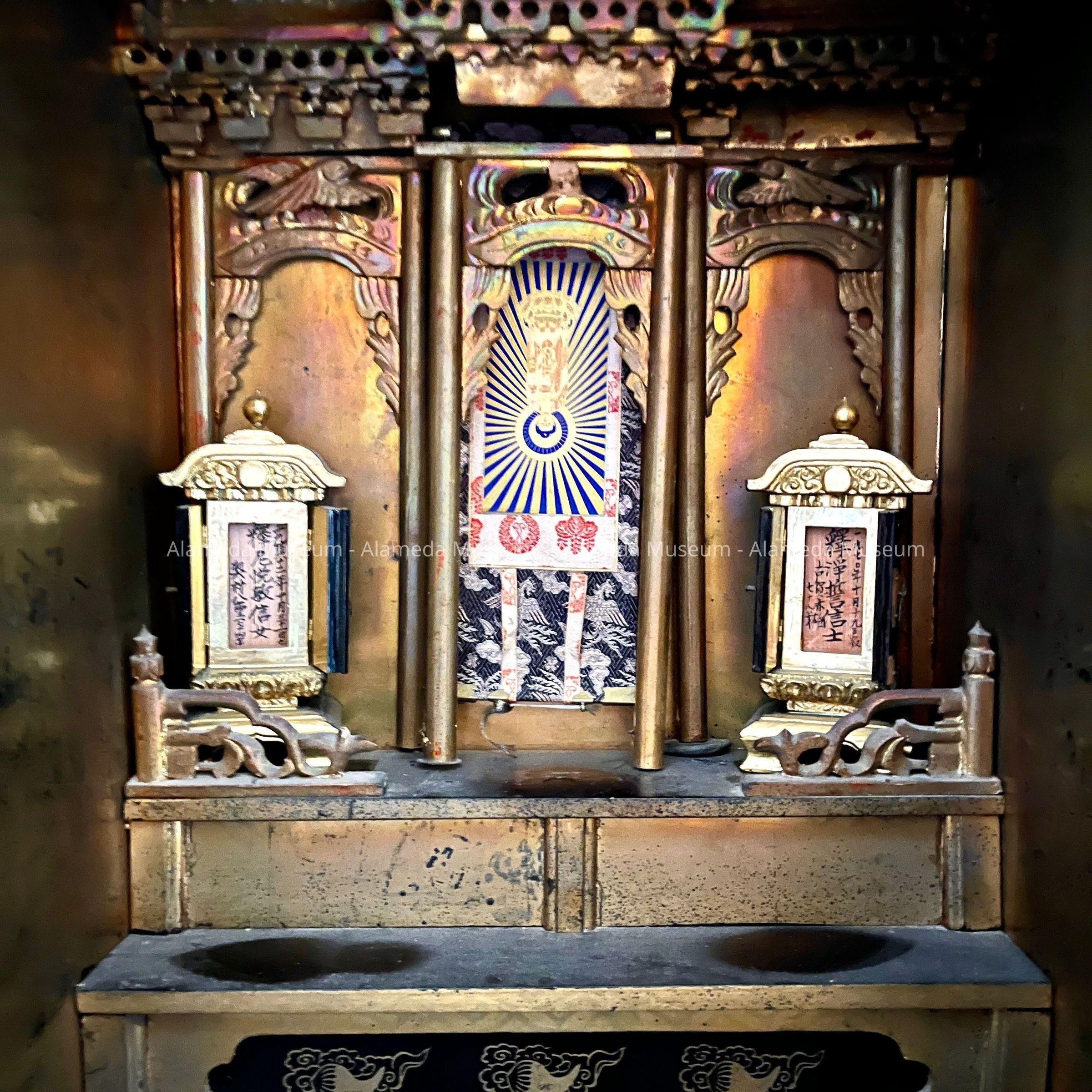
Inside the folding doors are two folding screen doors, again with decorative brass hinges and closure; inside these are two steps to a miniature wooden temple front, painted gold, with carved top, 3 sets of pillared straight arches, the ones on left and right with a carving of a bird, the center has a fabric hanging. Two small black-lacquered wood cabinets with gold-painted decorations are protected from falling down the steps with a small railing, also painted gold. When opened, these cabinets show panels with Japanese writing.
Size: H 36 x W 16 x D 12 inches.
History of Object: Japanese 'Butsudan', used for Budhist devotion ceremonies within a home. The cabinet belonged to Shigeko Iwaihara (married name Kogo), a lifelong member of Alameda's Japanese community - except a few years spent in Japan as a teenager for education, and internment from 1942 to 1946. Shigeko's parents had immigrated from Japan in 1906 and 1908. Being Nissei (second generation), Shigeko was born in Alameda in 1911. She married Matao Koga In 1939 in Alameda. In 1942 she was interned in Poston, Arizona, and returned to Alameda afterwards, when Matao and Dhigeko bought and lived in a house on Pacific Avenue, until Shigeko died in 2006, aged 95.
The cabinet was inherited by a friend, and was donated to the museum by Shigeko’s niece after he passed away.
Acquired from: Joyce Sue
Donated: 7/9/2025
Catalog Date: 10/18/2025