Bailey, Gary
Name/Title
Bailey, GaryTags
Motocross & SupercrossDescription
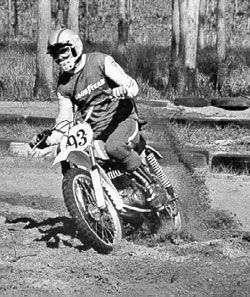
- The first American to beat top European motocross stars, topping the podium at the Firecracker International at Saddleback Park in Orange County, Calif., on July 4, 1969 - A top competitor during the early years of sanctioned American motocross and supercross competitions, winning multiple AMA Nationals in the early 1970s - A legendary motocross instructor who has coached AMA Hall of Famers David Bailey, Rickey Carmichael, Travis Pastrana, Jeff Stanton and many, many more Gary Bailey is one of the true pioneers of the sport of motocross racing in the U.S. and he remains one of the most influential and successful rider coaches more than 50 years later, well into the 2020s. Bailey began winning AMA Nationals in the early 1970s and almost immediately leveraged his racing experience to create the Gary Bailey MX School, the nation’s top motocross racing school for 50 years and counting. The stepfather of motocross great David Bailey, Gary trained David as well as numerous other national champions during their formative years learning the sport. Bailey is also a legendary racetrack designer who has laid out the Daytona Supercross course nearly every year from the beginning of that race in the early 1970s. Bailey was born on Oct. 6, 1943, in the Los Angeles suburb of South Gate, Calif. His grandfather, Tex Bryant, owned a motorcycle dealership and Bailey’s earliest memories involved being around bikes. As a kid, Bailey hung around the shop constantly bugging his grandfather to let him ride. Bailey got his first motorcycle at the age of 13, a 1955 Triumph 200cc Cub, and he was involved in racing right from the beginning, starting in scrambles and desert racing. In the early ‘60s, Bailey began winning a lot of lightweight scrambles races. By the mid-‘60s, Bailey had moved up to bigger bikes and expanded into dirt track and TT racing. About that time, motocross came onto the scene in the U.S. and Bailey went back to his first love of off-road riding. Bailey’s first motocross bike was a diminutive, 90cc Hodaka. The sight of six-foot, five-inch Bailey racing a tiny 90cc motocross bike earned him the nickname “Spiderman.” “I never knew why they were calling me ‘Spiderman’ until I saw a couple of pictures of me on that Hodaka,” he says. “I looked like a giant on that thing!” Bailey found that his height actually gave him an advantage. “In those days, the bikes had very limited suspension travel. I think having long legs worked to compensate for lack of suspension.” Bailey was just reaching his stride when Edison Dye invited the top European motocross stars like Torsten Hallman, Arne Kring and many more to compete against America’s first crop of motocross racers. “Those guys [the Europeans] were just flat-out fast,” says Bailey. “They would run into a berm full blast and use the berm to turn the motorcycle. It was kind of a rude awakening for us. These guys were lapping us and making us look stupid. I knew it was time for the American riders to do our homework.” Bailey rode professionally for Greeves distributor Nick Nicholson from 1968 through the early ‘70s. His breakout performance came at the Firecracker International motocross race in Orange County, Calif., on July 4, 1969, where he rode his British-built Greeves to victory in the 250cc class ahead of Sweden’s Arne Kring — making him the first American to beat the European Masters in an international motocross competition. He later won a Trans-AMA support race in Lewisville, Texas, in November 1970 before going on to race in Europe at international invitational motocross races for the first time. In 1969, at a motocross race in LaRue, Ohio, some European riders were scheduled to teach a motocross school the day after the race. After the European riders cancelled at the last minute, the promoter approached Bailey to ask if he could instruct instead. Bailey told the promoter he knew nothing about teaching, but the promoter persisted and Bailey soon found himself in front of a crowd of eager students ready to learn all they could about the emerging sport of motocross. “A funny thing happened afterwards,” Bailey remembers. “Everyone came up to me and told me how much they enjoyed the class. I thought, ‘Wow, that’s pretty interesting…’” Back in Southern California, Bailey decided to launch his own motocross school. His first class was held at Ascot Park in late December 1969 and more than 100 students showed up! “I was in a panic,” remembers Bailey. “I didn’t know what I was going to do with that many riders!” The Gary Bailey MX Schools were an instant hit. So much so, in fact, that Bailey decided to take his school on the road. “It was a little rough once I left Southern California,” recalls Bailey. “I was one of the top riders in California and everyone knew me, but back East they didn’t know Gary Bailey from Adam and a few times only five or six riders showed up. If it hadn’t been for the money I was earning from racing, I would have never been able to keep doing the schools.” Bultaco came to Bailey in 1971 with a proposal he couldn’t refuse and, though he hated to leave Greeves and the relationships he had built there, the Bultaco offer was too good to ignore. With Bultaco, Bailey earned an Inter-AMA win in 1971 in Orlando, Fla., and two AMA 250cc Motocross National victories (Washington, Ind., and Talladega, Ala.) in 1972. Bailey was also one of the earliest supercross riders, finishing fourth in that series in 1974. By 1975, however, Bailey had decided to retire from racing in order to concentrate exclusively on his schools. Bailey spent most of the ‘70s living out of a motorhome and traveling full-time from school to school across the country. Some of the biggest names of the sport came up through Bailey’s school. David Bailey, Damon Bradshaw, Sebastien Tortelli, Travis Pastrana, Ryan Hughes, Rickey Carmichael, Davi Millsaps and Justin Barcia are just a few of the great riders that Bailey has coached over the years. At the same time Bailey was racing and running his schools, he was also helping to organize the first stadium motocross races. He was already building tracks inside Ascot Park when he was asked to build the first motocross track inside Daytona International Speedway, followed shortly by other famous stadium tracks in Houston and Dallas. The AMA Supercross track at Daytona — which was designed by Bailey for many, many years — is still considered by many riders to be the most grueling on the circuit. Bailey continued to serve as a mentor, track designer, coach and riding instructor well into the next century. By the late 2010s, Bailey estimated that he had trained well over 15,000 riders, earning himself the nickname “The Professor” and making his the longest-running motocross school in the United States. The Gary Bailey Motocross School remains active in the mid-2020s, though Bailey has recently shifted to a “semi-retired” status to focus on private coaching and small group classes. When he’s not actively coaching, he spends his free time chronicling the history of motocross in America. He is highly active on his YouTube channel, regularly uploading race highlights, instructional tips and archival footage, and he has also curated a massive collection of historical photos, stories and race results from the 1950s through the 1980s, working to ensure that the early history of American motocross is not lost for younger generations. Bailey lives in Virginia, and he remains a visible presence at major motocross events across the nation.Category
Class of 1999