Barber, George
Name/Title
Barber, GeorgeTags
Ambassadors & IndustryDescription
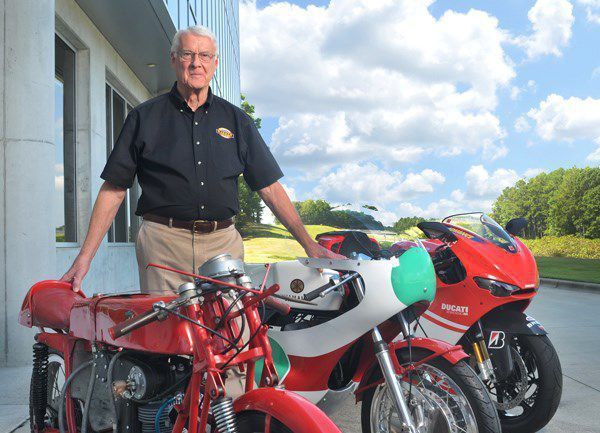
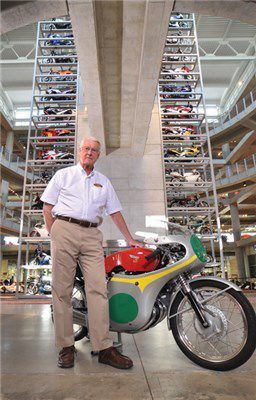
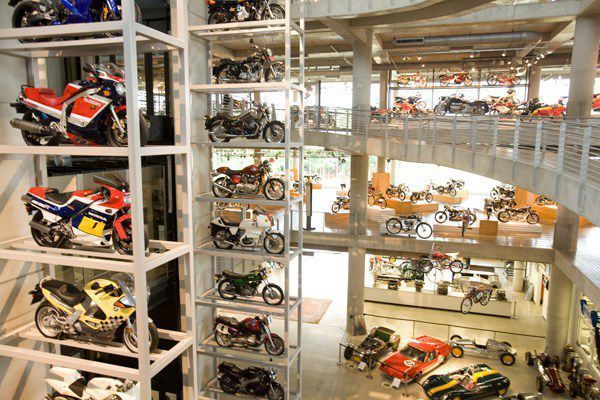
- Founder of the Barber Vintage Motorsports Museum in Leeds, Ala., which contains the world’s largest and most complete collection of historic motorcycles - Visionary behind Barber Motorsports Park, one of the United States’ premier road racing venues and multi-use motorsports facilities - Noted philanthropist inspiring and optimizing motor vehicle design through the Barber Advanced Design Center George Barber Jr. was a businessman, philanthropist and former racer whose passion for the preservation of historic motorcycles led him to create the world’s largest motorcycle museum, which now contains more than 1,800 individual bikes. With examples that range from an 1894 Hildebrand & Wolfmüller — widely considered the world’s first mass-production motorcycle — to modern-era World Superbike and MotoGP racers, not only is the Barber Vintage Motorsports Museum the largest in the world, but also perhaps the most complete and comprehensive collection of important historic motorcycles, too. Barber was the son of George H. Barber, who founded Barber Dairy in Birmingham, Ala., and helped establish some of the first standards for milk pasteurization in the U.S. After the sudden death of his father in 1970, Barber Jr. took over the family business and expanded it into the largest dairy corporation in Alabama and one of the largest in all the United States. He eventually sold the business to Dean Foods in 1998, a move that provided him with the financial resources to fully realize his motorcycle museum dreams. Barber’s interest in motorsports emerged in the early 1960s, when he began road racing automobiles at the club level. Competing in a variety of mostly Porsche-based race cars that he modified and maintained himself, Barber was quite successful as a club racer, eventually earning 63 first-place finishes in regional and national events. Over time, however, Barber became much more interested in motorcycles — especially the variety of novel and innovative methods that different engineers and designers employed to solve similar technical challenges. Barber purchased the first motorcycle in his collection in 1988, and the Barber Vintage Motorsports Museum was formed as a 501(c)(3) nonprofit in 1994, at that time housed in a small warehouse in Birmingham’s Southside neighborhood. That original museum was closed in 2002, reopening at its current location approximately 20 miles from downtown Birmingham, in nearby Leeds, Ala., in 2003. Today, the museum collection is housed in a five-story, 230,000-square-foot building that includes a fully staffed workshop where the vintage machines are restored and maintained. (Each bike in Barber’s “Living Museum” is restored as closely as possible to its original specification and 99 percent of the collection is in running condition.) Surrounding the Barber museum is the 880-acre, multi-purpose Barber Motorsports Park that includes a 2.4-mile road racing course, a 50-acre off-road vehicle park with seven miles of trails, and a 14-acre proving ground with wet and dry skid pads and other vehicle testing facilities. Each year, several hundred thousand people visit the Barber Museum and Motorsports Park for a variety of world-class racing events, festivals, riding and driving schools, and other related activities. “George Barber’s incredible collection of motorcycles at his museum, as well as his world-class racing facility, are evidence of a love for the history of motorcycling and an appreciation for the passion we all share,” said Ken Ford, a member of the AMA Motorcycle Hall of Fame executive committee and assistant treasurer of the AMA board of directors. “His investment has produced a world-class shrine to the design, manufacture and enjoyment of motorcycles.” In his later years, Barber focused on expanding his motorsports legacy and transforming the Barber Vintage Motorsports Museum into a global landmark for motorcycle engineering and design. An 85,000-square-foot expansion of the facility in 2015 made room for the Barber Advanced Design Center, a high-tech workspace for industrial design exploration to inspire new generations of creative engineers and designers. Through the George W. Barber Jr. Foundation, he continued to support the museum's nonprofit mission, which he funded with an estimated $80 million of his own resources over the decades. Barber said his first reaction on learning of his Hall of Fame election was “disbelief.” “I know that there are so many great people in the Hall of Fame that I wondered, ‘How in the hell did I get in?’” Barber said. “It truly is an honor.” Barber passed away on Feb. 15, 2026, at 85 years old.Category
Class of 2014