Blackwell, Mark
Name/Title
Blackwell, MarkTags
Motocross & SupercrossDescription
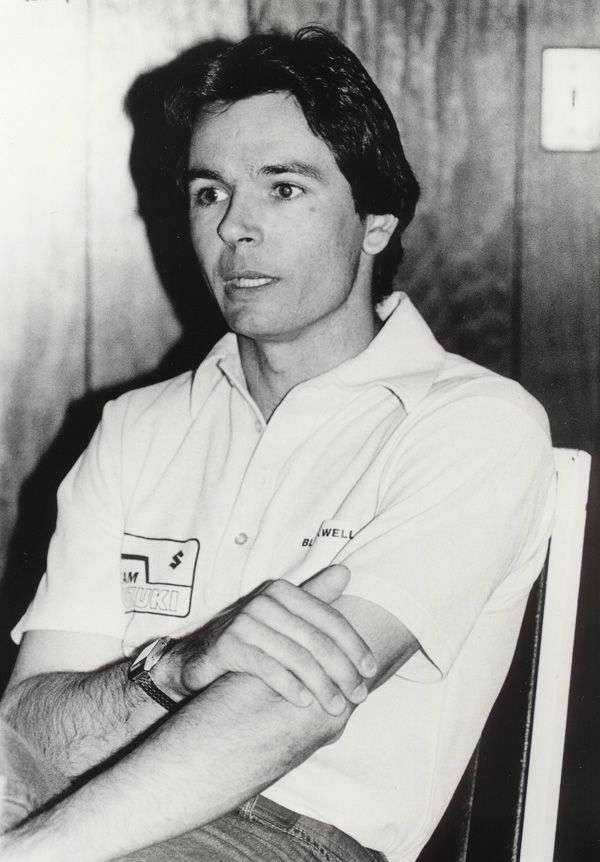
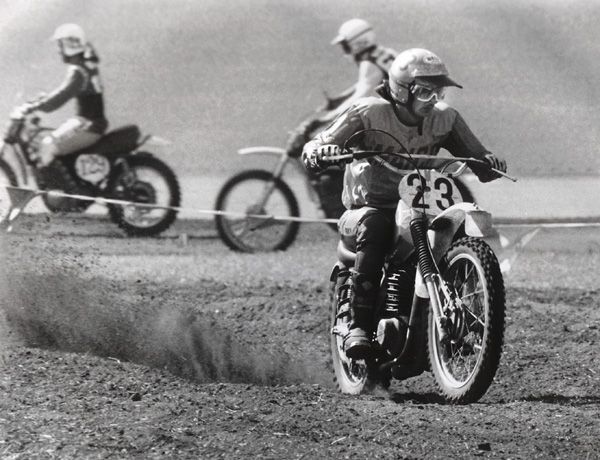
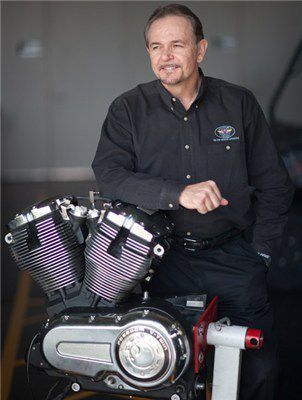
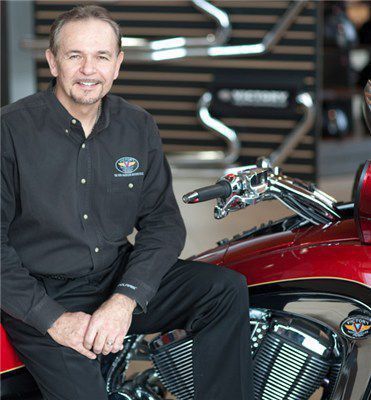
- America’s first motocross champion - Team manger during Suzuki’s late 70s/early 80s “Golden Era” when the company won six AMA Motocross and Supercross Championships - Former General Manager of Victory Motorcycles Mark Blackwell was one of the top riders in the early days of motocross in the United States, winning the 1971 American 500cc Motocross title — a predecessor of today’s AMA National Motocross Championship — by virtue of being the top-scoring American in the Trans-AMA Series that year. Blackwell was one of the first American riders to compete in the Motocross World Championships during the early 1970s, and he also scored a 500cc motocross victory at Daytona International Speedway in 1972 — officially America’s first 500cc National Championship motocross race. Perhaps even more influential than his racing exploits, however, were Blackwell’s later contributions as a director at various motorcycle companies as diverse as Suzuki, Husqvarna and later, Victory Motorcycles. Blackwell was born in Southern California on June 15, 1953. He grew up at a time when a new age of motorcycling in America was emerging. As a teen, his parents agreed to let Blackwell get a Honda 50 as long as he kept his grades up. He began racing informally with friends and eventually moved into sanctioned flat-track, TT and scrambles racing. Unlike most racers, who were led to racing by their fathers, Blackwell’s racing led his father, Jack, to become a racer as well. “He started racing at age 40,” Blackwell recalls. “Racing kept my dad and I close and, frankly, it probably kept me out of trouble. Many of the kids in my neighborhood were getting into drugs and things like that and racing gave me something else to keep my focus on.” By the late 1960s, motocross was just emerging in America and Blackwell would become one of this country’s earliest stars. Early in his professional career, Blackwell rode Yamahas before he was contracted to ride for Eastern European manufacturer CZ. In 1970, Edison Dye convinced Blackwell to ride for Swedish maker Husqvarna. During the summer of 1970, Blackwell went to Sweden to train with the factory Husqvarna riders. To pay for his stay in Sweden, he worked as chase driver for one of Dye’s European motorcycling tour groups — all of this at the age of 17. Upon his return to America in 1971, Blackwell raced in the Trans-AMA Series, which pitted the top European riders against America’s best practitioners of the emergent sport. The Europeans were so dominant at this stage of the series that a separate championship was held within the Trans-AMA Series for the top-scoring Americans. Blackwell had a slew of top finishes and beat out Brad Lackey by a single point to win the American rider portion of the Trans-AMA Series. In 1972, Blackwell began the season with a victory in the 500cc class in the prestigious Daytona Motocross (which later evolved into the Daytona Supercross). He then spent the remainder of that season racing in international motocross events in Europe and, by 1973, was competing full-time on the Grand Prix circuit. He dominated the Florida Series that winter and went on to score a podium finish in an international race in Germany, which gained him significant attention among hardcore motocross fans in America. Everything was starting to fall into place for Blackwell when he suffered a freak injury at a GP in Luxembourg. “It was a muddy race, and I was running in the top five,” Blackwell remembers. “I couldn’t see so I put my visor down and then I got hit in the eye by a rock.” Blackwell ended up spending two weeks in a hospital and temporarily lost vision in his left eye. His vision eventually came back and he returned to racing, but he never regained the momentum he’d built before the injury. The eye injury led to an initially undiagnosed cataract, which Blackwell felt led to a series of crashes and subsequent injuries. Though Blackwell continued racing in the U.S. through 1975, he had already begun to transition to the business side of the industry. He spent some time working as an instructor at a popular motocross training school sponsored by Suzuki and he also worked in product development for numerous companies, including Goodyear, Scott and Fox Racing. During this time, Blackwell also began attending college at night to earn a business degree. In 1977, Suzuki approached Blackwell and asked him to advise the company’s struggling U.S. motocross team. By 1978, he had taken over as team manager. Under Blackwell’s guidance, the Suzuki team made a dramatic turnaround to soon become the most successful factory team in AMA Motocross and Supercross racing during the early 1980s, fielding riders like Mark Barnett, Danny LaPorte and Kent Howerton. In 1981, Blackwell left Suzuki on friendly terms to take on an exciting opportunity at Husqvarna, the company he’d first worked for as a teenager. He started out as a product manager and soon worked his way up to Vice President of Marketing, where he was a major contributor to returning Husqvarna’s U.S. motorcycling division to profitability. One of his last projects at Husky was to make the presentation to the Castiglioni brothers at Cagiva, who soon after purchased all of Husqvarna’s motorcycling interests. Blackwell returned to Suzuki in 1986 as advertising manager and eventually became the top American employee of the company. Under Blackwell’s leadership, Suzuki merged its struggling marine division into the motorcycle and all-terrain vehicle division and helped turn that entire segment of the business around. All during this time, Blackwell continued pursuing his education, working towards an MBA. “I would learn something in class and put it to business use,” Blackwell recalls with a smile. “I remember writing press releases for a PR class, getting a grade on them and then going to use them at work the next day.” In 1992, snowmobile maker Arctic Cat approached Blackwell to join that company. Blackwell felt he had advanced as far as he could with a Japanese company and took the opportunity to go to work for a publicly held American company. At Arctic Cat, Blackwell helped guide the company’s entry into the ATV market. When he first joined Arctic Cat, that company was doing about $150 million in sales annually; during his time there running the ATV business, the company grew to over $500 million in sales. In 2000, Blackwell became General Manager of Victory Motorcycles, at that time a fast-growing division of Polaris, Inc., that was moving aggressively to establish itself as the only legitimate American-made competitor to Harley-Davidson. “For me, it was a chance to truly run a business,” Blackwell said. “I also came back to motorcycling, the industry I loved and knew so well.” Under Blackwell’s leadership, Victory quickly established a market position as America’s most modern American motorcycle manufacturer, offering traditionally styled American touring and cruiser motorcycles that were differentiated with more sophisticated engine and chassis technology compared to the competition. By 2005, after the Victory brand had been honored with numerous design and industry awards, Blackwell was promoted to Vice President of Victory Motorcycles and International Operations. Leveraging his deep roots with European brands, Blackwell forged a strategic partnership between Polaris and KTM during the mid-2000s and architected a strategic roadmap that successfully guided the company through the 2008 financial crisis and eventually led to the hugely successful acquisition and relaunch of Indian Motorcycles. Blackwell retired from his executive position at Polaris in early 2014, though he remained very active in the industry through Mark Blackwell & Associates, his strategic consulting firm that advised numerous high-profile clients in the U.S. motorcycle industry, including KTM North America, which relied heavily on Blackwell’s insights and business intelligence to execute an American expansion program that resulted in record-breaking revenue and market share growth during that period of time. Today, Blackwell continues to provide strategic guidance to a number of American motorcycle interests, in addition to enjoying his status as an “AMA Legend” and recipient (in 2021) of the Edison Dye Motocross Lifetime Achievement Award — the latter of which honors his dual legacy as both a legendary motocross champion and an influential and impactful motorcycle industry leader.Category
Class of 2000