Carruthers, Kel
Name/Title
Carruthers, KelTags
Road RacingDescription
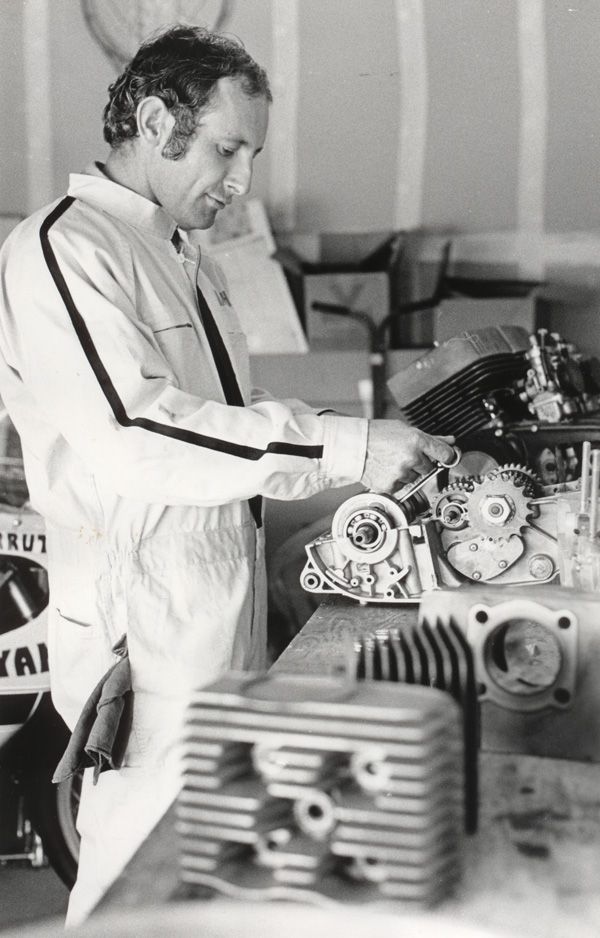
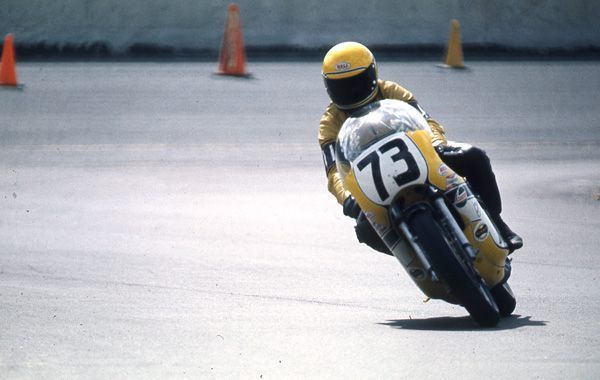
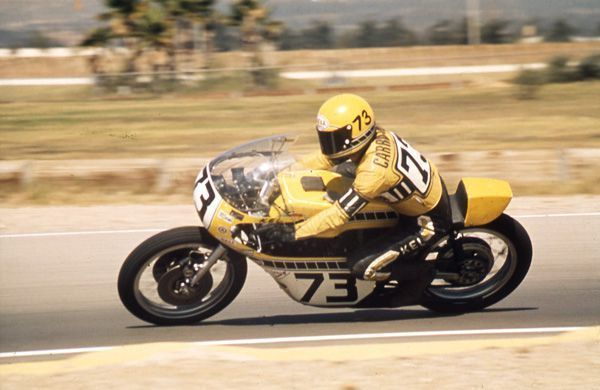
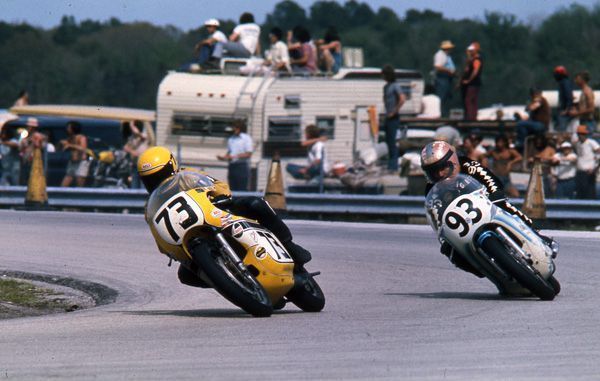
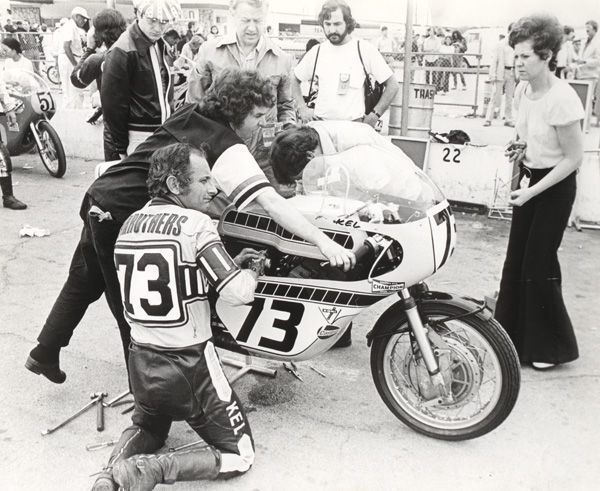
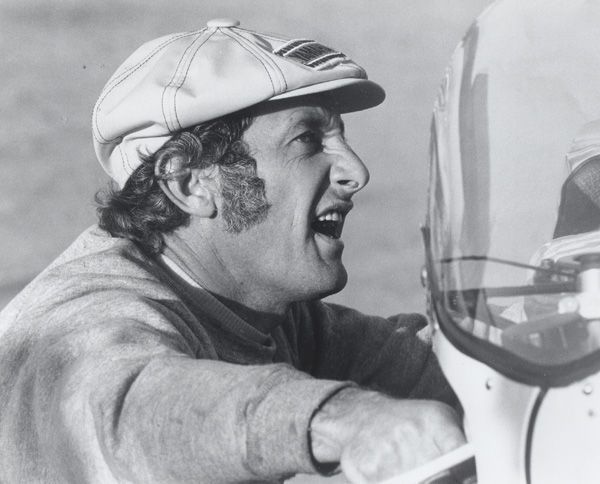
- 1969 250cc World Road Racing Champion - Noted Grand Prix tuner and team manager, supporting Kenny Roberts and other champions - “Golden Era” Grand Prix legend and motorcycle racing ambassador As a racer, Kel Carruthers is well known not only for winning the 1969 250cc Grand Prix Road Race World Championship, but also for his victories in the 250cc class at the Isle of Man in 1969 and 1970. He went on to have a brief but highly successful racing career in America in the early ‘70s before becoming one of the most successful team managers and racing engineers in the history of the sport — heading both national and world championship teams during the 1970s and ‘80s. Carruthers ran the teams on which Kenny Roberts won his three consecutive 500cc World Championships, among others. Carruthers was born January 3, 1938, in Sydney, Australia. His father owned a motorcycle shop and had been an Australian sidecar racing champion. Kel helped out around the shop and learned the mechanical workings of motorcycles at a young age. He started riding at age 10 and entered his first race at 12. Carruthers rode a two-stroke Royal Enfield and excelled on the dirt track racing circuit, which in Australia featured courses that were more like dirt road racing tracks with elevation changes and a variety of left and right turns. Carruthers turned pro when he was 15 and started clubman road racing a year later. By the early 1960s, he was the top racer in his country. From 1962 to 1965, he won 125cc, 250cc, 350cc and 500cc national championships. Carruthers rode a wide variety of racing machines, from factory-backed Honda RC161s and CR93s to 500cc Manx Nortons. By the mid-1960s, Carruthers had done all he could do in Australia, so he loaded his family on a ship in the spring of 1966 and sailed to Europe, where he lived in the summer months racing on the International GP circuit. As a privateer, he had to learn the long and complicated street and closed circuits, adapt to life in Europe while living on the road in a travel trailer, and he had to learn to be a hard-nosed negotiator. “In those days, the purse money was not very much, even at the GPs,” said Carruthers, who rode in three world championship classes that first year. “The promoters would pay good riders start money, so you had to learn how to sell yourself to these promoters and get the most start money possible. You wouldn’t get rich, but you could make a decent living racing in Europe.” By 1968, Carruthers finished third in the 350cc World Championships riding an Aermacchi. At the end of 1968, Carruthers almost got the break of his life: MV Augusta had tried to get Mike Hailwood to ride at the Italian GP at the end of the year, but due to contractual problems, he couldn’t, and so Carruthers was invited to ride instead. Unfortunately for Carruthers, Hailwood was released from Honda at the last minute and took the ride with MV. In 1969, Carruthers became an Aermacchi factory rider in the 125cc, 350cc and 500cc classes. At the Isle of Man, Benelli asked Carruthers to ride the company’s 250cc racer after Benelli’s Renzo Pasolini had been injured. Carruthers got permission from Aermacchi and won the 250cc class at the TT that year. Benelli was thrilled, since the win was the company’s first major victory since the 1965 Italian Grand Prix. In an almost unheard-of arrangement, Aermacchi allowed Carruthers to sign with Benelli to race the 250 the rest of the season and so, Carruthers found himself a factory rider for two different companies at the same time. Carruthers went on to win the 250cc Grands Prix in Ireland and Yugoslavia to give Benelli its second-ever world title, and first since 1950. Carruthers followed in the footsteps of fellow Australians Keith Campbell (350cc world champ in 1957) and Tom Phillis (125cc world champ in 1961) to become the third motorcycling world champion from his country. He was so popular in his home country that he finished as runner-up to tennis great Rod Laver, who had just won the tennis Grand Slam, in voting for Australian Sportsman of the Year. He was later voted in as one of the original 100 inductees to Australia’s Sporting Hall of Fame. Traveling to America to race at Daytona in 1970 would prove to be a turning point in Carruthers’ life. That year he won the 250 race there and came close to winning the Daytona 200. Don Vesco told Carruthers that if he wanted to race in America, he could work out of his shop in El Cajon, Calif. Carruthers went on that season to finish runner-up in the 250cc and 350cc world championships riding Yamahas. Carruthers had already decided it was getting close to time to head back to Australia, but he figured he would race one full season in America before retiring from the sport. He and his family came to the United States in 1971, and he raced out of Vesco’s shop. Doing road races exclusively, Carruthers still managed to finish eighth in the AMA Grand National Championships, winning his first AMA national at Road Atlanta in April 1971. Besides the nationals, Carruthers won a slew of non-national Lightweight races in the class that would later become the AMA 250 Grand Prix. Kawasaki tried hard to hire Carruthers at the end of the 1971 season, but Yamaha wanted him even more. Carruthers continued to race, but his emphasis by then was beginning to shift. That season he was working with a rookie expert named Kenny Roberts, taking care of his motorcycles and helping him learn the ropes at the road races. By 1973, Yamaha had contracted Carruthers to run its U.S. road racing team. While Carruthers actually had a good season on the track (runner-up at Daytona and Road Atlanta and winner at Talladega, Ala.), it was becoming clear that his racing career had become impractical. “By that time, I was hardly even practicing at all,” remembers Carruthers. “There were three other riders I was looking after. Kenny [Roberts] would go out and turn a few practice laps on my bike just to make sure it was okay. I would hop on it for a few practice laps and then race. Yamaha was wanting me to concentrate on running the team and I decided before the season was over that I would not race the next year.” Under the direction of Carruthers, Yamaha’s racing team was the most successful in the United States during the mid-1970s. Roberts won the AMA Grand National championship in 1973 and ‘74 and the AMA Formula 750 (Formula One) road racing title in 1977. In 1978, Carruthers and Roberts left for Europe to contest the 500cc Grands Prix for Yamaha America. Roberts won the world championship in his first full year and gave Carruthers much of the credit for his success. Carruthers continued working as team manager and engineer for various teams on the GP circuit through 1995. By the end, he no longer found the GP world as rewarding as it had once been. “We used to have a seven-month season, send the bikes back to the factory and tell them to make them better next year,” Carruthers recalls. “Gradually, running a GP team became a year-round job with no break at all. Plus, you used to be able to actually work on the machines and see an improvement. The way things are now, they hardly touch the bikes once they leave the factory.” In 1996, he was lured away from motorcycling to head up the Sea-Doo watercraft factory racing team for two years. Again, Carruthers found success, with his Sea-Doo teams winning national and world titles. In 1998, Carruthers returned to motorcycling to run the Chaparral Yamaha national Supercross and motocross team and later the Southern California company’s AMA Supersport road racing effort, too. Carruthers remains a fixture in the motorcycle racing world, having since transitioned into a new role as ambassador and hero of the sport. He was a key participant in Yamaha’s 50th Anniversary of Grand Prix racing celebrations in 2011, appearing among other places at the Assen TT alongside other “Golden Era” legends, and he still makes occasional media appearances, often in the company of his son, Paul, the former editor of Cycle News magazine and former communications manager for the MotoAmerica racing series.Category
Class of 1999