De Coster, Roger
Name/Title
De Coster, RogerTags
Motocross & SupercrossDescription
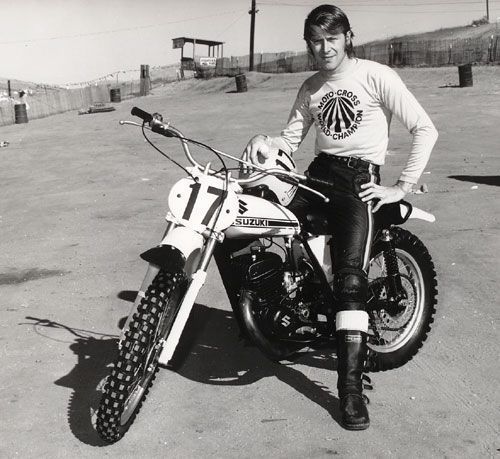
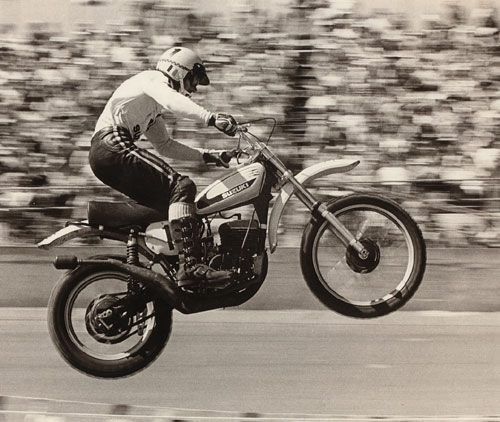
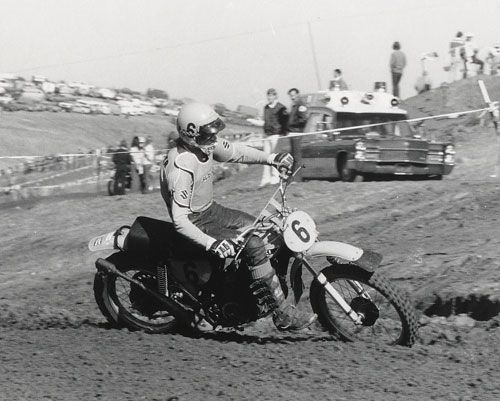
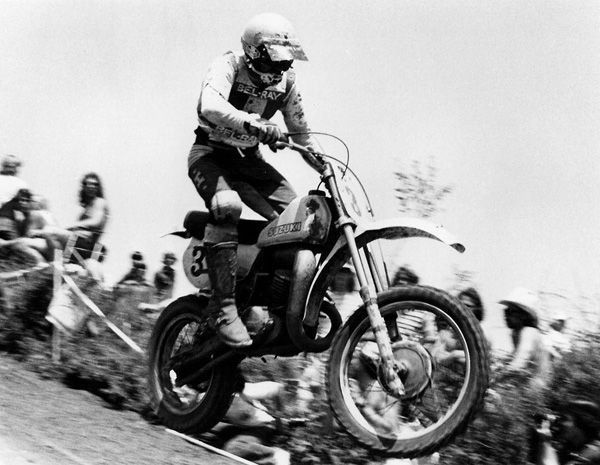
- Five-Time 500cc Motocross World Champion - Four-Time Trans-AMA Motocross Champion - Six-Time Motocross des Nations Championship Team Member Roger De Coster’s name is synonymous with the history of motocross. De Coster is generally regarded as the best-known motocross racer from the first 50 years of the sport, and his racing accomplishments are simply remarkable: five 500cc Motocross World Championships, with a record 36 500cc Motocross Grand Prix victories; a member of no less than six championship-winning Belgian Motocross des Nations teams; four-time winner of the Trans-AMA Motocross Championships; Gold Medalist in the International Six Day Trial (Enduro); numerous national championships in his native Belgium (including a national Trials title!), and more…so much more. That brief biography only covers his racing years. De Coster has been just as important and influential after he retired from racing, managing many more winning teams, including the first U.S. team to win the Motocross des Nations in 1981. Later, he went on to develop some of the very best motocross and supercross racing talents — and racing machines — over the next 25 years during his time working inside Suzuki and then KTM. There’s a very good reason that De Coster is simply referred to as "The Man." Roger De Coster was born on August 28, 1944, in Uccle, Belgium. His father worked in a steel mill to support a family of seven. With so many mouths to feed, there wasn’t much in the way of extra income and so De Coster had to wait until he was old enough to start working himself to begin his racing career. He took a job in a motorcycle shop where he worked six days a week, even while going to school at the same time. After a few months of hard work, De Coster, now 17, was able to buy his first race bike — a 50cc Flandria. Fearing his parents’ reaction, De Coster kept his motorcycle hidden in a friend's garage. One day, his father was sitting by the stove reading the local newspaper and came across a small article of interest. It was about young De Coster winning a motorcycle race. Instead of being upset with his son’s secret hobby, De Coster’s father was proud and attended the next race with a group of buddies from the mill. De Coster won a couple of 50cc Belgium MX titles before jumping straight to the 500cc class in 1964. The ’64 season was a breakthrough year for the now-19-year-old De Coster. He won the junior 500cc Belgium Motocross title, won the Belgium Trials championship, and also earned a gold in the ISDT (now ISDE). Soon after, he went to work for Czechoslovakian motorcycle maker CZ. By the late 1960s, De Coster’s racing career began to accelerate. He won the Belgium 500cc National title in 1966 and started competing in the world championships the next year. Success did not come overnight. He was a late starter in the sport, but a quick study. In fact, studying is one of the things that set De Coster apart from many other riders. He would watch other riders whenever he had a chance and would intensely examine their every move, how they handled jumps, or set up for turns. The hard work and studious approach to motocross soon began to pay off. De Coster won his first GP in Italy in 1968, then won again the next year in his home country, though injuries initially kept him from being a consistent winner. In 1969, De Coster helped give Belgium its first Motocross des Nations victory in 18 years. He would go on to help his country win the prestigious competition five more times. In 1971, De Coster made the difficult decision to leave CZ to race with Suzuki. It was with Suzuki that De Coster finally came into full fame and glory. Riding a newly designed bike —the RN370 — De Coster promptly went out and won his first 500cc Motocross World Championship. He would go on to win four more 500cc world titles in the next five years. By the mid-1970s, De Coster had established himself as the greatest motocross racer of his generation, and arguably one of the best ever. Besides winning world championships, De Coster also helped spread the gospel of motocross to America. He first came to the United States in the early ‘70s to race in the Trans-AMA Series, which pitted the best American riders against the top Europeans. De Coster won the Trans-AMA Championship four years in a row (1974-1977), cementing his status as an admired and popular figure in the sport in America as well. De Coster continued racing, and winning, through 1980. He left the sport on top, winning his final world championship race — the 500cc Motocross Grand Prix of Luxembourg — at the end of the 1980 season. Soon after his retirement, De Coster relocated to America and stepped comfortably into the role of racing advisor for Team Honda. The success he enjoyed as a racer in the Motocross des Nations carried over to his new position as manager for Team USA. Under De Coster’s guidance, the United States won its first victory in the prestigious Trophy and Motocross des Nations. While working with Honda, the teams he assisted amassed numerous AMA National Motocross and Supercross championships. DeCoster also helped Honda develop its motocross bikes and even had a hand in helping design full-face helmets for motocross racing. De Coster returned to Suzuki in 1996 and took over as Team Manager for Suzuki’s motocross team. Under his direction, Suzuki won its first AMA 250cc National Motocross championship in 18 years, with Greg Albertyn, in 1999. De Coster also continued to help guide the United States to even more victories in the Motocross des Nations as well. De Coster was inducted into the Motorcycle Hall of Fame in 1999, and Cycle News magazine named him “Motocrosser of the Century” the next year, in 2000. He was also named to the Motorsports Hall of Fame in Novi, Mich., a few years earlier, in 1994 — becoming only the seventh motorcyclist and the first foreign-born rider inducted into that exclusive institution. Despite all these cumulative accolades, however, De Coster showed no sign of slowing down. In fact, in some ways, the most impactful period of his career was just getting started. During his third act, De Coster redefined what it means to lead a factory racing program, first with Suzuki and then with KTM. Suzuki’s motocross and supercross racing programs had been struggling for nearly two decades before De Coster began rebuilding the franchise from the ground-up following this return to the brand in 1996. Following the pivotal championship breakthrough with Albertyn in 1999, De Coster made his most significant move at Suzuki when he signed a young Florida racer named Ricky Carmichael in 2005. This partnership yielded immediate results when Carmichael won both the AMA Supercross and AMA Motocross titles in both 2005 and 2006. De Coster was also instrumental in the rise of Ryan Dungey, whom he drafted to the Factory Suzuki team as a young amateur in 2006. When Dungey pulled off his historic rookie sweep of both the AMA Supercross and AMA Motocross titles in 2010, riding the Suzuki RM-Z450 four-stroke, De Coster’s meticulous approach to rider development — and race bike development — became overwhelmingly evident. DeCoster shocked the industry when he left Suzuki at the end of the 2010 racing season, taking his significant talent to KTM. The Austrian manufacturer was a powerhouse in European motocross at the time, but not much more than a minor player in the American series — until De Coster convinced KTM to create a special series of “Factory Edition” motocross racers built specifically for the American market, and to assemble a “Superteam” to race and promote those bikes. Ryan Dungey, once again racing under De Coster’s direction, gave KTM its first premier-class Supercross win in 2012, and by 2015 the duo had secured their first 450SX championship. The De Coster/Dungey duo eventually won three consecutive AMA Supercross titles from 2015-17 and this was the beginning of KTM becoming the dominant force in American Supercross racing, eventually winning championships with Marvin Musquin, Cooper Webb and Ken Roczen, all under De Coster’s watchful leadership. In July 2025, De Coster officially retired from his role as Manager of Team USA for the Motocross des Nations, a title he had held for a remarkable 44 years. During that period, he had led American teams to 25 world titles — an incredible record that cemented his status as the winningest manager in the history of that event. Even as he stepped away from Motocross des Nations management, as of early 2026, De Coster still continued to serve as Motorsports Director of KTM and Husqvarna North America, paying special attention to talent acquisition and overseeing the development and ongoing support of supercross stars like Chase Sexton, Eli Tomac and Jorge Prado, all under the KTM umbrella. Elevated to the status of AMA Motorcycle Hall of Fame Legend in 2011, Roger De Coster remains a very active and important figure in the world of American supercross competition to this day, and no doubt will continue to play an outsized role in this sport for many years to come.Category
Class of 1999