Ferracci, Eraldo
Name/Title
Ferracci, EraldoTags
Road RacingDescription
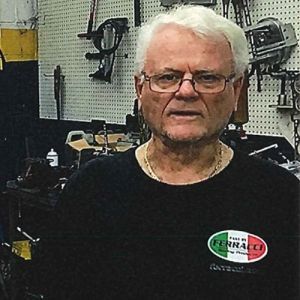
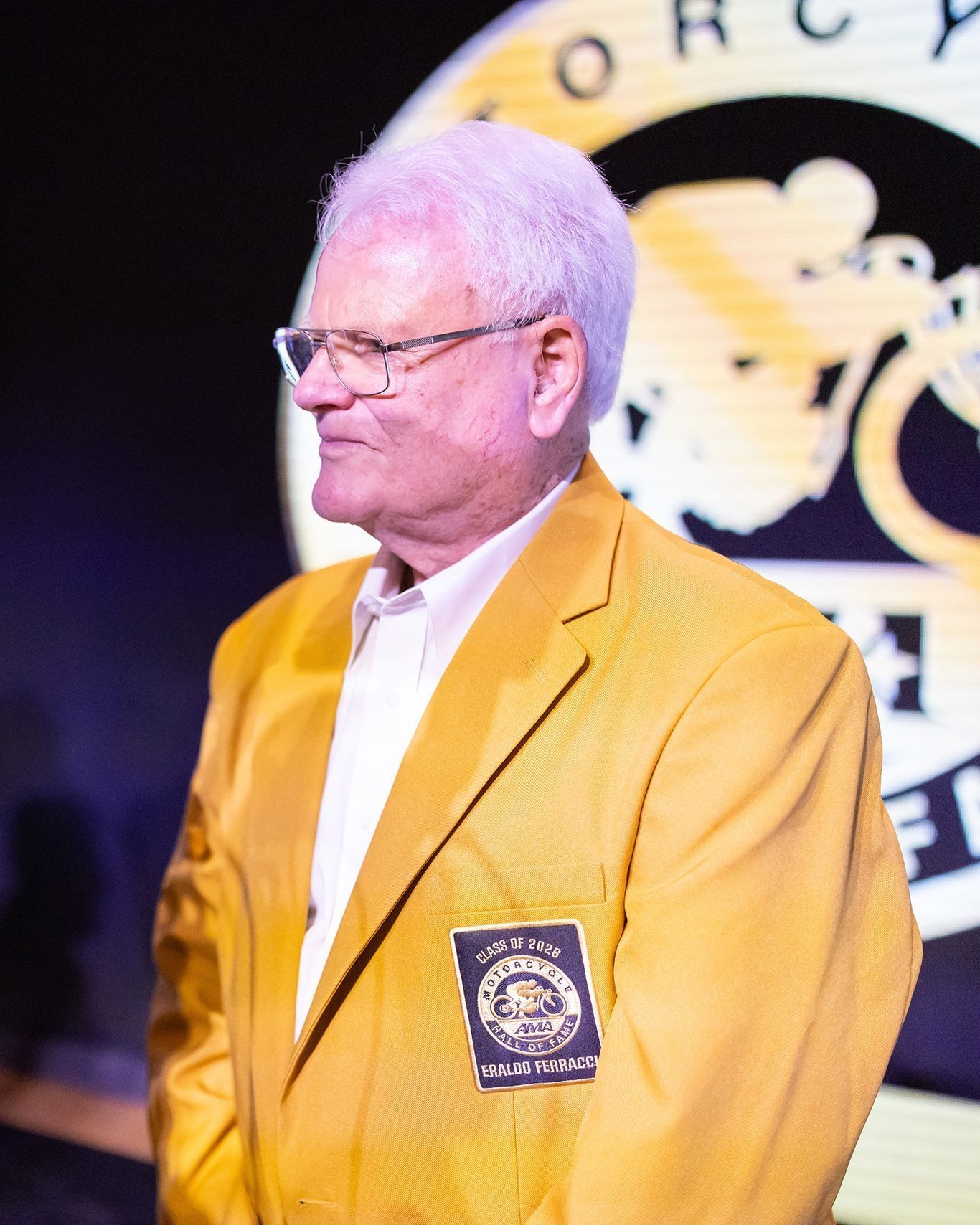
- Italian National Championship-winning rider and record-setting drag racer here in the U.S. - Established Fast by Ferracci in 1980, offering go-fast parts and tuning expertise to a wide array of drag and road racers - Created and headed Team Fast by Ferracci Ducati in 1988, Ducati’s lone North American factory road race team; won two World Superbike titles (with AMA Hall of Famer Doug Polen in ’91 and ’92), and two AMA Superbike championships (with Polen in ’93 and Aussie Troy Corser in ’94) - Helped make Ducati a worldwide road racing powerhouse, and one of the world’s most successful producers of performance motorcycles Bursting onto the scene in Italy in the late 1950s/early 1960s, Eraldo Ferracci was already an accomplished racer, having won both the Italian 175cc amateur championship and the 125cc Italian National championship (1963) before he joined Benelli, where he developed and perfected the skills that would soon make him peerless as an engine builder and engineer. “I never had any interest in anything else,” Ferracci admitted, describing what motivated him during his early hands-on “education” at Benelli. “Only motorcycles. It was the opportunity to learn…a big opportunity. I was a little bit fortunate to learn so much and so quick.” Around that time, Benelli wanted to break into the American market, so the company sent Ferracci and his colleagues to the U.S. to scout opportunities and determine what might sell. The answer, after seeing the machines virtually everywhere they traveled: minibikes. After returning to Italy, Ferracci and his crew started secretly developing a small minibike after hours specifically for the American consumer. As legend goes, the project was so hush-hush that when company patriarch Giuseppe Benelli wandered into the shop one night and found the engineers working on what looked like a toy motorcycle, he immediately wanted them all fired. Thankfully, the moto gods intervened to ensure that never happened and those same, albeit production-model, little Benellis went on to land in the big U.S. department stores of the day — Montgomery Ward, Sears, J.C. Penney and the like — and sell to the tune of 45,000 units over the first two years. Following this success, Ferracci was subsequently sent back to America to help train department-store mechanics to repair the machines — and what was supposed to be a temporary assignment went on to become the first chapter of his American career, with Ferracci ultimately settling in Philadelphia, where he set about building and modifying motorcycles for friends and racers, soon discovering that his reputation for making motorcycles faster was becoming a business in itself. The high demand for his speed work and go-fast parts led Ferracci to found Fast by Ferracci, Inc. in 1980. “I was thinking about doing my own thing anyway,” Ferracci explained of breaking away to establish his own business, adding, after years of building, riding and setting records on drag racers, “I told my son [Larry] that I had to get off these things right now, otherwise I was going to get hurt.” In 1988, Ducati approached Ferracci about creating the first American-based Ducati factory race team, and Team Fast by Ferracci Ducati was born. The Italian marque was skeptical at first when Ferracci told them he believed the Ducati 888 could run with and beat the Japanese OEMs. “They told me I was dreaming,” he recalled. But Ferracci had a few tricks up his sleeve, as he’d been fabricating what were, for the time, fairly exotic go-fast parts — like a slipper clutch, electronic shifter and chassis-settling suspension mods that would allow a rider to brake much deeper into corners. In fact, Ferracci’s motorcycles were far ahead of their time, forcing even the factories to play catch up. The team quickly found success on the world and American stages, winning two FIM World Superbike Championships with AMA HOFer Doug Polen aboard (in 1991 and 1992) and two AMA Superbike Championship titles, with Polen in 1993 and Australian Troy Corser in 1994. The team’s efforts not only made Ducati a worldwide road racing powerhouse and a household name, but they also helped turn Ducati from a niche player into one of the world’s most successful and powerful OE manufacturers, with popularity, sales success and brand strength rivaling the world’s most successful companies. Ferracci’s contribution went beyond simply building fast motorcycles. He understood racing as a combination of rider, machine and preparation, and his ability to find performance in a motorcycle made him an invaluable partner to both racers and manufacturers. His work helped establish Ducati as a serious force in American road racing as the company was still finding its place in the U.S. market. In 2000, Ferracci spearheaded factory-supported Team Fast by Ferracci Husqvarna, which became the first non-Japanese manufacturer team to win an AMA 125cc Pro Motocross race. With Ferracci at the helm, the Husqvarna Supermoto team was invited to participate in the X Games twice. Along with his drag racing records, Ferracci held multiple FIM World Superbike and AMA Superbike records, some of which have stood the test of time. Ferracci is a member of the FIM World Superbike Hall of Fame and a founding member of the Ducati North America Hall of Fame. And now, he’s one of the newest members of the AMA Motorcycle Hall of Fame. “I’m very happy about the induction,” he said after learning he was selected for the Class of 2026. “You know, I work all my life in the motorcycles, and now I get to have acknowledgment, so that’s excellent. I’m very happy about that!” From a young racer and mechanic in Italy to one of the most respected names in American motorcycle racing, Ferracci built a career defined by speed, ingenuity and results. His motorcycles won championships, his performance work helped racers reach their potential, and his teams helped manufacturers establish themselves on the world stage. More than a tuner or team owner, Ferracci became a force behind the machines that made racing history — and his influence continues to be felt wherever motorcycles are built to go fast.Category
Class of 2026