Rainey, Wayne
Name/Title
Rainey, WayneTags
Road RacingDescription
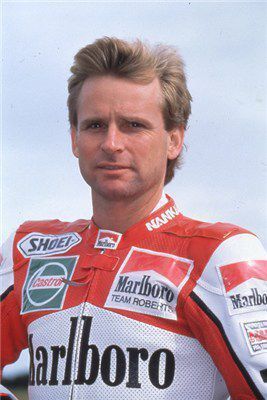
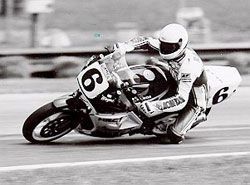
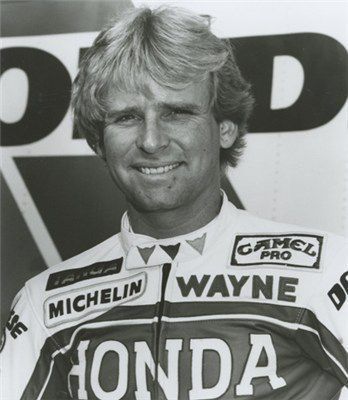
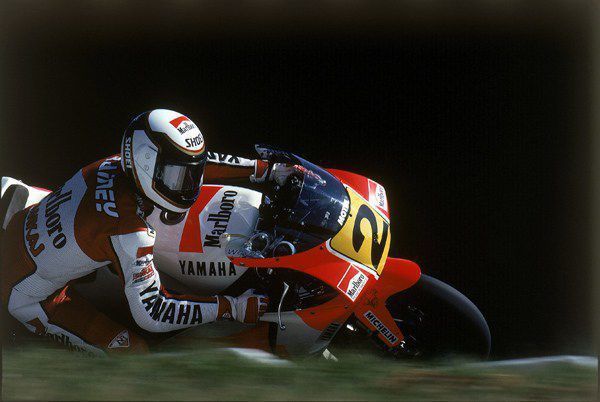
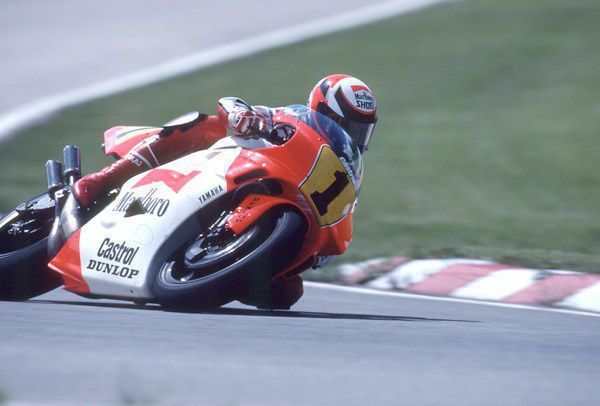
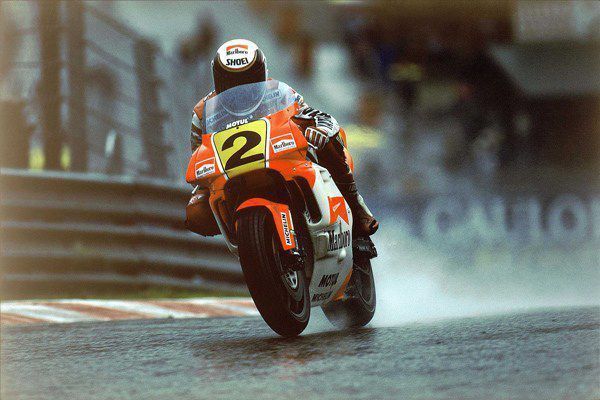
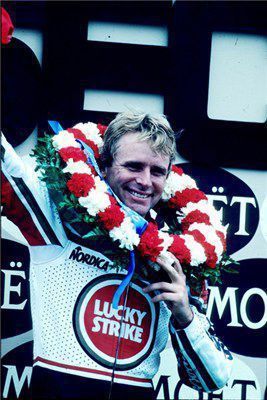
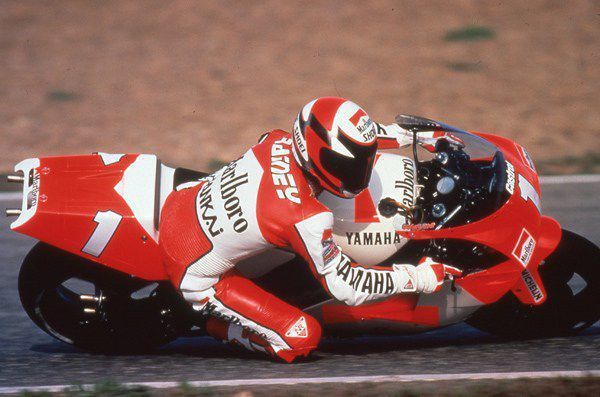
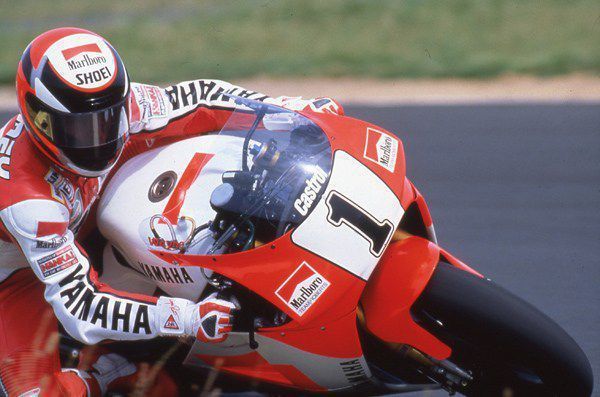
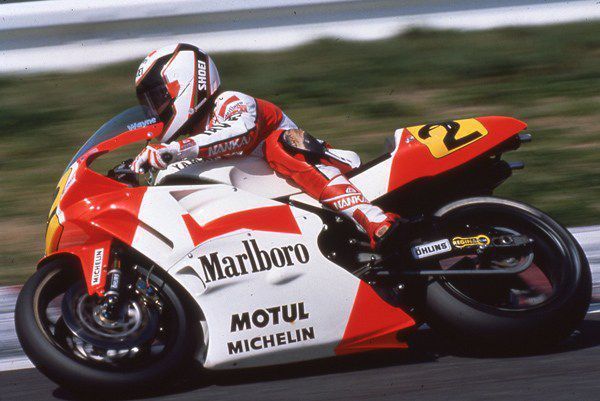
- 1990-92 500cc World Road Racing Champion - 1983 and 1987 AMA Superbike Champion - Founder and President of MotoAmerica professional road race series Wayne Rainey was the top 500cc Grand Prix rider of the early 1990s, winning three consecutive world championships with Yamaha during that time period. In addition to his accomplishments on the world championship level, Rainey was also a standout in AMA Superbike racing during the 1980s, winning that title in 1983 (riding for Kawasaki) and again in 1987 (riding for Honda). Rainey’s racing career ended abruptly after he was paralyzed in a crash while leading the Italian Grand Prix in September of 1993, but Rainey did not let his disability keep him down. He soon returned to the world championship circuit — this time as a successful team owner and manager — and he later went on to found and lead MotoAmerica, which critically revitalized professional road racing in the United States and forged a clear path for a new generation of American-born road racers to compete internationally. Born on Oct. 23, 1960, in the Los Angeles suburb of Downey, Calif., Rainey grew up in a racing family. His father, Sandy, was an avid go-kart racer, and some of Wayne’s earliest memories are of his father loading up the truck to go racing. By the mid-1960s, Rainey’s father began casually racing motorcycles. Wayne began riding a 50cc Honda minibike when he was 6 years old and he frequently attended races at the famous Ascot Park dirt track, where he became a big fan of local hotshoe David Aldana’s wild riding style. At the age of 9, Rainey — along with thousands of other kids in Southern California — began racing on the numerous circuits in the area. Rainey quickly progressed from minibikes to amateur dirt track racing before making the professional ranks in 1979, at the age of 18. Once on the AMA Grand National circuit, Rainey suffered from having less-than-competitive equipment. Rainey’s first Grand National finish was ninth in the ’79 Houston short track national in the Astrodome. Rainey continued to struggle in his rookie season before he was eventually sidelined with injuries. Rainey found more success in 1980, when he earned six top-ten Grand National finishes. That same season, Rainey also began competing in club-level road races with support from Kawasaki. Even though he had come up through the dirt-track ranks, Rainey was finding that his real talent was for racing on pavement. In 1981 Rainey won the novice 250 Grand Prix race at Loudon, N.H., aboard a factory Kawasaki. Kawasaki knew it had a real talent in Rainey and promptly signed him to race the AMA Superbike Series for 1982. Rainey would team with defending AMA Superbike champ Eddie Lawson, whom he had raced against and alongside as an amateur dirt track racer in Southern California. Rainey was immediately competitive in Superbike racing. He earned a fifth-place finish in his Superbike debut at Daytona, then garnered three straight third-place finishes in the following rounds. Rainey’s first national victory came at Loudon on June 19, 1982. In that race Rainey fought off a tough challenge from Honda’s Steve Wise (who crashed while battling for the lead) and beat teammate Lawson. Rainey was ecstatic after winning his first national. It would certainly not be his last. Rainey finished his rookie Superbike season third in the final standings behind teammate Lawson (who moved on to the world championships the next year) and Honda’s Mike Baldwin. Rainey came back strong in his second season of Superbike racing, winning six races and beating out Baldwin for the 1983 title. It was a pinnacle of Rainey’s career to that point, and the result — and the context — cemented his reputation as a generational talent: Kawasaki had beat out the high-dollar Honda effort and it had done so with a young, up-and-coming rider. Less than a week after he’d won the title, however, Rainey was given devastating news: Kawasaki was pulling out of Superbike racing. The reason was the economic recession of the early 1980s, when motorcycle sales had fallen off tremendously. Rainey, like so many other Americans during that time, found himself unemployed, a victim of corporate downsizing. Former World Champion Kenny Roberts, now a team owner, came to the rescue and offered Rainey a ride in the 250cc Grand Prix World Championships. Unfortunately for Rainey, the GP ride was premature. He labored on a nearly stock Yamaha and only managed eighth in the championship, with a season-best finish of third. Longing to return to America, Rainey took an offer to ride Hondas in the 1985 AMA Formula One and 250 Grand Prix Series with MacLean Racing. Rainey suffered through an injury-plagued season and, despite winning multiple races in both classes, managed only eighth in the Formula One standings and third in 250 GP. Rainey got a break when he was signed with the factory Honda team to ride AMA Superbike and F-1 in 1986. Rainey won six of the nine Superbike races (including five wins in a row, which remained a record until it was broken by Miguel Duhamel in 1995), yet was still edged out by Honda teammate Fred Merkel, who had been consistent all year while Rainey crashed out at Mid-Ohio. Rainey finally won his second AMA Superbike title in 1987. That was the year the epic battles began between himself and the young Kevin Schwantz. The intense rivalry started in England during the Trans-Atlantic Match Races and continued through the entire 1987 AMA Superbike season. Many considered the rivalry between Rainey and Schwantz to be the best-ever in AMA Superbike history. After winning that year’s Superbike title, Rainey returned to his first love and strapped on a steel shoe in October of 1987, riding to a fourth-place finish at the Sacramento Mile AMA Grand National. That would be his final appearance in an AMA national. Rainey went back to the World Championships in 1988, this time in the premier 500cc class, once again riding for Team Yamaha Roberts. He earned his first World Championship victory that year with a win at Donington Park in England, and he went on to place third in his debut season in the 500cc class. The next year Rainey took three GP wins and finished runner-up in the championship to his former teammate, Eddie Lawson. The dawning of a new decade saw Rainey winning the opening round of the 500cc Grand Prix series at Suzuka, Japan. It proved to be the beginning of a three-year reign as the top rider in the world. He won the three world titles (1990, ’91 and ’92) at a time when the field was loaded with talented riders, including Lawson, Freddie Spencer, Wayne Gardner, John Kocinski, Michael Doohan and of course, his arch-rival, Kevin Schwantz. In all, Rainey went on to win 24 world championship races during his six seasons on the circuit. Rainey was well on his way to his fourth consecutive title in 1993. He was leading the championship points chase as well as leading the GP when he suffered his career-ending crash at Misano, Italy, leaving him paralyzed from the chest down. Rainey’s crash led to a comprehensive re-evaluation of Grand Prix racetrack safety, eventually leading to the complete redesign of gravel traps and curbing to better protect fallen riders. Rainey wasn’t away from the World Championship for long. He returned to the series the very next season to manage his own Grand Prix effort, Yamaha Marlboro Team Rainey. Despite fierce competition from the dominant Mick Doohan/HRC effort, Team Rainey — Yamaha’s primary factory-supported effort during those years — built a reputation for developing elite talent in the premier 500cc class, including such riders as Luca Cadalora, Loris Capirossi, Norifumi Abe, and Sete Gibernau. Under Rainey’s guidance, Cadalora became the most successful Yamaha rider of the mid-1990s and one of the only consistent threats to Doohan’s dominance. Rainey held the role of team manager through 1998, when he decided to step away from the World Championship circuit to spend more time with his family. Rainey remained mostly out of the spotlight for the next 15 years, until 2014 when he made a very high-profile return to racing in America as the founder and president of the MotoAmerica professional road racing championship. Launching MotoAmerica was more than just a smart business venture for Rainey. It was a personal mission to revive professional road racing in the United States, during a critically low period in both factory participation and fan interest. Collaborating closely with former Team Roberts manager Chuck Aksland, Rainey’s original plan was to create a simple “talent cup” program to identify young American riders who might be well suited for international competition. After Rainey and Aksland pitched their idea to Dorna (the rights holder for MotoGP), however, the pair was asked instead if they might be interested in taking over the entire U.S. national series — which was then struggling under declining interest, disinterested management and more symptoms of general malaise. Working with three partners (including Aksland), Rainey’s group was able in 2014 to acquire the commercial rights to the AMA Superbike Series, which was rebranded MotoAmerica, completely reconfigured with a new rulebook and new race calendar, and relaunched just six months later, in 2015. After securing sanctioning from both the AMA and the FIM ( the international governing body), MotoAmerica immediately aligned its technical rules with FIM World Superbike standards, a decision that made racing in America easier and cheaper for manufacturers, and then created new racing classes that defined a clear pathway from entry-level racing to elite-tier superbike competition, leading to a large increase in participation from manufacturers and riders both. As of 2026, MotoAmerica has seen a nearly 100-percent increase in viewership and has successfully recreated a ladder system similar to what Rainey climbed to the top step of the world championship more than three decades earlier. Re-establishing the priority and prominence of American professional road racing on the global stage may just be Rainey’s most impactful contribution to the sport yet. It’s little wonder that the FIM named him an official Grand Prix Legend in 2000, and the AMA Motorcycle Hall of Fame bestowed its “Legend” status on Rainey in 2015. Both honors are extremely well deserved.Category
Class of 1999