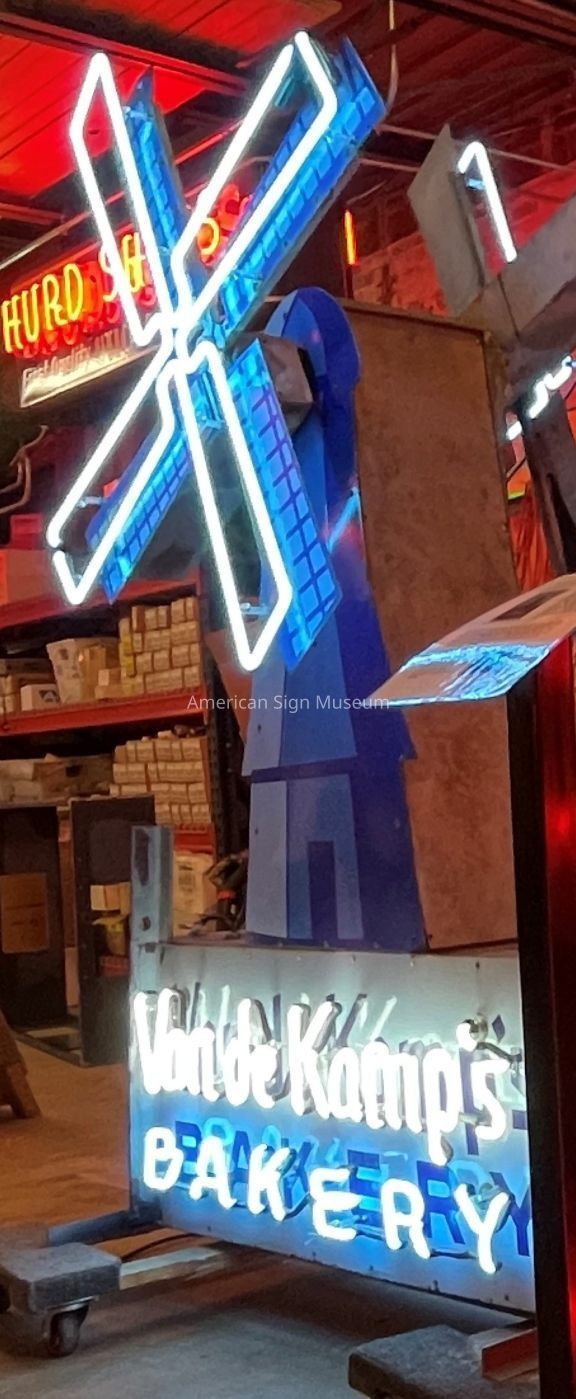
Van de Kamp's Porcelain Neon Windmill Sign
Name/Title
Van de Kamp's Porcelain Neon Windmill SignEntry/Object ID
2008.0006.0001Description
Double-faced, projecting die-cut porcelain enamel neon sign features windmill with rotating blades. This was a production sign made for the chain of bakeries that began in California.Context
The bakery was founded in 1915 by Theodore de Kamp and his brother-in-law, Lawrence L. Frank. The business was located at 236 ½ South Spring Street where it sold potato chips, but converted to bakery items to due to a potato shortage in 1916. The company opened its first retail store in 1921, which was also when the “Dutch Windmill” icon was introduced. By the 1930s, the store had grown into a chain that had 95 locations throughout the Los Angeles area. While they experienced success for many years, and in 1956, Theodore Van de Kamp died, Lawrence L. Frank retired, and the company was sold. It changed owners a handful of times before it permanently closed all remaining locations in 1990. Little remains of the iconic windmill throughout Los Angeles since most were specifically built at some of LAs busiest intersection making redevelopment very lucrative and desirable.Collection
Permanent CollectionCategory
Porcelain Enamel — Neon-illuminated, Signs/Displays
Signs/Displays