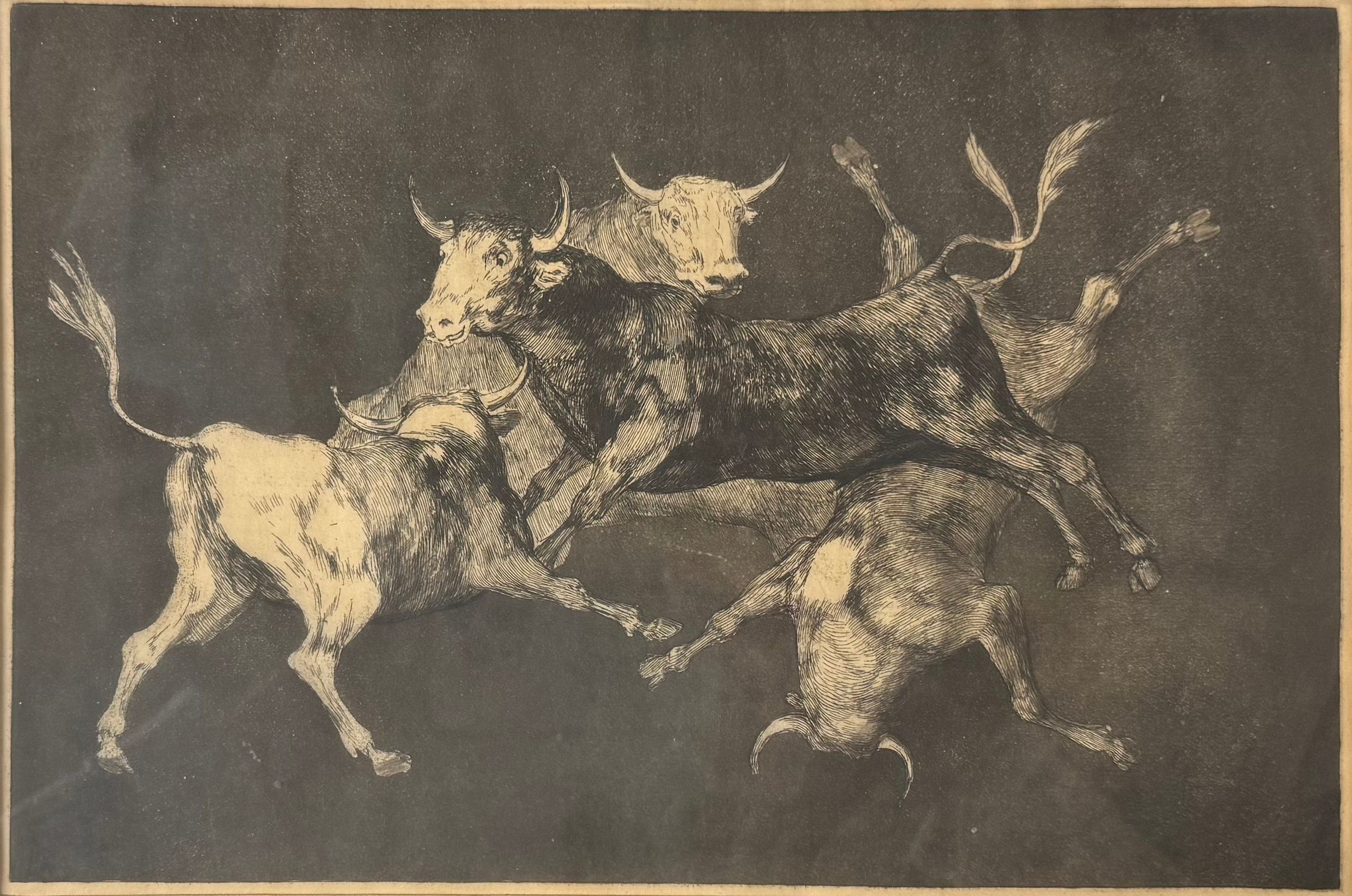
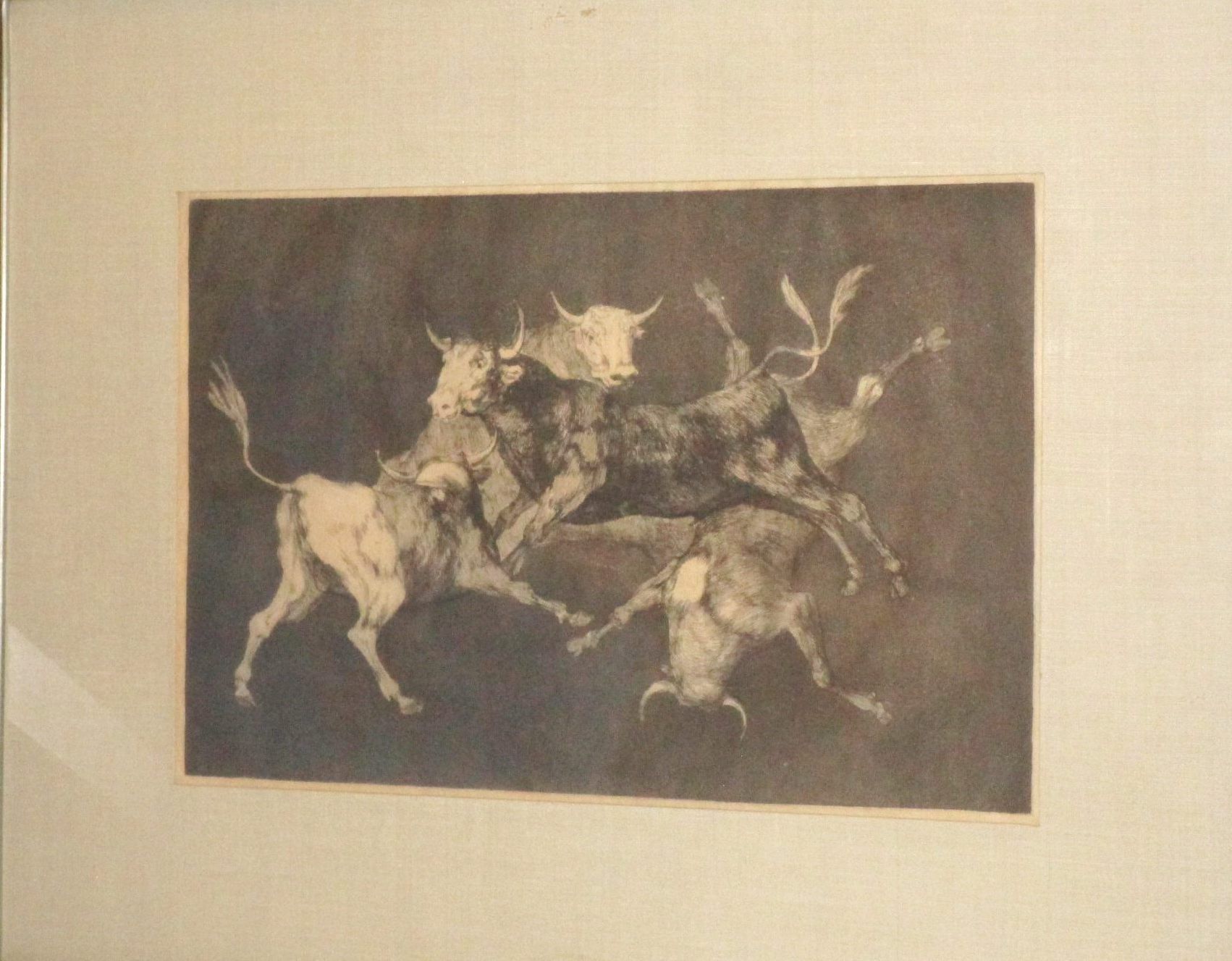
Al Toro y al Aire Darles Calle (Lluvia de Toros)
Print

Object ID: CNGQS

Private Collection

Al Toro y al Aire Darles Calle (Lluvia de Toros)
Overview

Description

One of the additional plates for Los Proverbios, trial proof before letters

Made/Created

Artist

Francisco de Goya

Date made

circa 1824

Dimensions

Dimension Description

Plate

Height

8-1/2 in

Width

12-5/8 in

Location

Morrison Gallery Storage

Valuations

Valuation Type

Appraisal

Value

$10,000.00

Estimator

Sotheby's

Date

Oct 16, 2026

General Notes

Note Type

AI search

Note

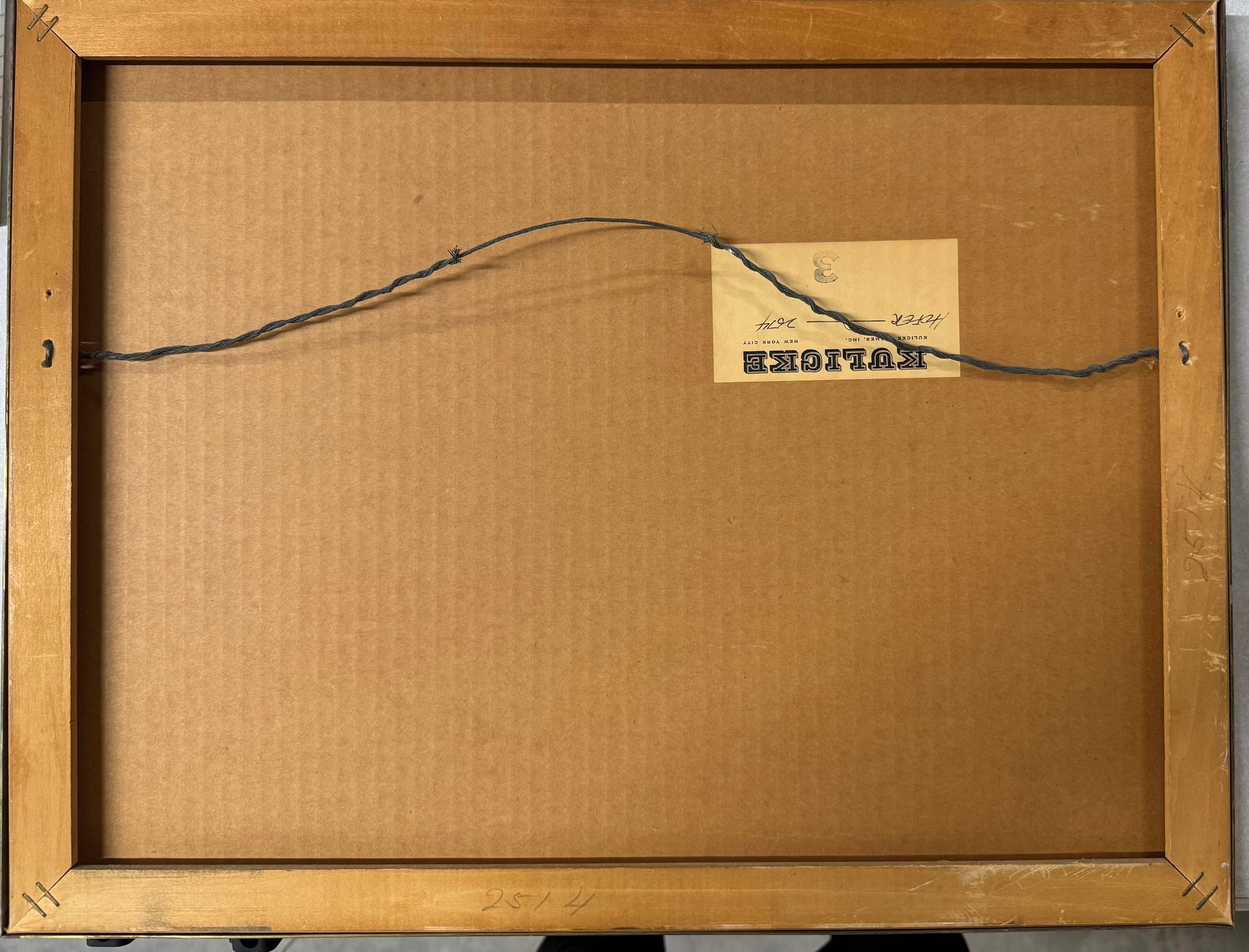
X Specifically, this piece is titled "Disparate de toritos" (Folly of Little Bulls), also known as "Lluvia de toros" (Rain of Bulls). It is one of the four "additional" plates from Goya’s enigmatic Los Disparates (The Follies) series. Why this is a special piece The notations on the back now make perfect sense in this context: The "HOFER" Connection: The name written on the back likely refers to Philip Hofer (1898–1984). He was a world-renowned curator at Harvard and one of the preeminent collectors of Goya's prints in the 20th century. He even wrote the introduction to major volumes on Goya’s etchings. Having his name on the label suggests this print may have once been part of his collection or a gallery specializing in his acquisitions. The Subject Matter: This particular image is famous for its surrealism—bulls floating and tumbling in a dark, empty void. It was created between 1815 and 1819 but was not published until 1877 (after Goya's death) by the journal L'Art. The Kulicke Frame: As mentioned before, Robert Kulicke was the framer of choice for the elite art world in NYC. A Goya print from the Hofer collection housed in a custom Kulicke frame is a very high-pedigree combination. Provenance and Value The numbers etched into the frame (2514 and 2674) are likely gallery stock numbers or inventory codes from the collection. Important Note on Authenticity: Goya’s plates were used for several editions over the decades. First Edition (1877): These were printed in Paris by François Liénard for the magazine L'Art. They are highly sought after. Later Editions: The plates were later printed again in the early 20th century. Given the "Hofer" name and the high-end Kulicke framing, there is a strong possibility this is an authentic 19th-century or early 20th-century impression. You should have this appraised by a specialist in Old Master prints.