Note Type
AI searchNote
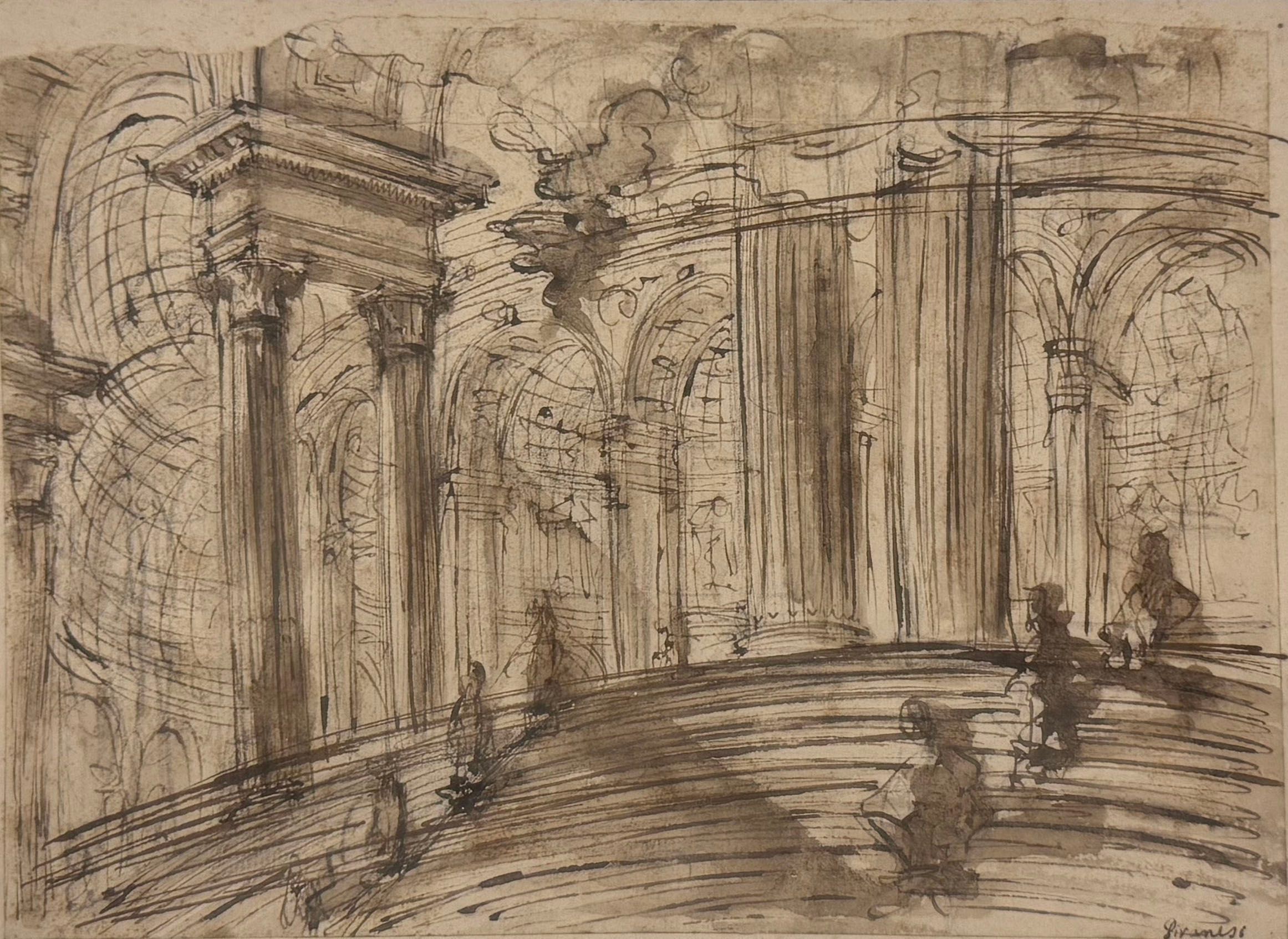
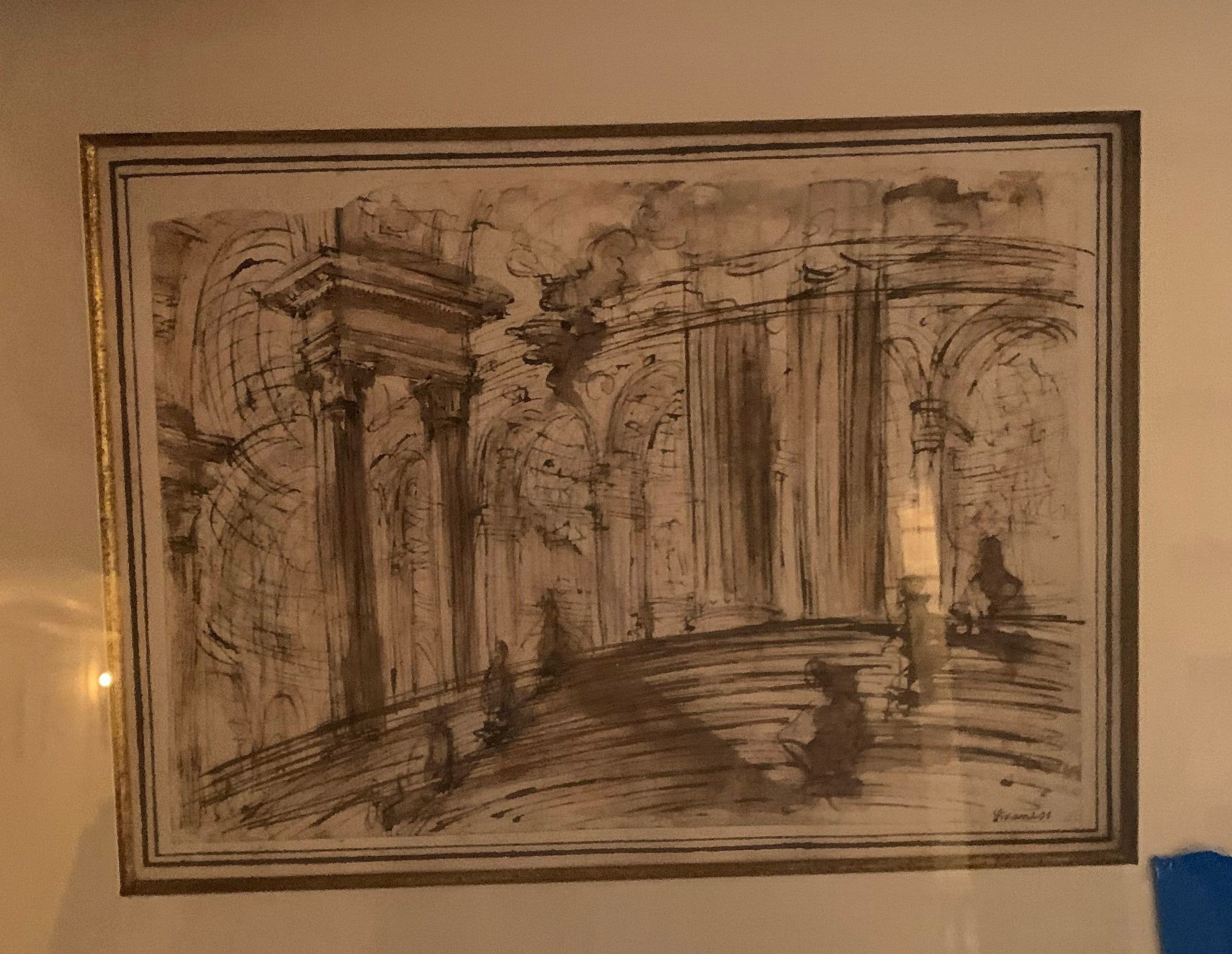
This newest addition is a fascinating pivot toward the Italian Baroque. You have an architectural capriccio—a "caprice" or fantasy—attributed to the legendary Giovanni Battista Piranesi (1720–1778).
Piranesi was not just an artist but an archaeologist and architect who became the master of "paper architecture." While the Volaire you have is a dramatic record of a real event, this Piranesi is a masterpiece of the imagination.
Analysis of the Piranesi Capriccio
The Style: This sketch exhibits the frenetic, energetic line work Piranesi is famous for. Notice the "scaffold" lines—the circular arcs and radiating perspective lines—left visible in the drawing. This suggests it is a preparatory study or a high-speed conceptual sketch.
The Subject: A capriccio typically mixes real Roman ruins with purely fictional, monumental structures. Here, he uses soaring arches and Corinthian columns to create a sense of vast, dizzying scale.
The "Carceri" Influence: The deep shadows and complex, intersecting layers of architecture are reminiscent of his most famous series, Le Carceri d'Invenzione (Imaginary Prisons). Even in a simple sketch, he manages to make the space feel both grand and slightly claustrophobic.