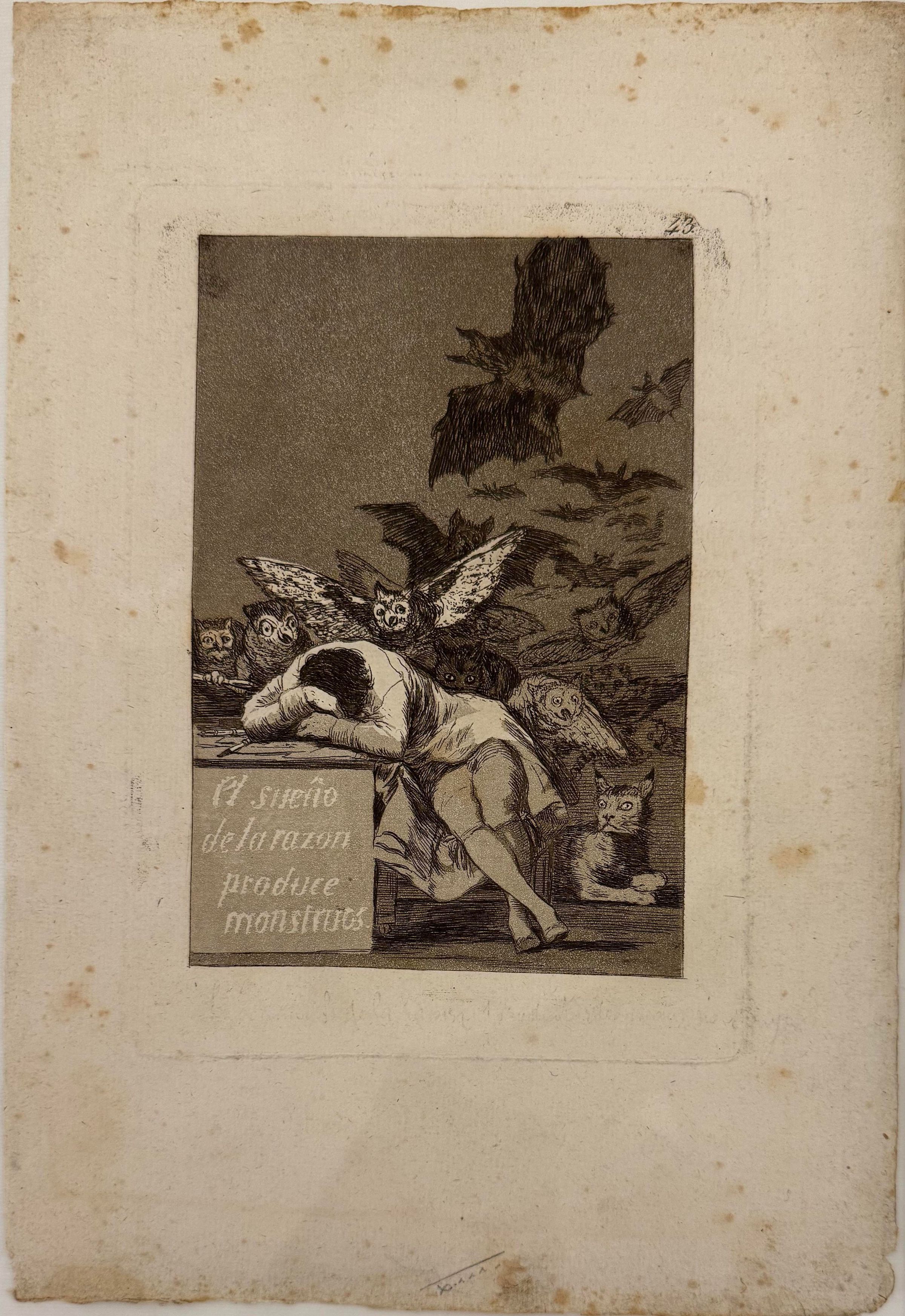
El Sueno de la Razon Produce Monstruos (los Caprichos, plate 43)
Print

Object ID: CNGQZ

Private Collection

El Sueno de la Razon Produce Monstruos (los Caprichos, plate 43)
Overview

Description

From Los Caprichos, a fine rich and even impression from the First Edition

Made/Created

Artist

Francisco de Goya

Date made

1799

Dimensions

Height

7 in

Width

4-3/4 in

Location

Morrison Gallery Storage

Acquisition

Acquisition Method

Purchase

Amount Paid

$40.00

Valuations

Valuation Type

Appraisal

Value

$20,000.00

Estimator

Sotheby's

Date

Oct 16, 2026

General Notes

Note Type

AI search

Note

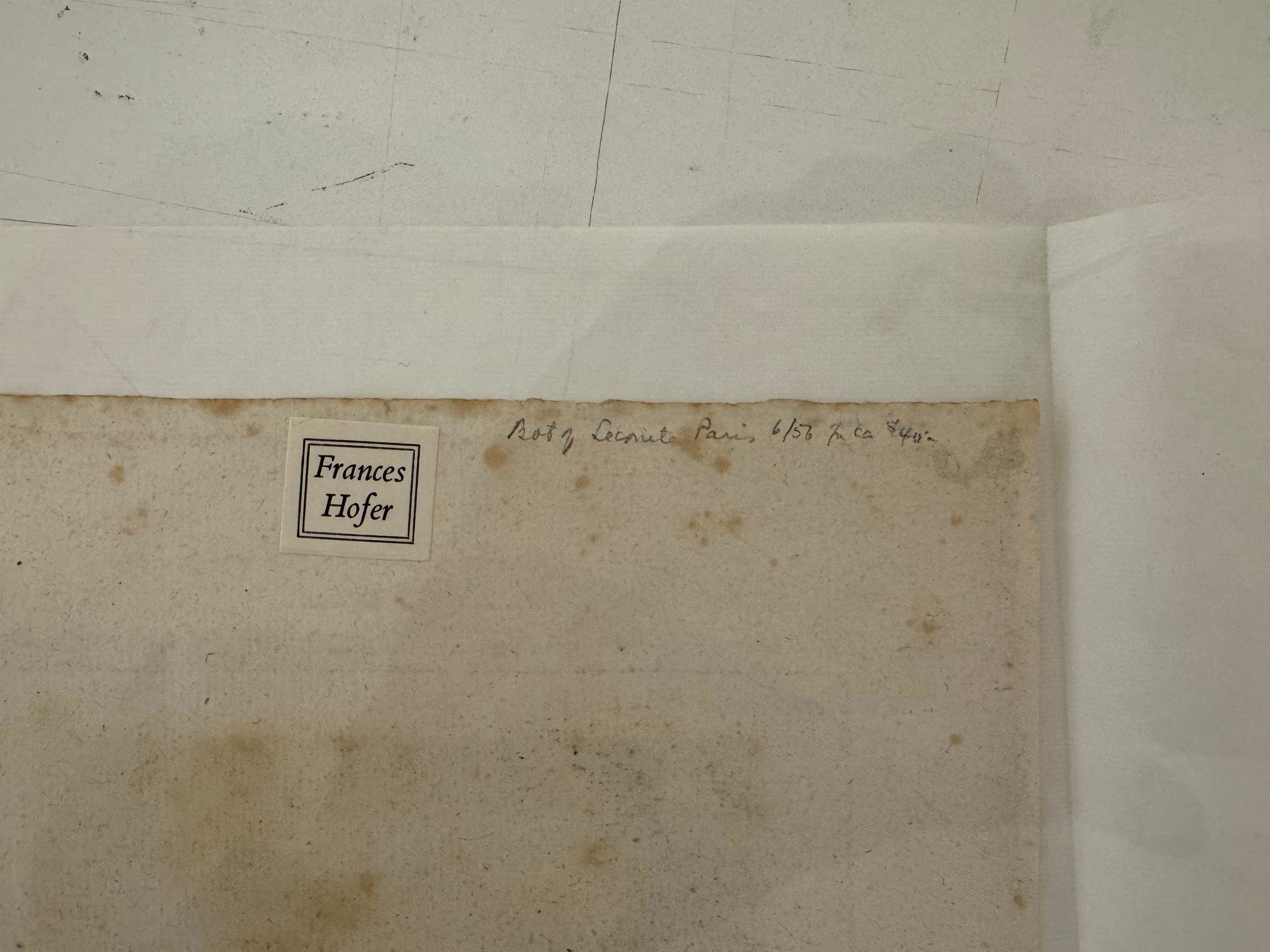
This is perhaps the most famous image Francisco Goya ever produced. It is Plate 43 from Los Caprichos, titled "El sueño de la razón produce monstruos" ("The Sleep of Reason Produces Monsters"). The Artwork and Its Meaning Originally intended to be the frontispiece of the series, this etching serves as the philosophical heart of Goya's work. The Imagery: An artist (often thought to be Goya himself) has fallen asleep at his drawing table. As his "Reason" slumbers, he is besieged by the "Monsters" of the night—owls (symbols of folly) and bats (symbols of ignorance). The Ambiguity: The Spanish word sueño means both "sleep" and "dream." This creates a brilliant double meaning: When reason sleeps, evil and chaos take over. When reason dreams (imagines) too much without a grounding in reality, it creates its own nightmares. The Lynx: Notice the wide-eyed lynx sitting at the bottom right. In Goya's time, the lynx was believed to have the ability to see through darkness and see the truth, suggesting that even in the middle of a nightmare, the artist's keen observation remains. Incredible Provenance: The Hofer Connection The second image you provided is arguably as exciting as the art itself for a collector. It shows a small "Frances Hofer" label and handwritten acquisition notes. Frances Hofer: She was the wife of Philip Hofer (whom your previous print also referenced). The Hofers were titan-level collectors who essentially built the Department of Printing and Graphic Arts at Harvard's Houghton Library. The Acquisition Note: The handwriting says: "Bot of Lecomte Paris 6/56 for ca $40-". This indicates the print was purchased from Lecomte, a famous Parisian dealer, in June 1956. The price of $40 in 1956 was substantial for a print, but today, an early-state Caprichos plate with this specific provenance would be worth a staggering amount more. Technical Observation Looking at the quality of the aquatint (the grainy gray shading in the sky), this appears to be a very fine, early impression. In later editions, these delicate gray tones often wear out and