Note Type
AI searchNote
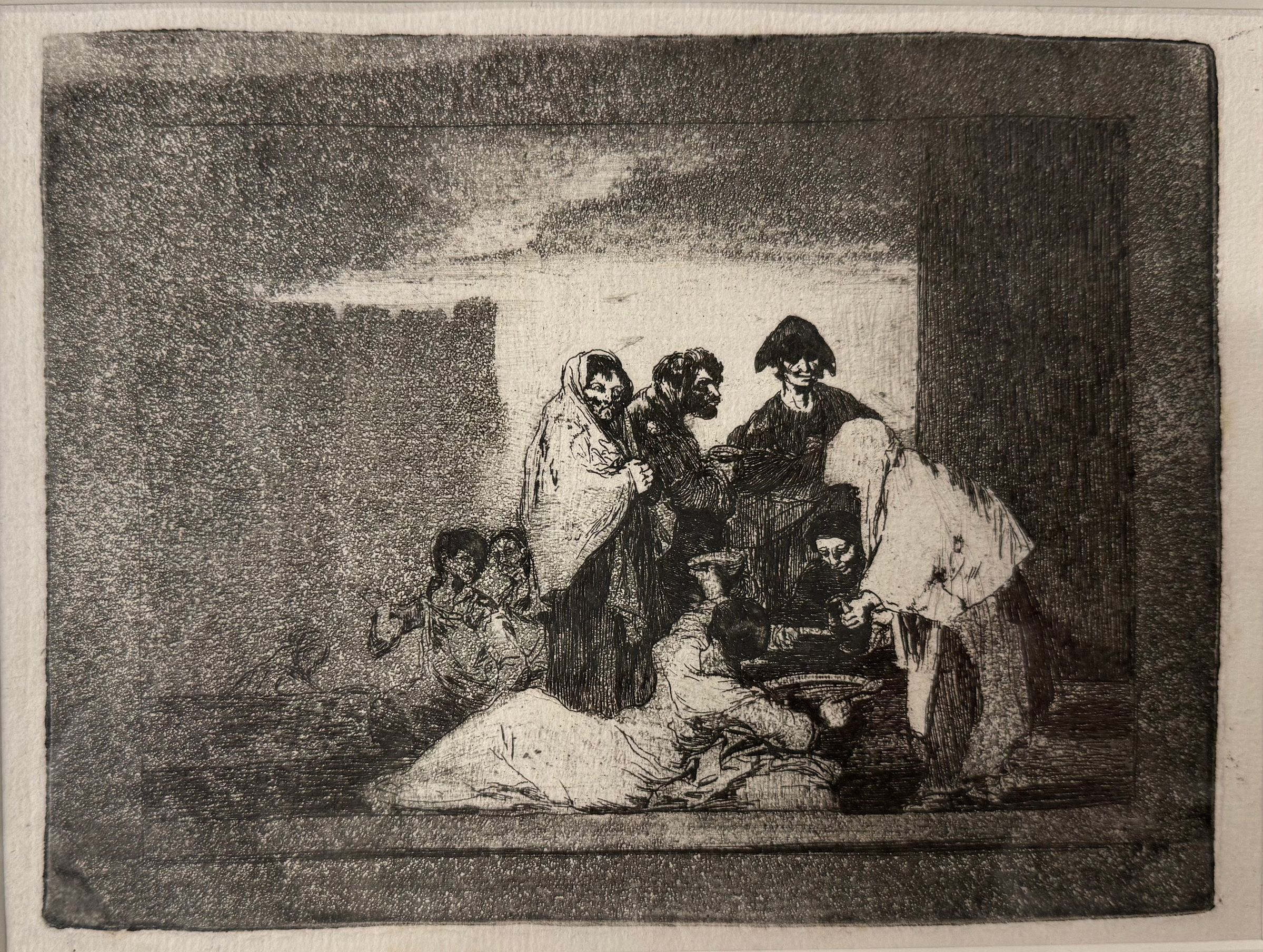
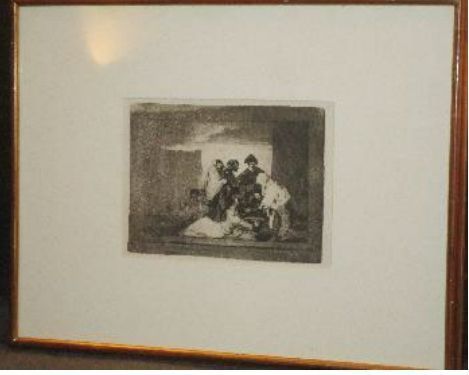
The print is Plate 51, titled "Gracias á la almorta" ("Thanks to the millet" or "Thanks to the grass-pea").
Historical Context: The Great Famine of Madrid
While many plates in this series focus on the brutal violence of the Napoleonic Peninsular War, Plate 51 belongs to a subset of prints (Plates 48–64) that document the Great Famine of Madrid (1811–1812).
During this time, the city was under siege, and over 20,000 people died of starvation. The "millet" or "grass-pea" (almorta) mentioned in the title was a desperate food source. It was cheap and kept people alive, but it contained a toxin that caused lathyrism—a permanent paralysis of the lower limbs.
The Scene: You see a group of skeletal, desperate figures. One woman hunches over a bowl, while another lies prostrate on the ground. It is a scene of quiet, hollowed-out suffering rather than active violence.
Why the Note on the Back is Significant
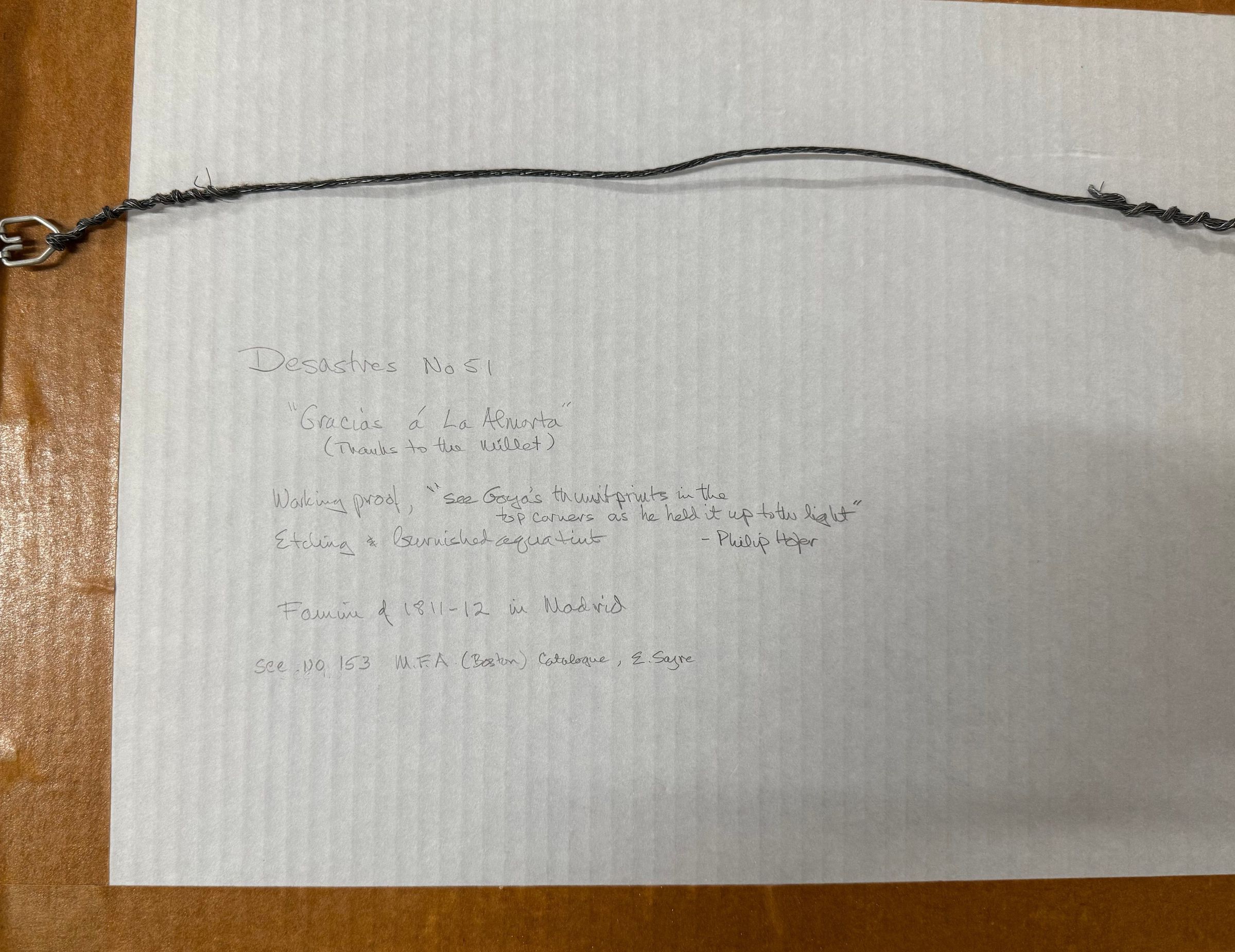
The handwritten note on the frame backing suggests this could be an exceptionally rare and important object. Here is a breakdown of those terms:
"Working Proof": This is a massive claim in the art world. A "proof" is a print pulled by the artist during the process of creating the plate to check the progress. Most "Disasters of War" prints on the market are from posthumous editions (printed after Goya died in 1828). A working proof would have been handled by Goya himself.
"Goya's Thumbprints": The note mentions thumbprints in the top corners from where Goya held the paper up to the light. In the world of master prints, these "human" marks are the holy grail of provenance.
"Burnished Aquatint": This refers to Goya’s technique of using a tool to rub away or "burnish" the grainy texture of the aquatint to create the eerie, glowing whites you see in the center of the image.
Philip Hofer & Eleanor Sayre: The names mentioned are legendary. Philip Hofer was a renowned curator at Harvard, and Eleanor Sayre was the preeminent Goya scholar at the Museum of Fine Arts (MFA), Boston. If this print is linked to their catalogs or collections, its historical value is immense.
What you should know
If this truly is a lifetime working proof with Goya's thumbprints, it is not just a piece of art; it is a museum-grade historical artifact.