Identification and Subject
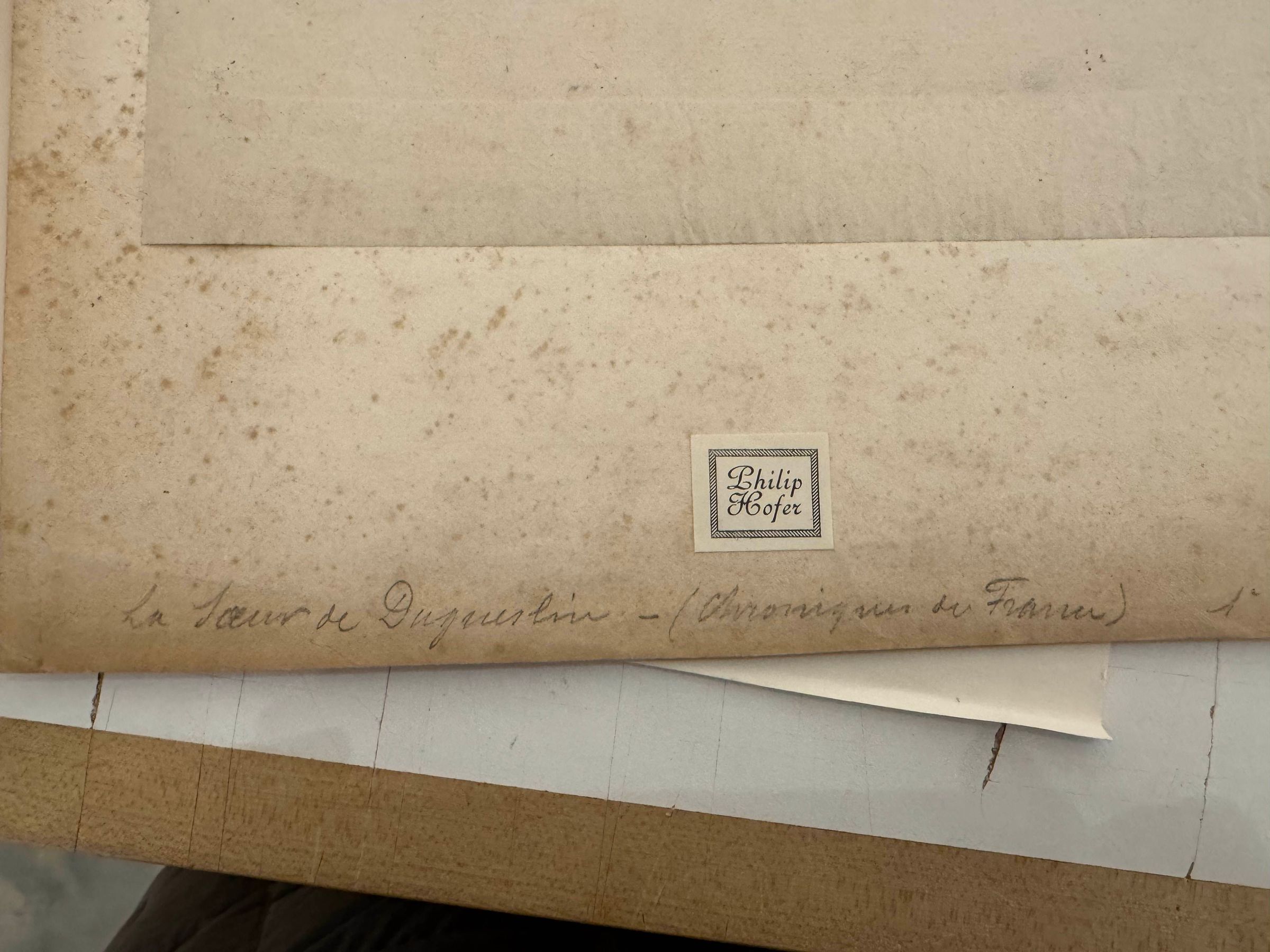
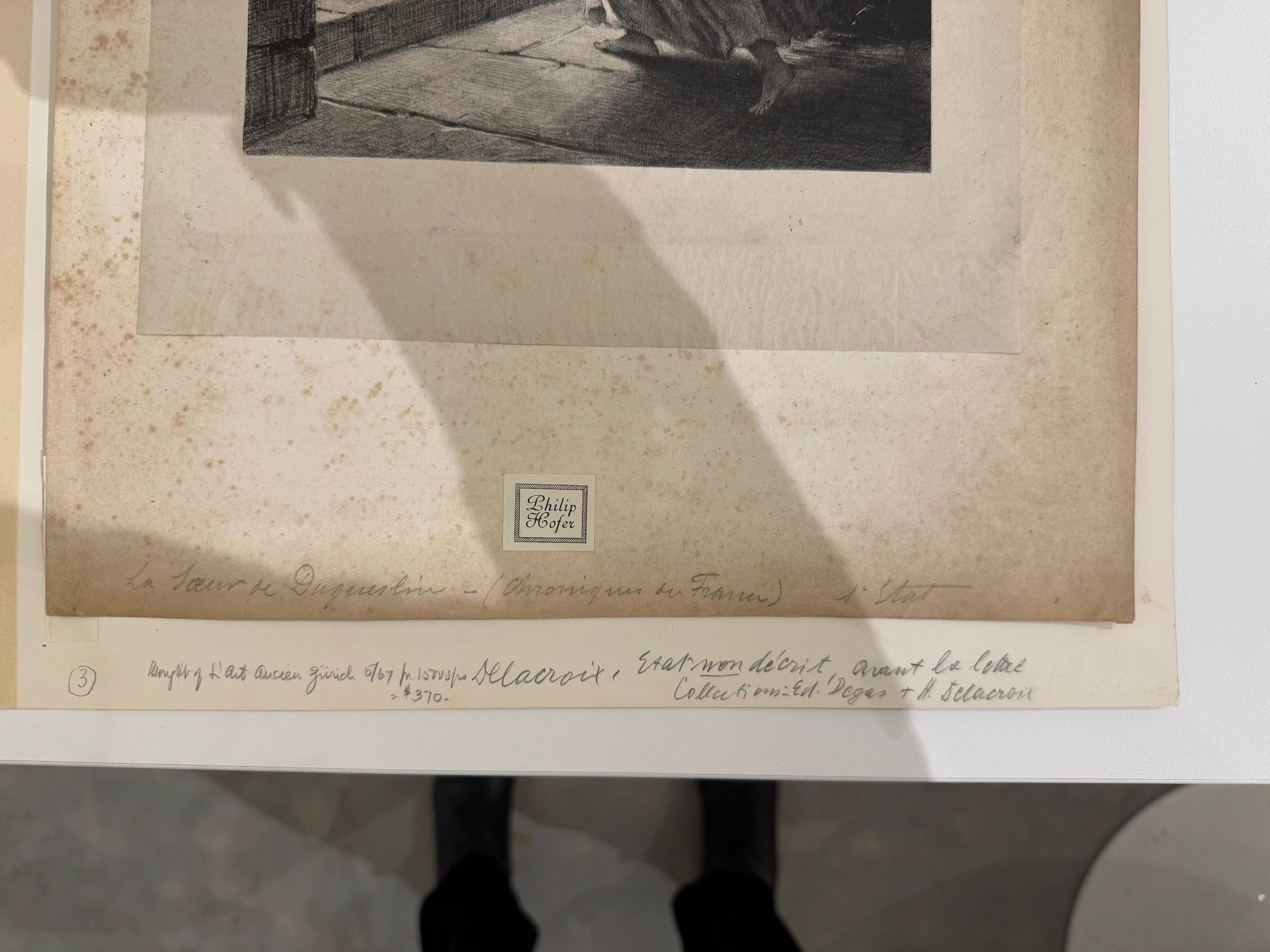
The pencil inscription at the bottom left reads: "La Sœur de Duguesclin" (The Sister of Du Guesclin).
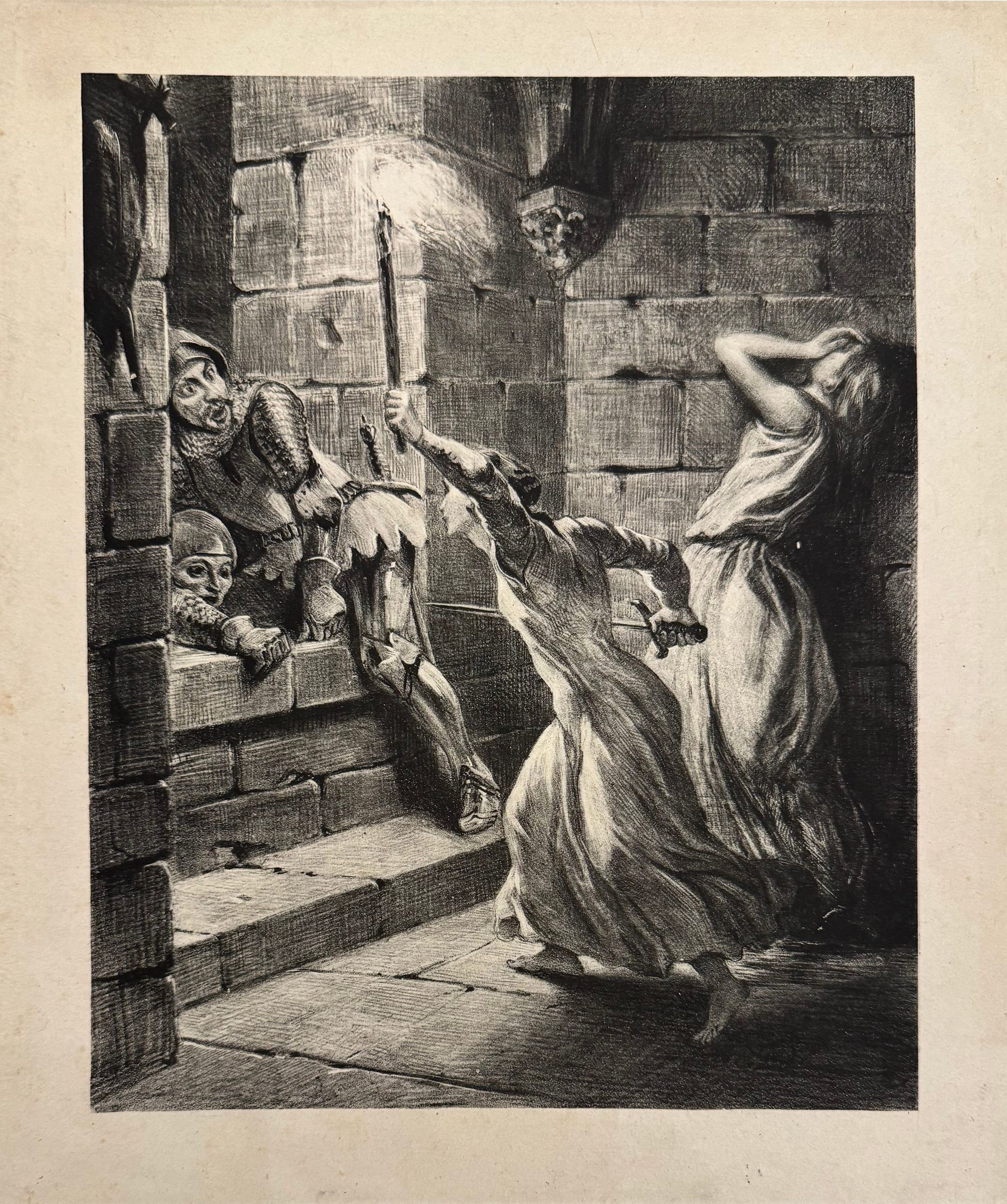
This refers to a legendary episode involving the sister of the 14th-century French knight Bertrand du Guesclin. According to the story, during a siege, his sister defended their castle against English soldiers who tried to enter through a window or secret passage. She is often depicted as a heroic, warrior-like figure who used her wits and whatever weapons were at hand to repel the invaders.
The Annotations
The notes on the mount are a goldmine for an art historian or collector:
Philip Hofer Stamp: This is the mark of a famous 20th-century curator and collector who founded the Department of Printing and Graphic Arts at Harvard's Houghton Library. Having his mark suggests this print has a distinguished pedigree.
"1er Etat" (First State): This indicates the print is from the earliest stage of the lithographic stone, before later changes or the addition of printed titles ("avant la lettre").
"Collection Ed. Degas + H. Delacroix": This is a remarkable claim. It suggests the print was once owned by the famous Impressionist Edgar Degas (who was an avid collector of Delacroix) and perhaps Henri Delacroix (a descendant or relative).
"Etat non décrit": This means this specific version or "state" of the print was not recorded in the standard catalogs of Delacroix's work at the time the note was written, making it quite rare.
Artistic Style
Delacroix was a leader of the Romantic movement, and you can see it here in the raw energy and dramatic lighting. Unlike the more polished Neoclassical style of his time, Delacroix used "painterly" lithography to create movement and emotional intensity.
This is a significant piece of art history. Given the mention of the Degas collection and the Philip Hofer provenance, it may have substantial historical and market value