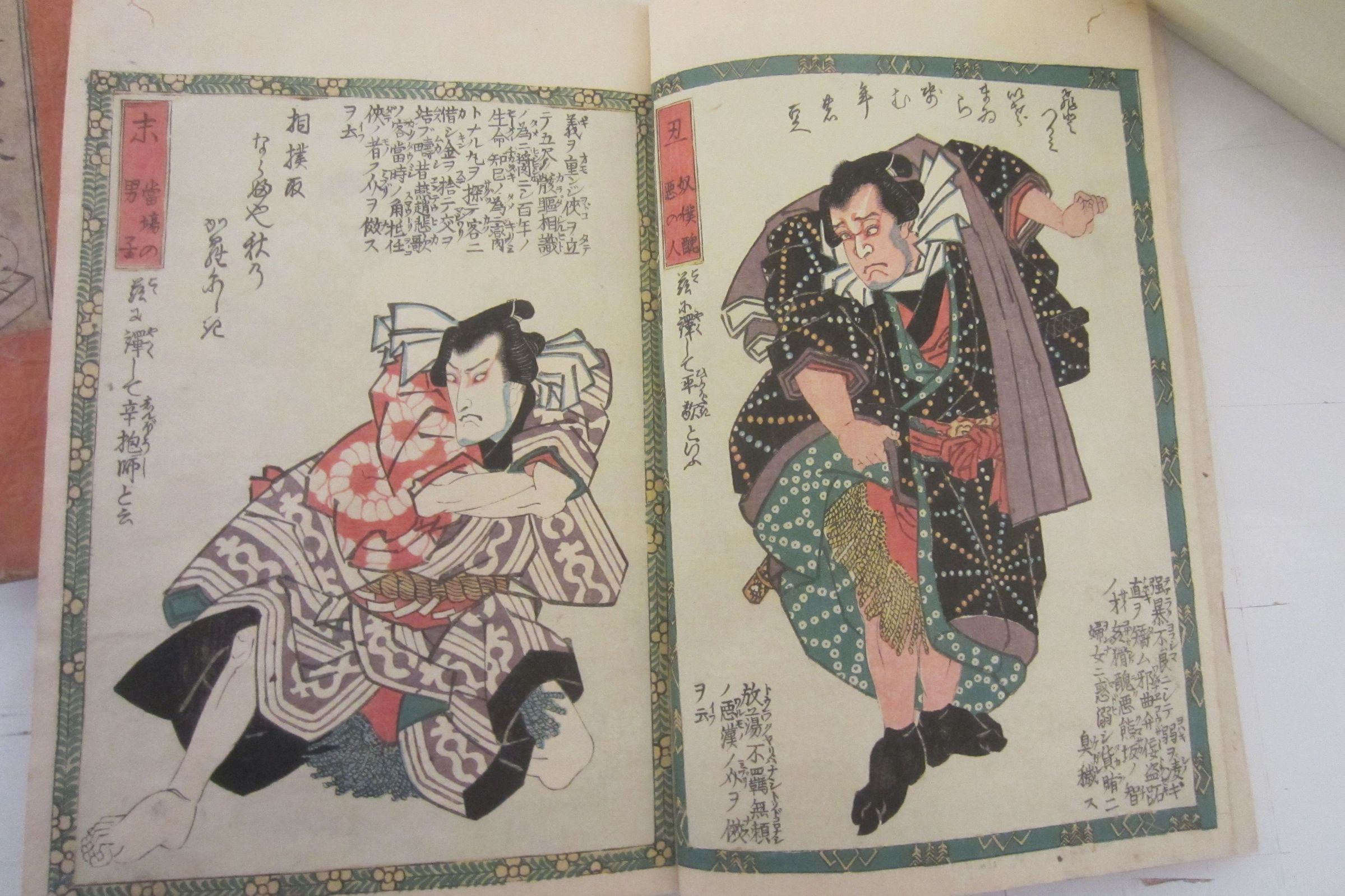
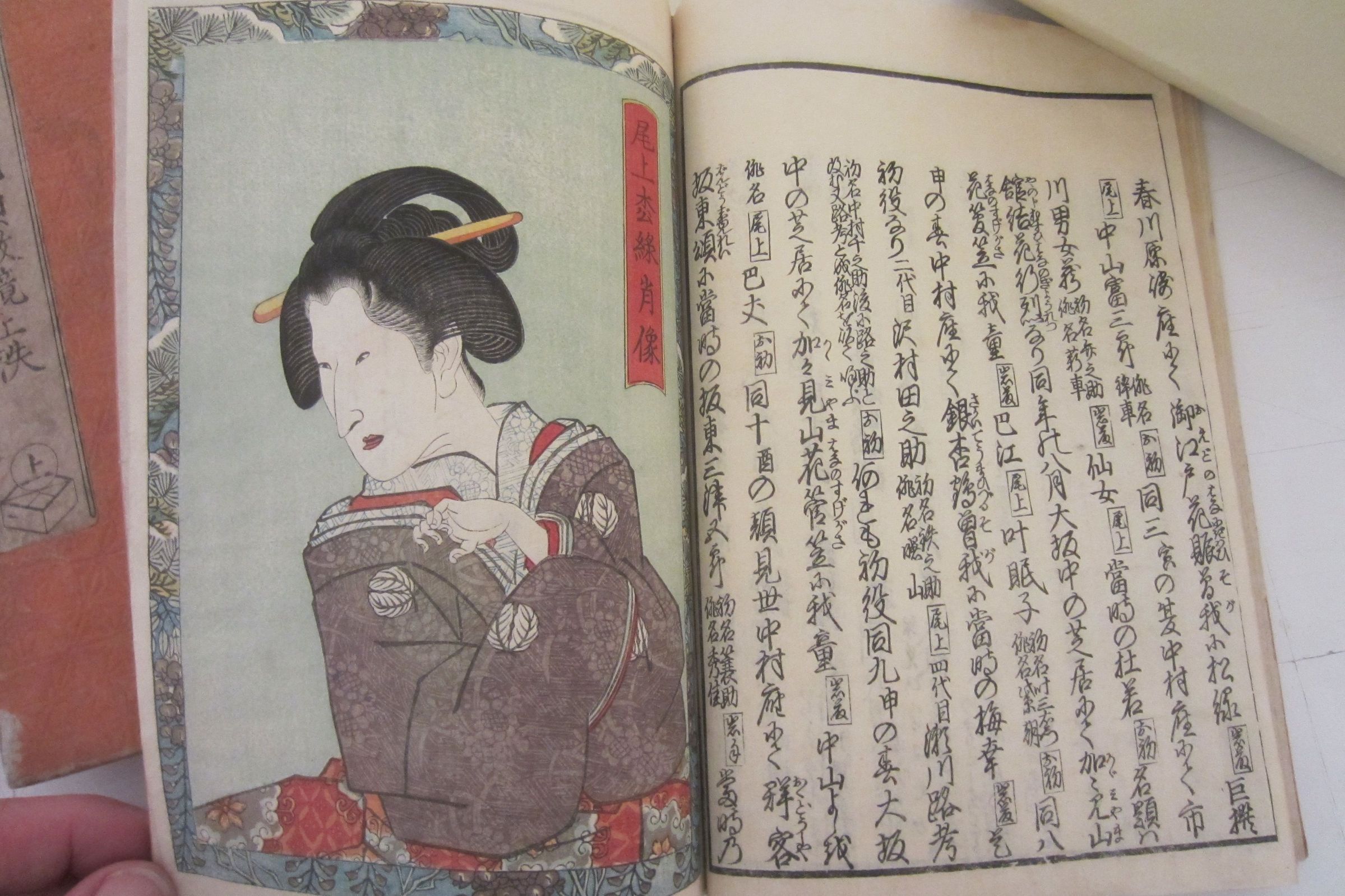
The book pictured is a very fine example of an E-hon (illustrated book) by one of the most prolific and commercially successful artists of the Edo period: Utagawa Kunisada (also known as Toyokuni III).
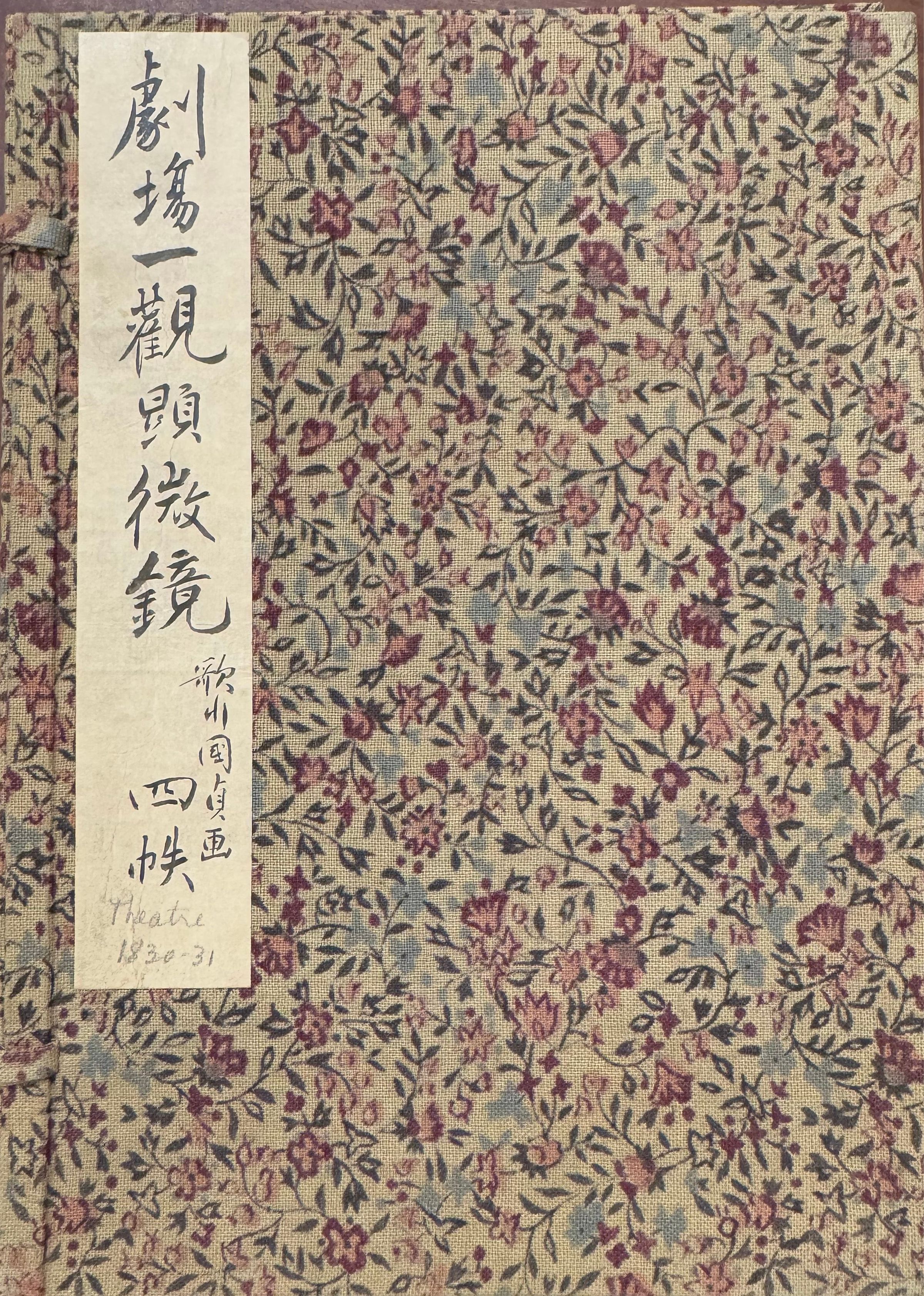
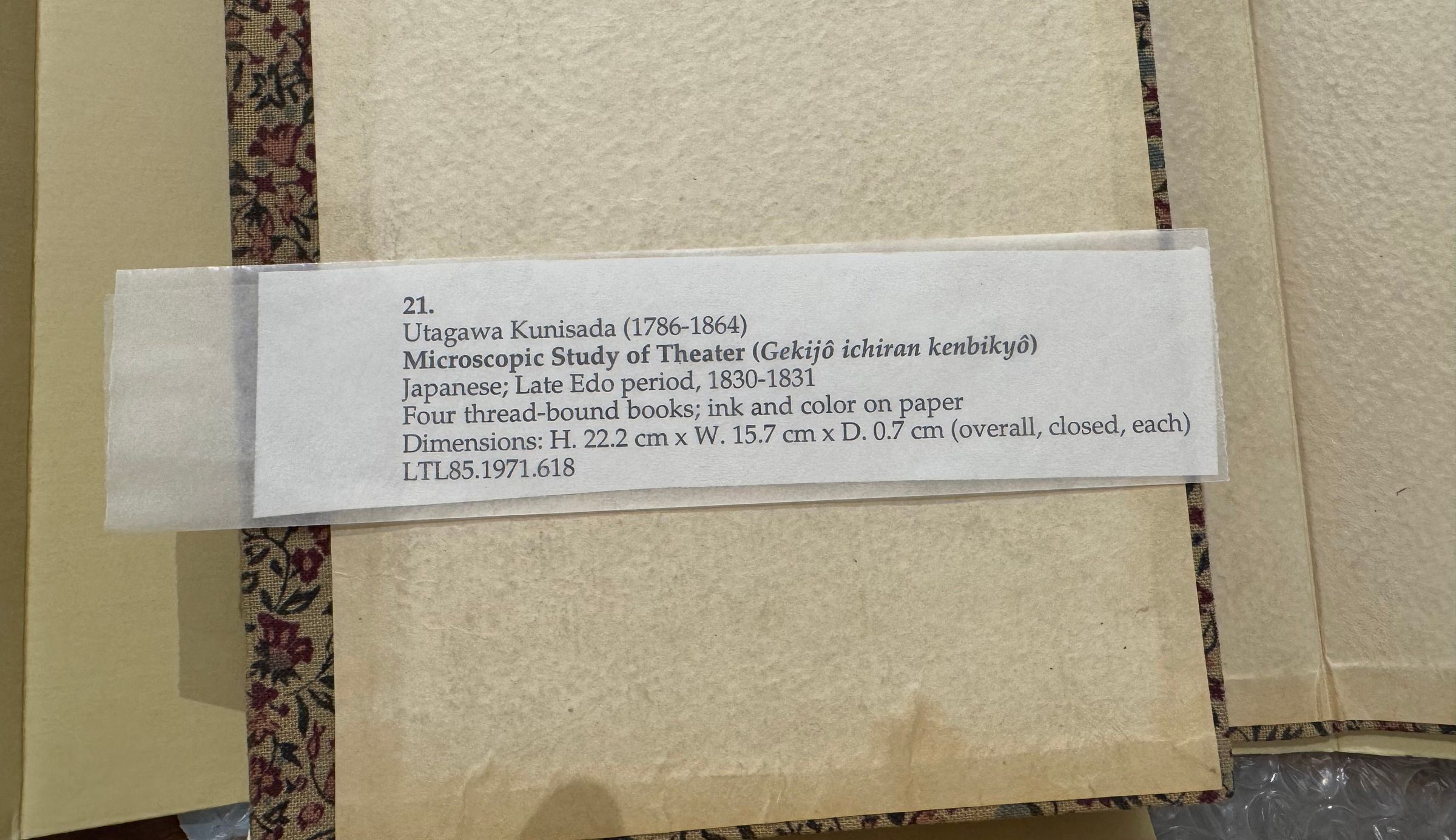
Book Identification: Gekijō Ichiran Kenbikyō
The title strip (daisen) on the cover reads Gekijō Ichiran Kenbikyō (劇場一覧顕微鏡), which translates to "Microscopic Study of the Theater" or "The Theater at a Glance through a Microscope."
The Artist: Utagawa Kunisada (1786–1864) was the "rockstar" of the Ukiyo-e world. While Hiroshige was famous for landscapes, Kunisada owned the market for Yakusha-e (actor prints).
The Date: 1830–1831. This was the height of the Bunsei/Tenpō eras, a time when Kabuki culture was at its most decadent and popular before the strict Tenpō Reforms attempted to curb such "luxury."
The Format: This is part of a four-volume set (Yon-shatsu as noted in the calligraphy). The covers are bound in a beautiful floral patterned fabric, which is a sign of a high-quality "deluxe" edition.
What’s Inside?
A "Microscopic Study" doesn't mean it's about biology; in the Edo period, the "microscope" was a metaphor for a deep, behind-the-scenes look. These books typically contain:
Actor Portraits: Intimate, highly stylized depictions of famous Kabuki stars in their most famous roles.
Backstage Life: Rare glimpses into the dressing rooms (gakuya), showing how actors applied their elaborate kumadori makeup and donned heavy wigs.
Theater Architecture: Detailed woodblock illustrations of the Edo theater district (Yoshiwara and the Saruwaka-chō area).
Artistic & Cultural Significance
Kunisada’s style is defined by its "Bunjin" (literati) influence mixed with commercial appeal. Look for the sharp, angular line-work in the faces—this was his trademark.
This book represents the Ukiyo-e ("Floating World") philosophy perfectly: the idea of living for the moment, enjoying the theater, and celebrating the fleeting beauty of celebrity culture. It is a direct cultural descendant of the Kibyōshi you showed earlier; while the Kibyōshi was satirical and narrative, this Kunisada work is more like a high-end "Collector's Edition" program for a devoted theater fan.