Note Type
AI searchNote
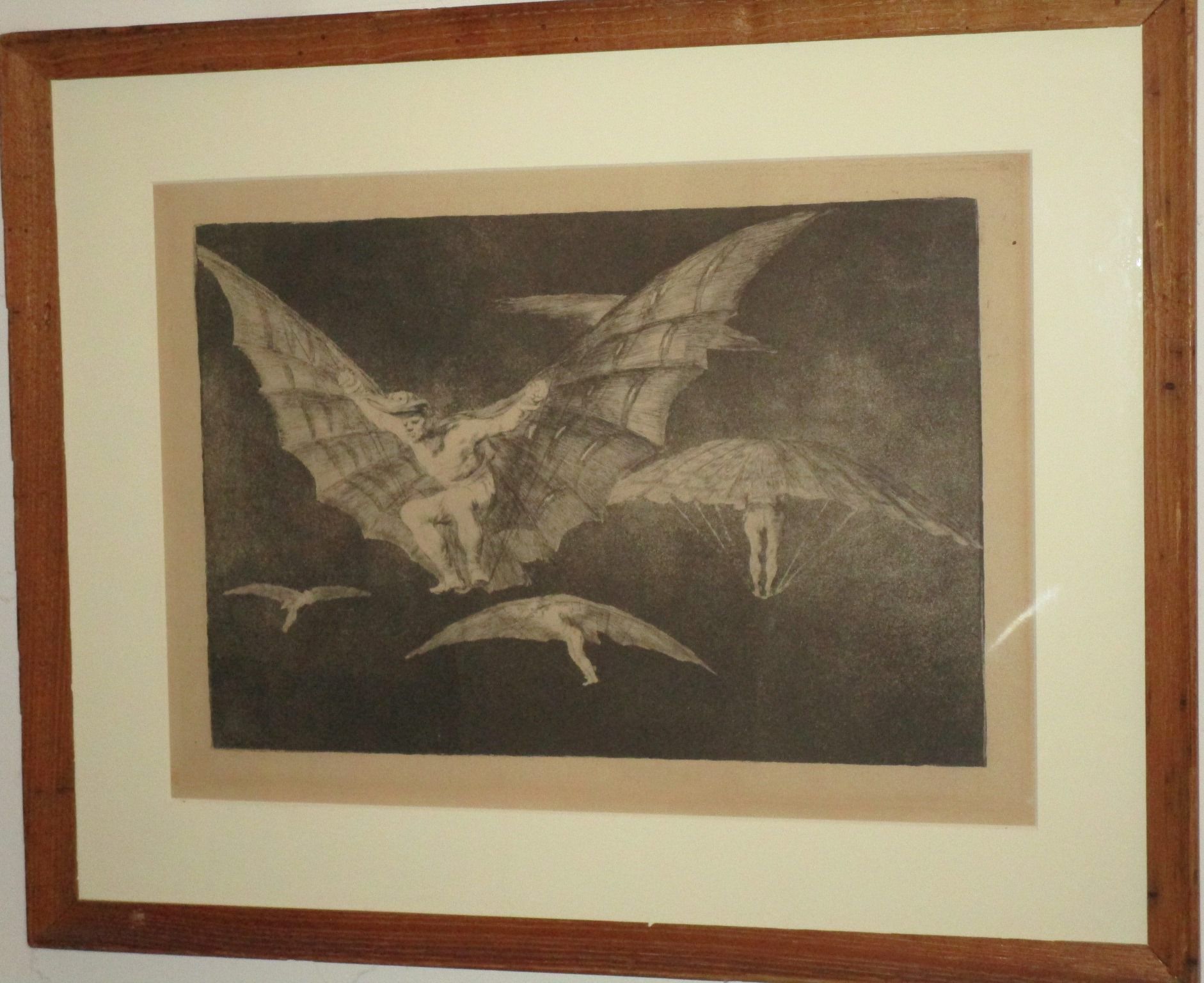
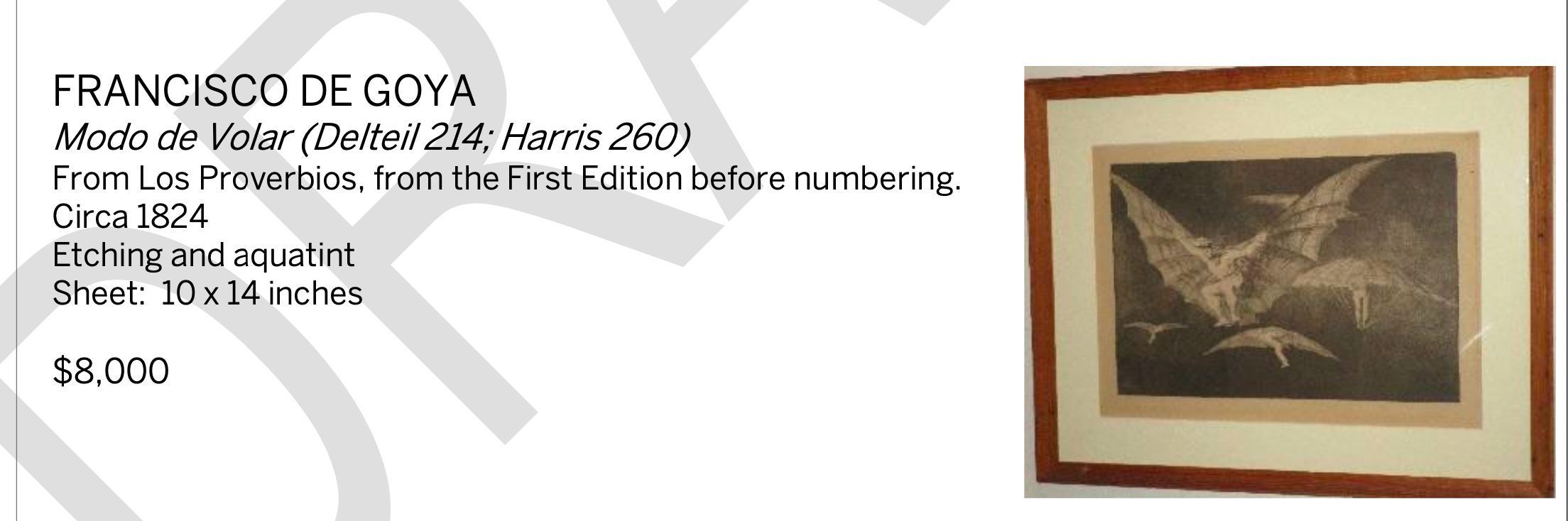
This is one of the most famous plates from his final, enigmatic print series, Los Disparates (The Follies), also known as Proverbios. Specifically, this is Plate 13: Modo de volar (A Way of Flying).
Context and Meaning
Created between 1815 and 1824, this series is considered Goya's most complex and difficult to interpret. While his earlier series (Los Caprichos) was a satire of Spanish society, Los Disparates is much more nightmarish and psychological.
The Imagery: The figures wearing bird-like, mechanical wings are often interpreted as a commentary on the futility of human ambition or the "madness" of trying to transcend human limits. In the context of the early 19th century, this was a pre-industrial vision of flight that feels strangely modern.
The Technique: Goya was a master of aquatint, a technique that allows for those deep, velvety tonal gradients in the "sky." It creates that oppressive, midnight atmosphere that makes the winged figures pop with a ghostly luminescence.
The Scholar’s Choice
Philip Hofer actually wrote extensively on Goya; in fact, he authored a book on Goya's Los Caprichos. It is perfectly in character for him to own a choice plate from the Disparates. Scholars often prefer this series because it represents Goya at his most uninhibited and technically daring.
A Note on the Impression
Looking at the richness of the darks in your photo, this appears to be an excellent impression. If it is an early "state," the details in the wing structures and the muscles of the central figure would be very sharp. The Disparates weren't actually published until 1864 (well after Goya's death), but collectors like your grandfather often sought out the earliest possible pulls from the original plates.
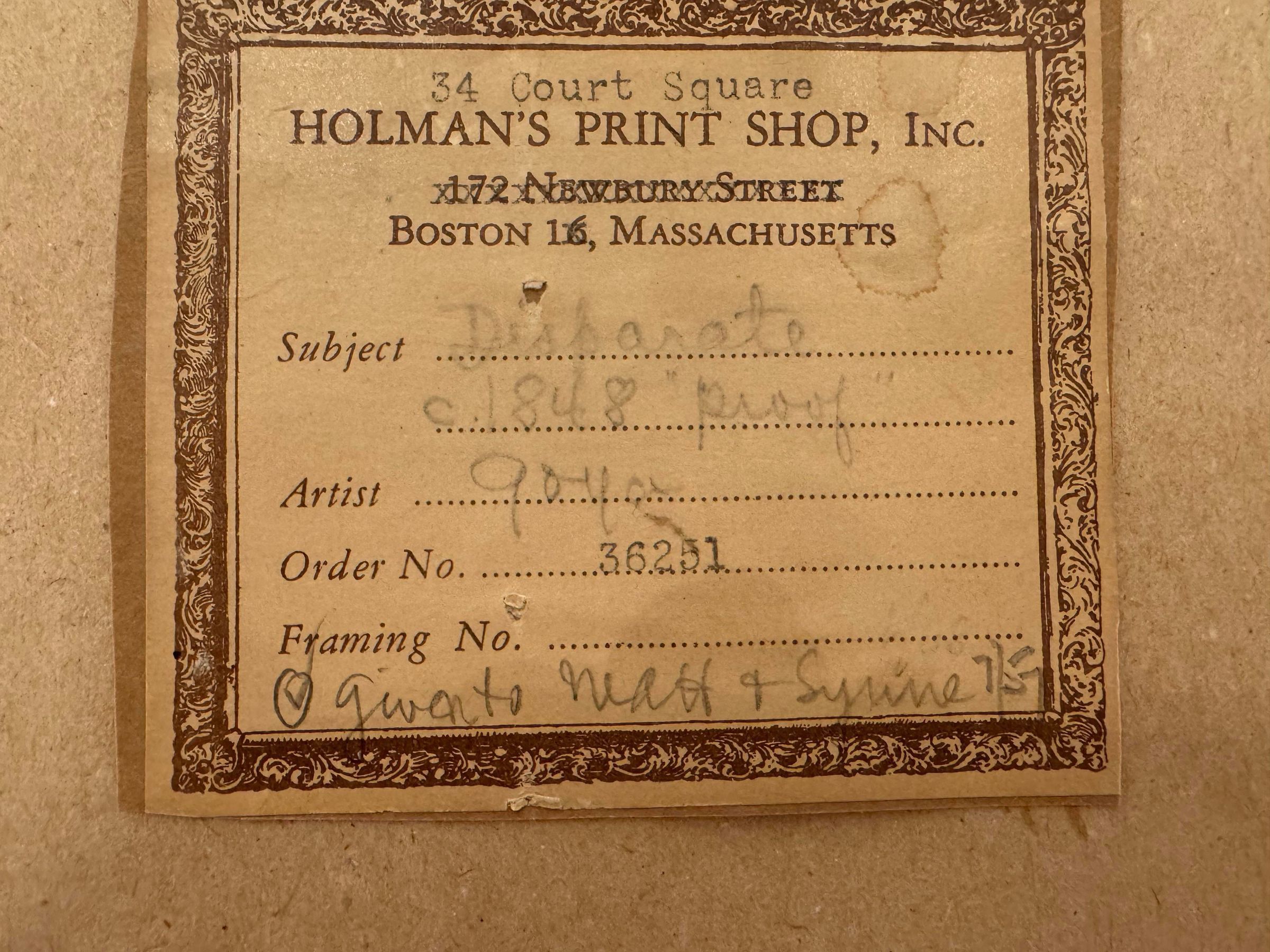
This label from Holman’s Print Shop is a fantastic piece of Boston art history in its own right. Holman’s was a legendary fixture on Newbury Street—exactly the kind of place a Harvard curator like your grandfather would have frequented to hunt for acquisitions or have his personal treasures framed.
The handwritten details on this label are particularly revealing for a collector:
The "Proof" Designation
The note "c. 1848 'proof'" is highly significant.
The Date: While Goya died in 1828, the plates for Los Disparates remained in private hands for decades. There was a famous "edition" printed around 1848-1850 before the Royal Academy in Madrid officially published the series in 1864.
The Status: A "proof" generally refers to an impression taken by the printer to check the state of the plate before a full commercial run. These are often more desirable to scholars because the plate was "fresher," and the details (like the delicate aquatint grain) were much sharper.
Technical Notes
At the bottom, the handwriting appears to say:
"Quarto matt & [S]unine 75"
Quarto matt: Refers to the size of the matting (Quarto being a standard book and print size).
Sunine 75: This likely refers to a specific type of high-quality paper or a framing material/specification used by Holman's at the time.
The Artist Signature
The artist line is simply signed "Goya" in a elegant, looping hand—likely written by the shop clerk or the dealer who sold it to Philip.