Note Type
AI searchNote
The Artist: Alexandre Iacovleff
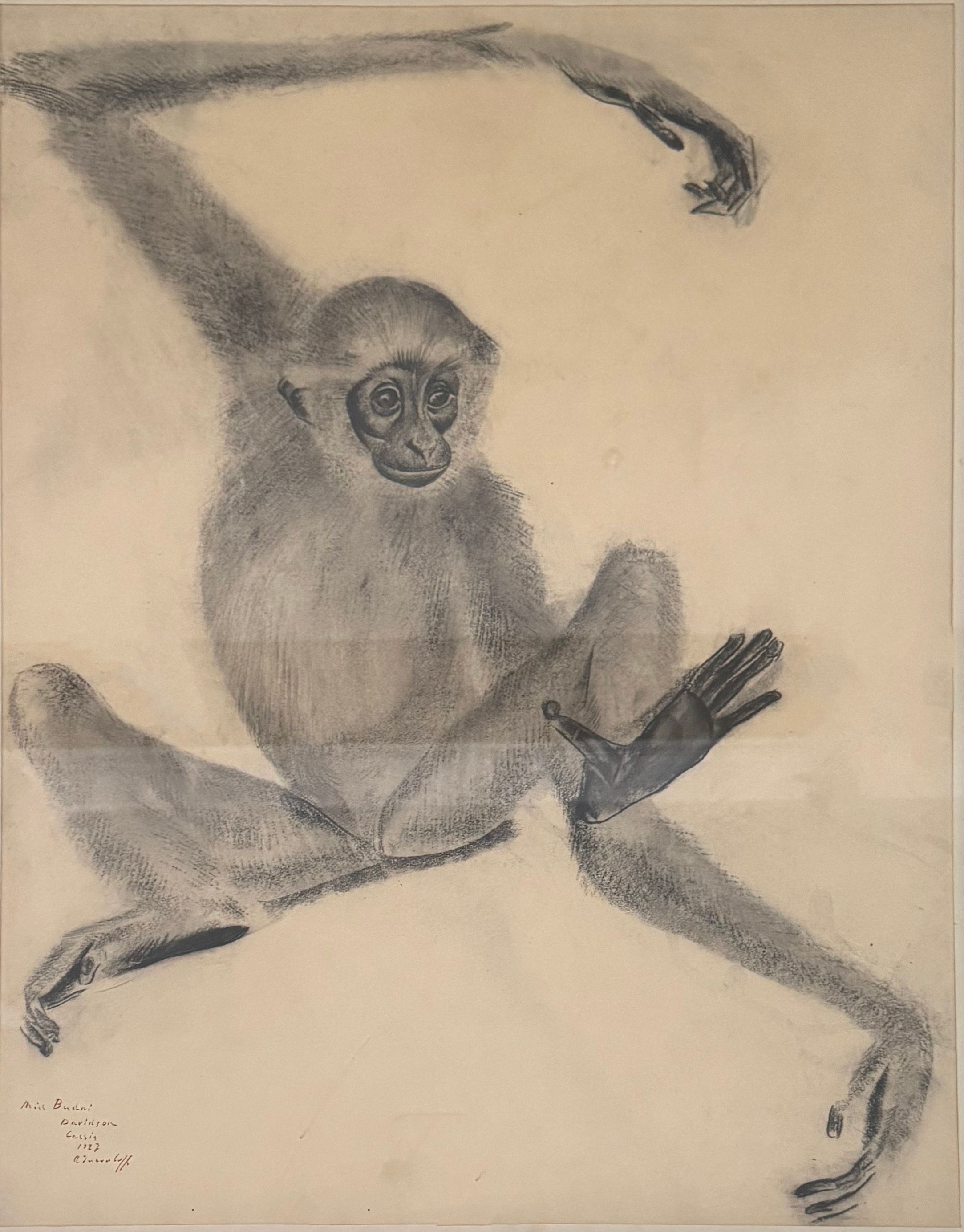
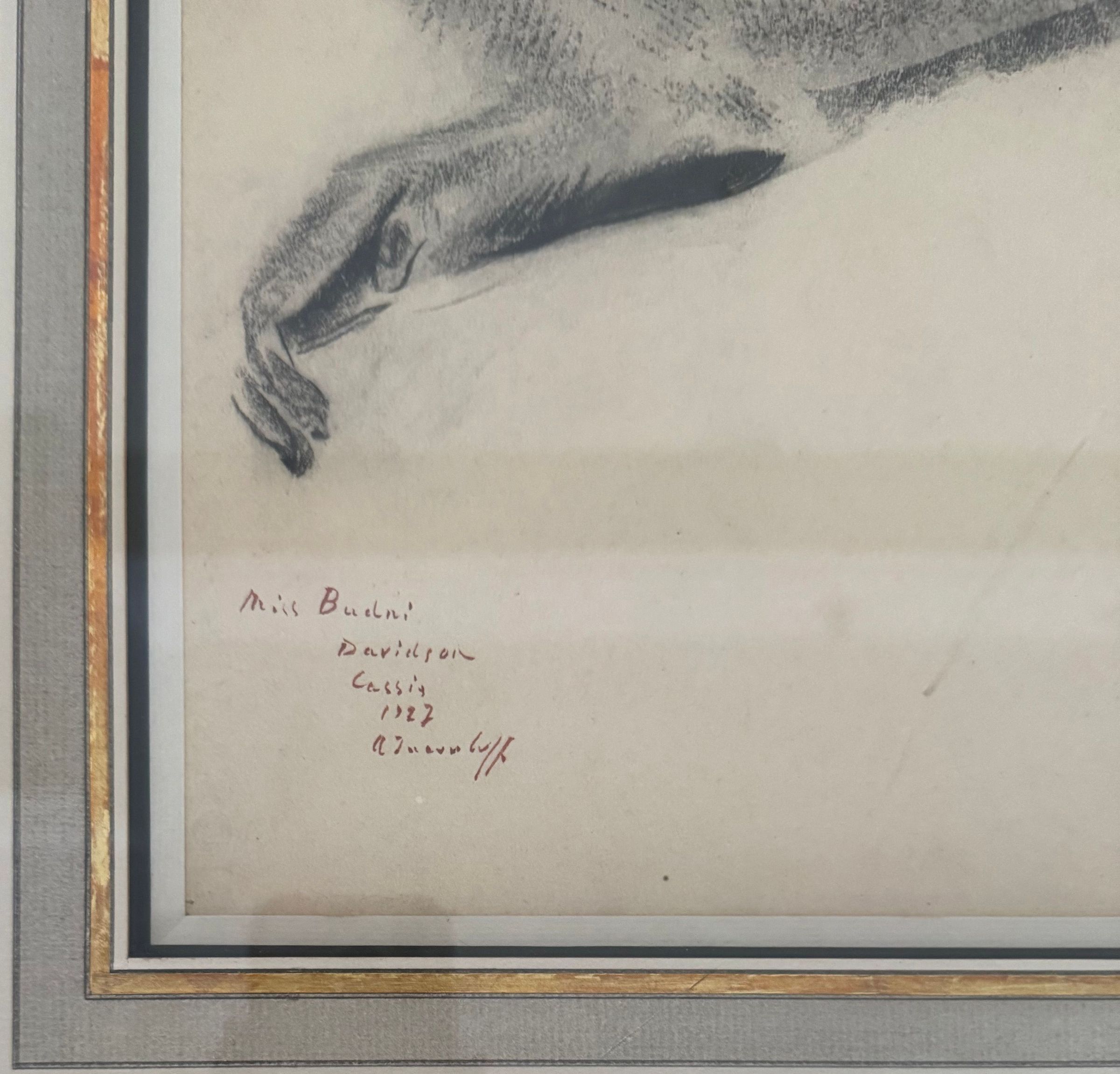
The signature appears to be that of Alexandre Iacovleff (1887–1938), a famous Russian neoclassicist painter. He was renowned for his participation in the "Croisière Noire" and "Croisière Jaune" (expeditions across Africa and Asia), during which he produced masterly drawings of indigenous people and local wildlife.
The Subject: "Miss Budai"
The inscription reads:
Miss Budai
Davidson
Cassis
1927
A. Iacovleff
The Gibbon: "Miss Budai" was likely a pet gibbon. Iacovleff was known to be fascinated by primates and often drew them with a human-like expressive quality.
The Location: Cassis is a Mediterranean fishing port in southern France. In 1927, this was a hub for artists and the "Bloomsbury Set." The mention of "Davidson" likely refers to the American sculptor Jo Davidson, who had a famous estate in France where many artists of the era gathered. It’s highly probable this gibbon belonged to Davidson or was part of that social circle.
Artistic Context
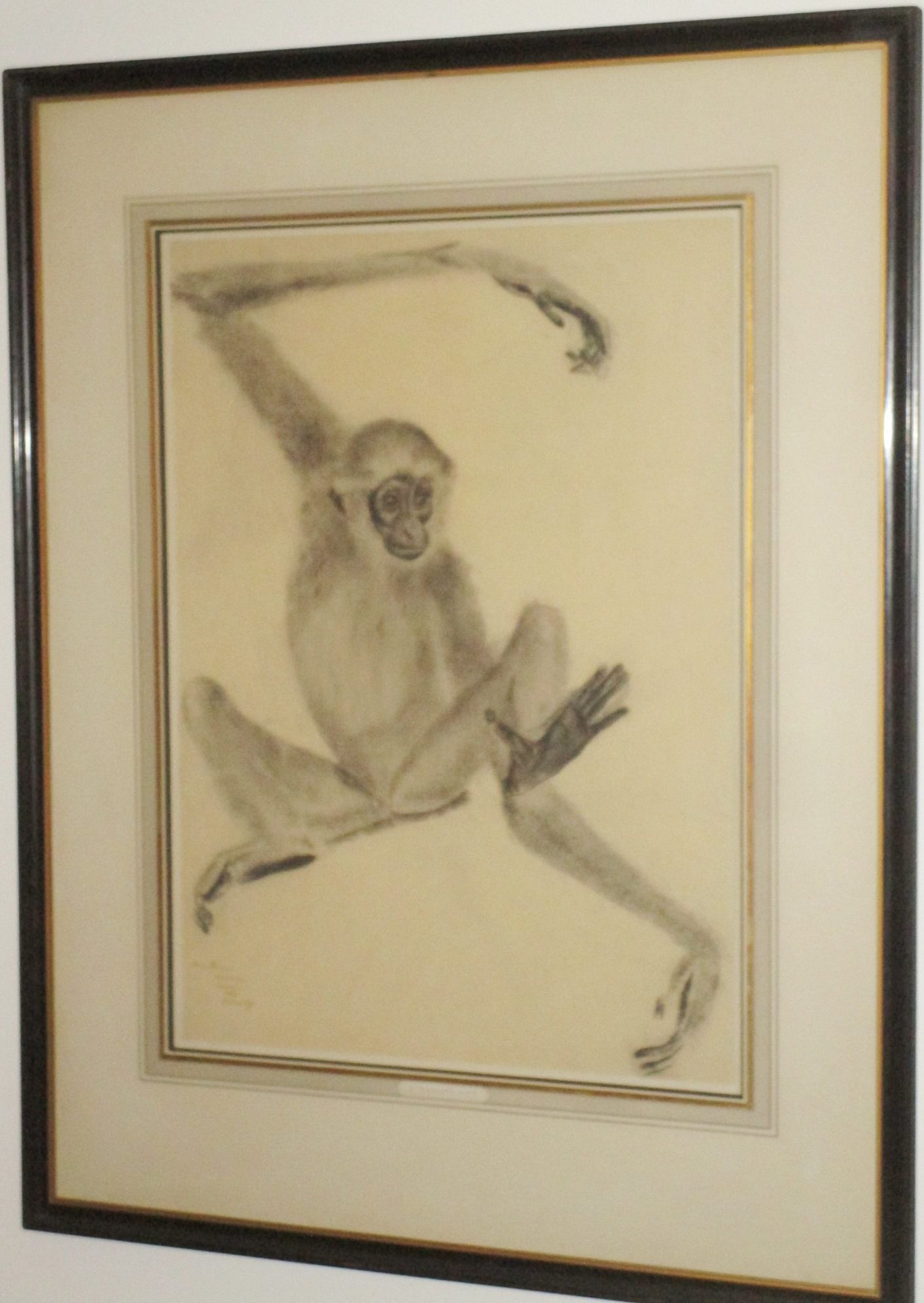
Iacovleff’s style in 1927 was at its peak. He used a technique called sanguine and charcoal (though this looks primarily charcoal) to create a three-dimensional sense of volume. Notice the incredibly long, fluid limbs—he has captured the "rubbery" physics of a gibbon perfectly while giving the face a soulful, almost questioning look.