Note Type
AI searchNote
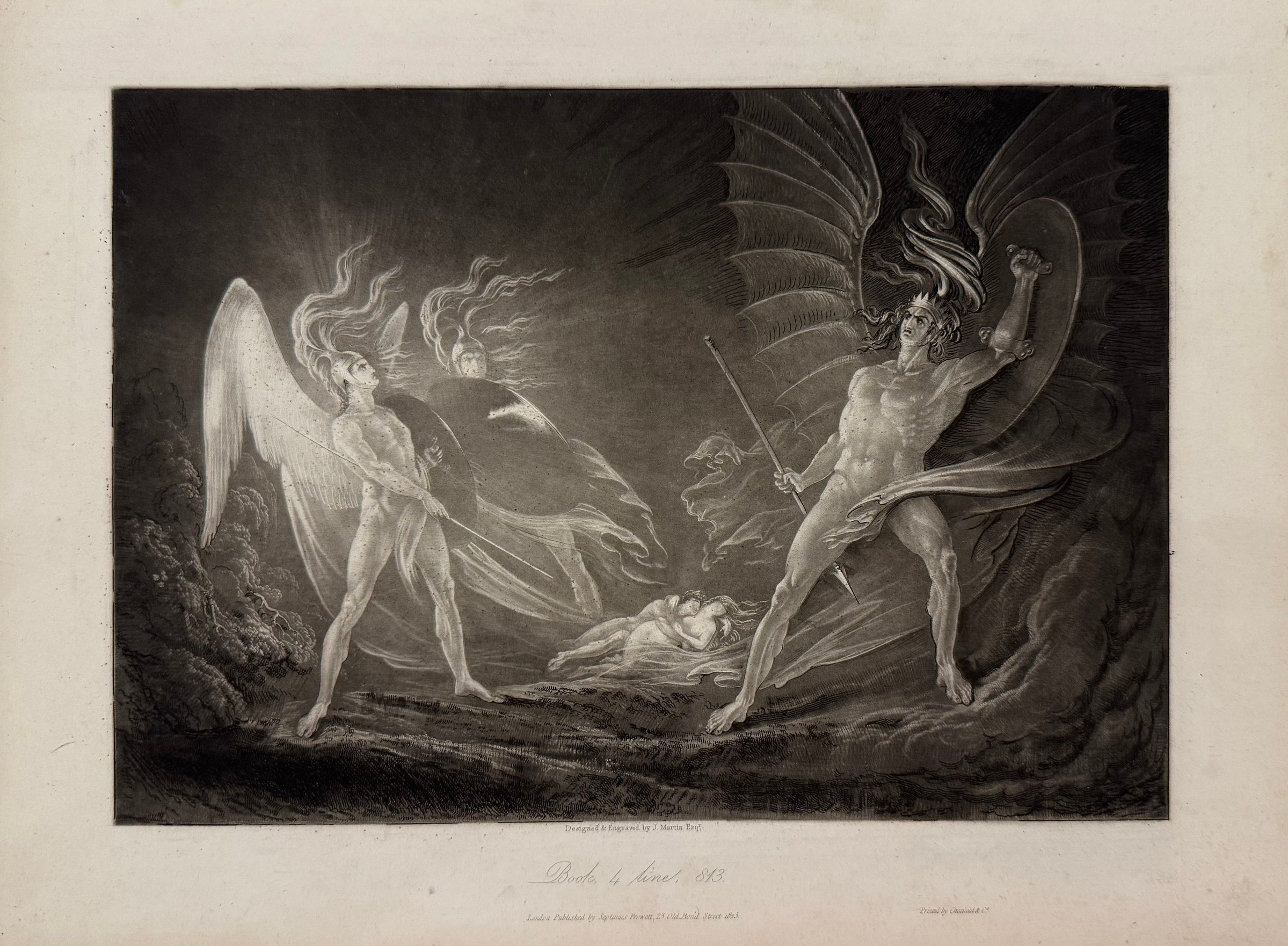
This striking engraving is titled "Satan Aroused" (also known as Satan Surprised at the Ear of Eve), created by the English Romantic painter and engraver John Martin in 1824–1825.
It is part of a famous series of 24 mezzotint illustrations Martin produced for a deluxe edition of John Milton’s epic poem, Paradise Lost.
Context and Narrative
The scene illustrates a specific moment from Book 4 of the poem. Here is the breakdown of what you are seeing:
The Discovery: Two angels, Ithuriel and Zephon (sent by Gabriel), have found Satan in the Garden of Eden. Satan had disguised himself as a toad to whisper disturbing dreams into the ear of the sleeping Eve.
The Transformation: When Ithuriel touches the toad with his celestial spear, the disguise shatters. Satan is "aroused" and forced back into his true, formidable form.
The Sleeping Couple: In the center-bottom of the frame, you can see Adam and Eve lying asleep and vulnerable, unaware of the cosmic confrontation happening just above them.
The Conflict: On the right, Satan stands defiant, vast and muscular with bat-like wings, brandishing a shield and spear. On the left, the two angelic guards confront him with a radiant, ethereal glow.
Artistic Style: The "Martin-esque" Sublime
John Martin was famous for his "Sublime" style—a genre of art intended to provoke awe, terror, and a sense of vastness.
Mezzotint Technique: This specific engraving process allows for rich, velvety blacks and dramatic transitions between deep shadows and brilliant highlights (chiaroscuro). It perfectly captures the "darkness visible" that Milton describes in his poetry.
Scale: Notice how small Adam and Eve are compared to the figures and the environment. Martin often used architecture and landscape to make human (or even divine) figures feel dwarfed by the scale of the universe.
Influence: These illustrations were revolutionary for their time. Martin’s vision of Hell and Eden influenced everything from 19th-century cathedral architecture to the "epic" look of modern cinema and concept art.
If you look closely at the bottom of the print, you can see the inscription: "Book 4, line 813," referencing the exact line in Milton's text where the transformation occurs.