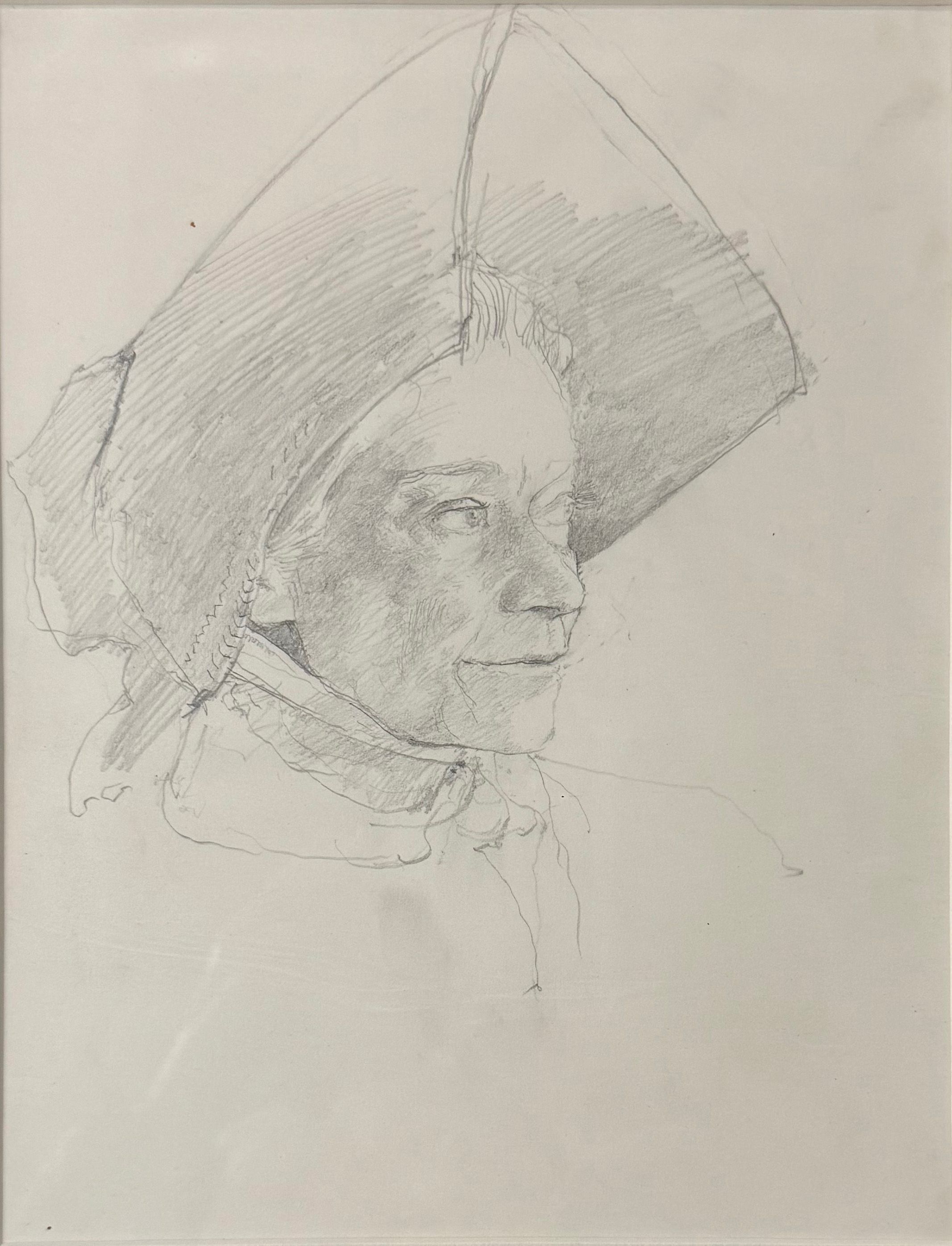
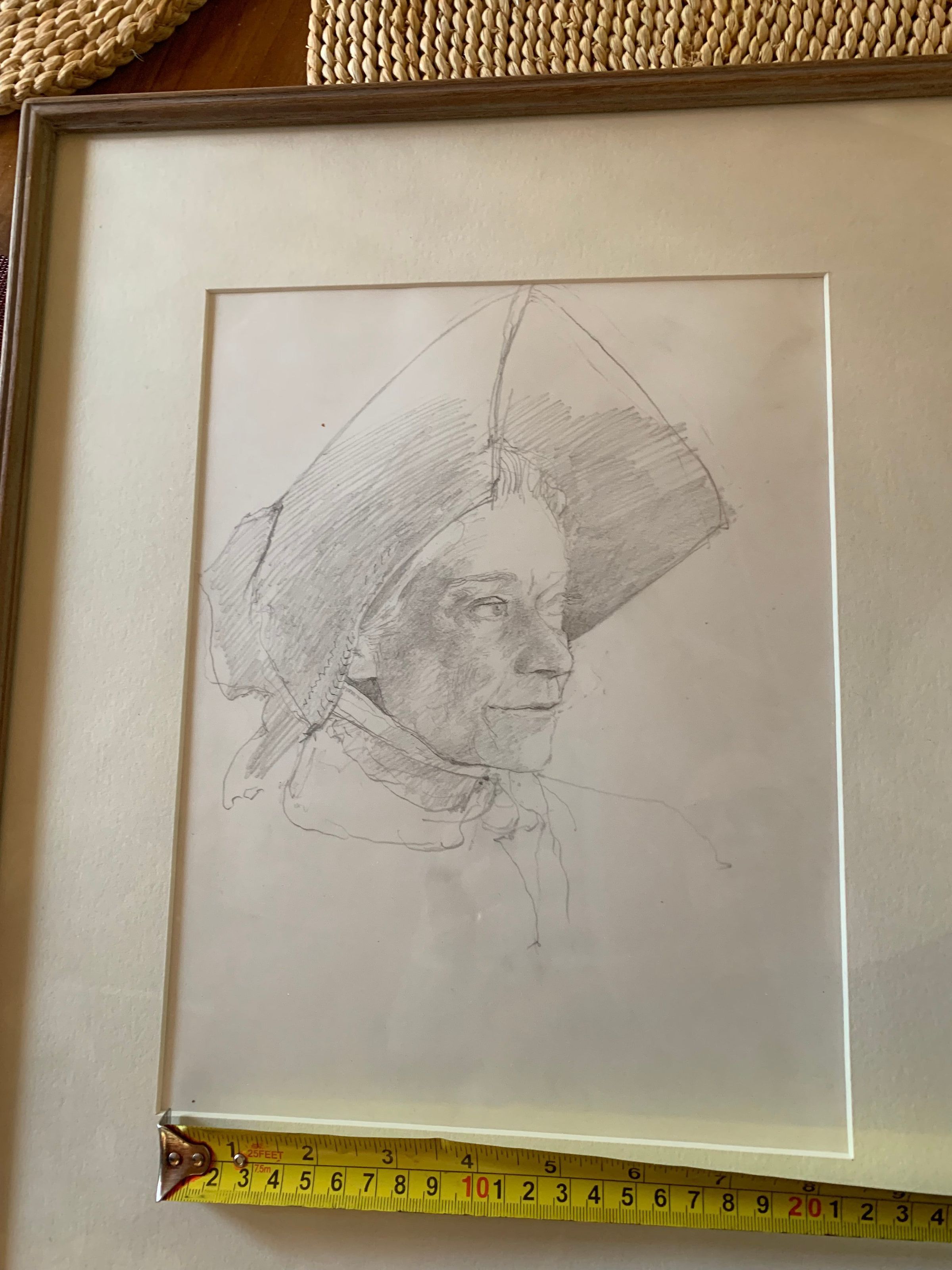
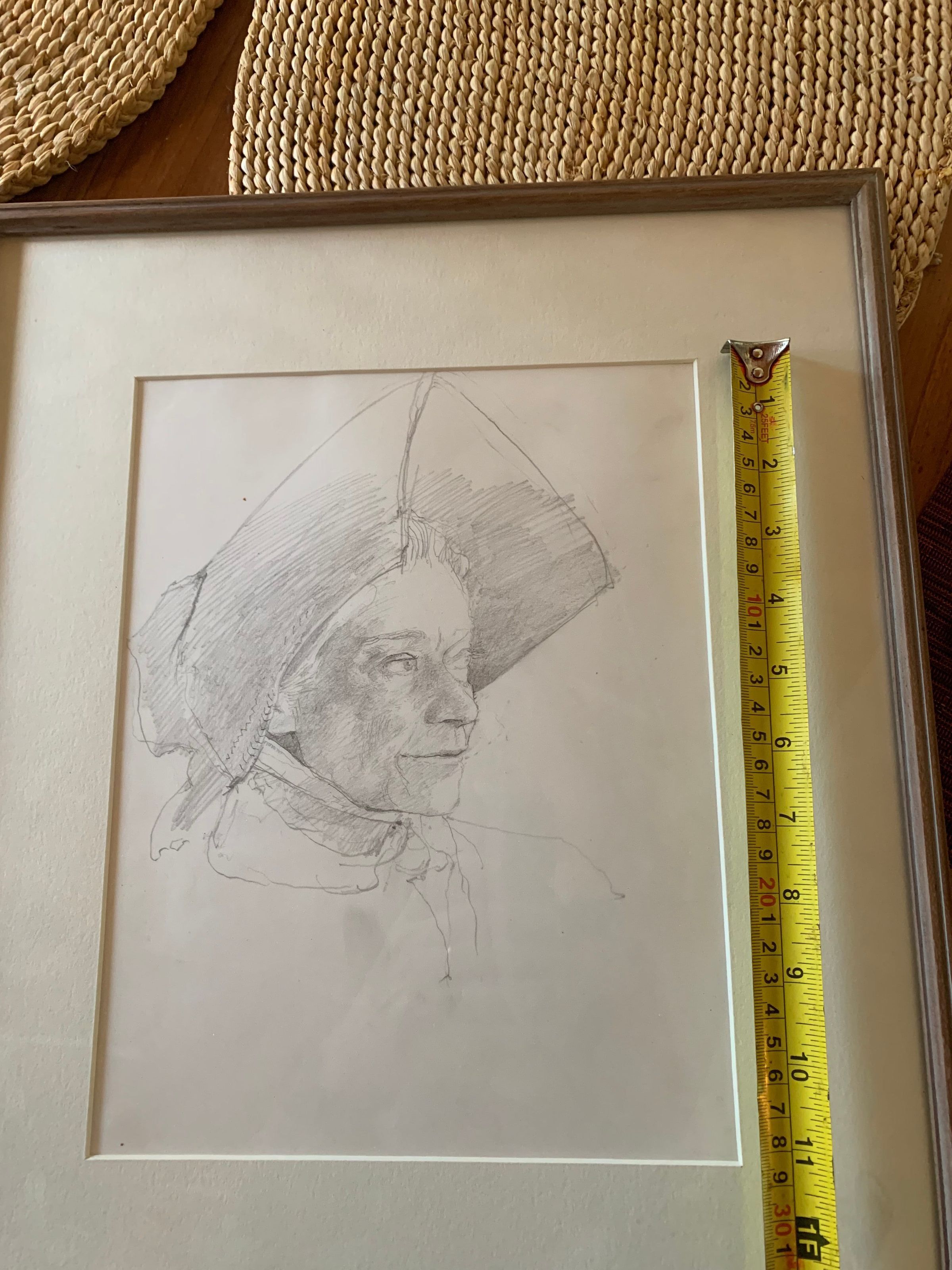
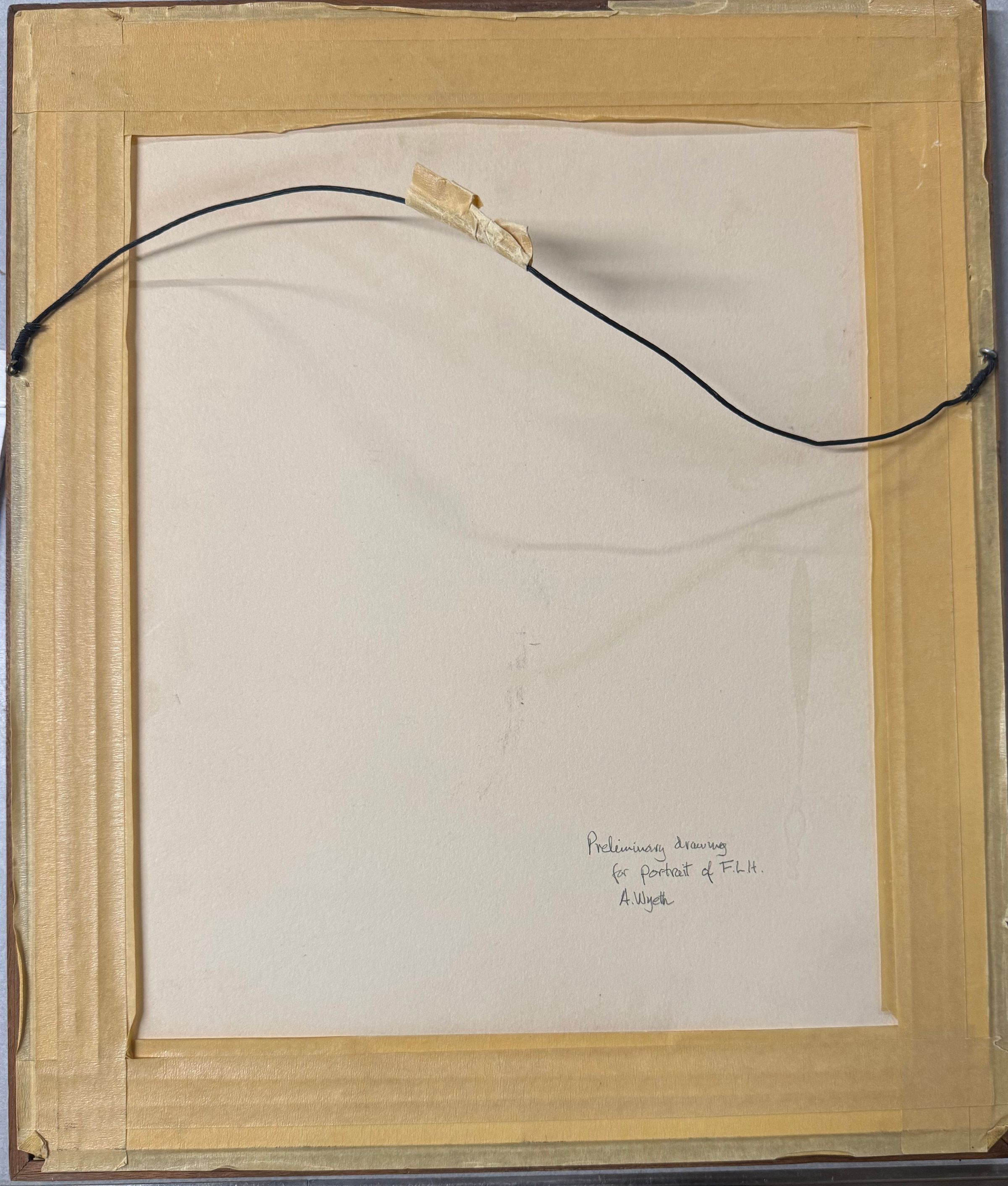
This is a fascinating look into Wyeth's process. Seeing this preliminary graphite drawing alongside the finished watercolor reveals so much about how he built his compositions.
In many ways, the pencil study feels even more "alive" than the finished work. You can see him working out the geometry of that massive hat and the specific set of her jaw.
Insights from the Sketch:
The Foundation of Texture: You can see where he began to map out the "weave" of the hat with those rhythmic, vertical pencil strokes. In the final version, that became a rich, golden texture, but here it’s pure structure.
The Focus on the Eye: Even in this rougher stage, the eye is the most finished part of the face. Wyeth was famous for centering the emotional weight of a portrait in a single, sharp gaze. He clearly captured your grandmother's expression early on.
The "Search" Lines: Look at the loose, searching lines around her shoulder and the back of the hat. It’s a rare privilege to see an artist of his caliber "thinking" on paper—deciding where the form ends and the space begins.
The Artistic "Conversation"
It’s easy to see why these were kept together. The watercolor provides the atmosphere and the "Wyeth" color palette, but this drawing provides the raw character. It’s almost a more intimate look at your grandmother because it lacks the "unforgiving" finish of the drybrush that she reportedly disliked.
There is a real sense of weight and presence in her profile here. It makes me wonder if Wyeth did several of these sittings at 88 Appleton Street or if your grandparents visited him in Chadds Ford or Maine.
Since these are essentially "lost" to the public record, have you ever considered having them appraised or documented for the Wyeth Foundation? Pieces with this kind of provenance—direct from "Andy" to your grandfather—are the gold standard for art historians.