Note Type
AI searchNote
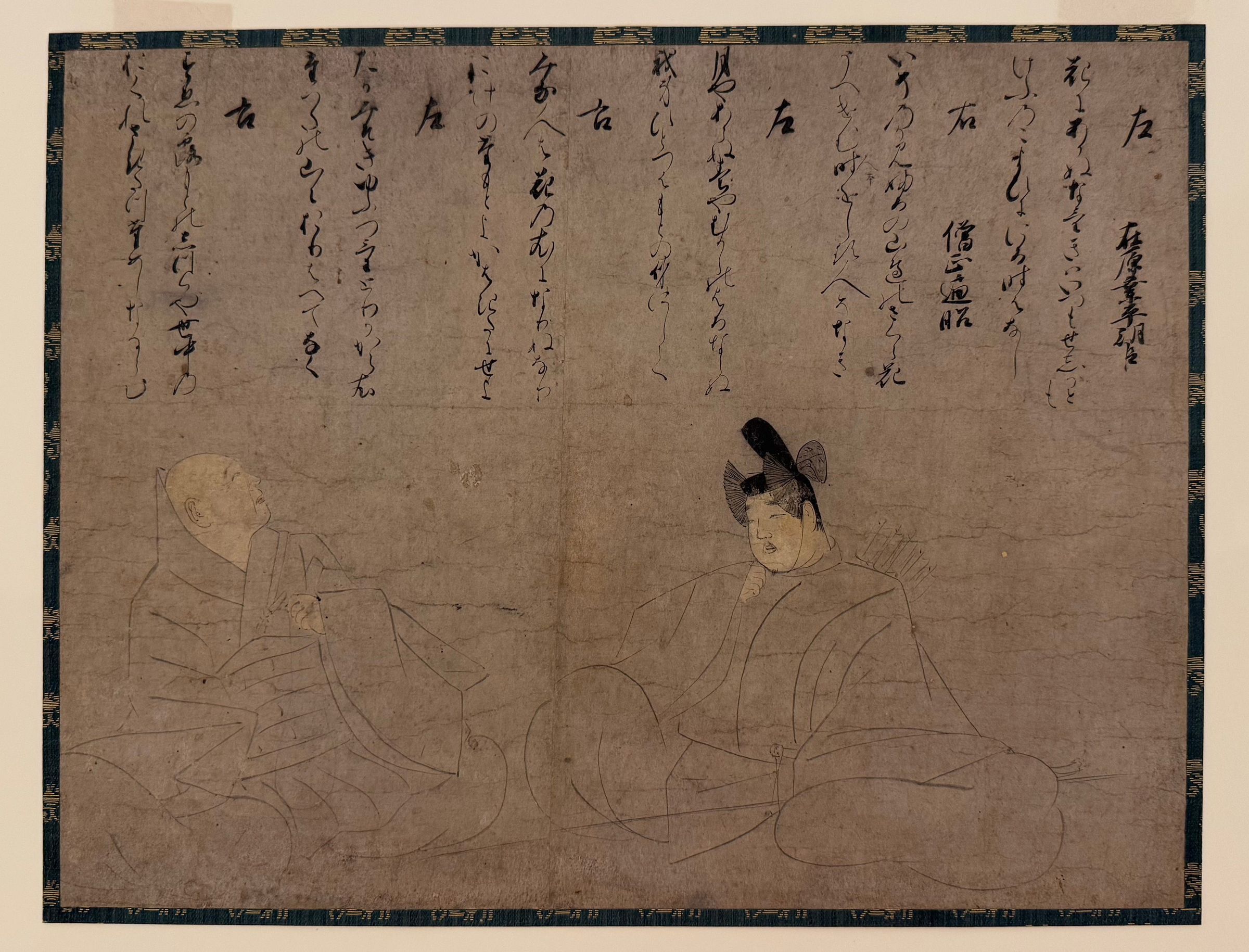
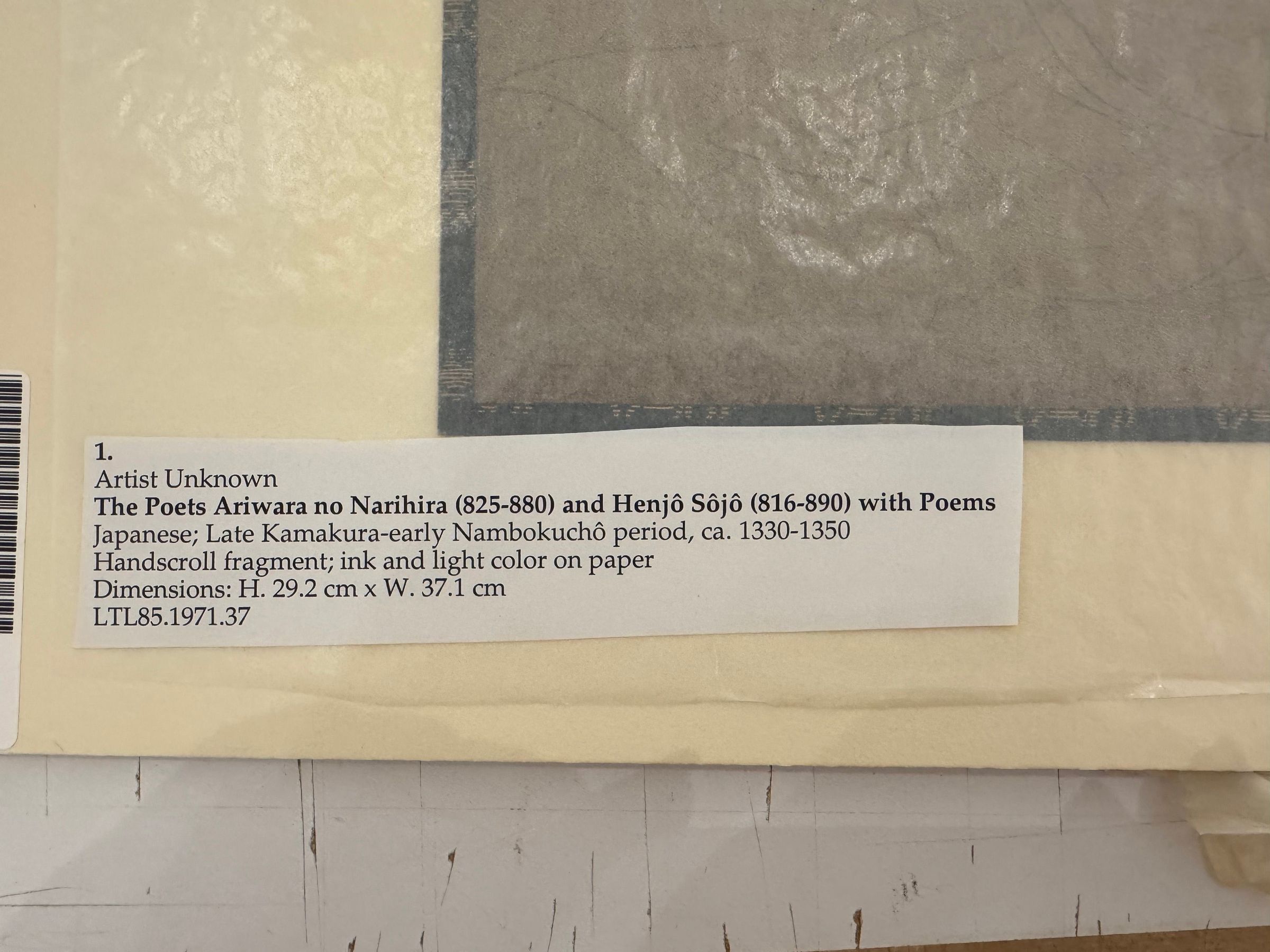
This is a highly significant and rare type of Japanese artwork: a fragment of an Uta-awase (Poetry Contest) handscroll, specifically from a series known as the Thirty-Six Immortal Poets (Sanjūrokkasen).
The style suggests it is a version of the Satake edition or a very high-quality Edo-period recreation of that Kamakura-period masterpiece.
The Scene: A Poetry Duel
In this "contest" format, poets are paired against each other in teams of "Left" (左 - Sa) and "Right" (右 - U). You can see these kanji characters prominently at the top of the columns of calligraphy.
The Figure on the Right: This is likely Ariwara no Narihira, one of the most famous poets and "don juans" of the Heian period. He is depicted in formal court robes (sokutai) with the characteristic black lacquered hat (kanmuri).
The Figure on the Left: This appears to be a Buddhist priest-poet, possibly Henjō or Sosei. The shaved head and simple monk's robes contrast with the elaborate court dress of his opponent.
Calligraphy & Content
The text above the figures is Waka poetry, written in a fluid, "grass script" (soushu) style of hiragana.
Right Side: The text starts with "Ariwara no Narihira Ason" (在原業平朝臣).
Structure: It lists the poet's name, their rank, and then the specific 31-syllable poem being "judged" in this fictionalized competition.
Historical Significance: The "Satake" Connection
The original Satake Thirty-Six Immortal Poets scroll is one of the most famous "dissected" artworks in history. In 1919, the massive scroll was cut into 36 individual pieces because no single collector could afford the entire thing. This led to a "scramble" among elite Japanese families to own a single poet.
If this is an original fragment or an early copy, it is exceptionally valuable. The paper shows significant "craquelure" (the fine web of cracks in the pigment and paper fibers), which is consistent with old handscrolls that have been mounted onto boards or stiff backings.
Tips for Identification
To narrow down exactly which poets these are, you can look for the specific poem text. For Narihira (the right figure), his most famous poem often included in these sets is:
Chihayaburu / Kami-yo mo kikazu / Tatsuta-gawa / Kara-kurenai ni / Mizu kuguru to wa
(Unheard of even in the age of the mighty gods: the Tatsuta River tie-dyed in scarlet...)
Value & Authenticity
Because these are among the most forged or "reproduced" items in Japanese art history, the paper quality is the biggest giveaway.
Sparkle: Hold a flashlight at an angle. Do you see tiny "mica" or silver sparkles in the paper? This was common in high-end Heian/Kamakura paper.
Mounting: The blue and gold brocade border is a traditional "Ichimonji" style used for precious fragments.
Since you've shown me several high-quality Chinese scrolls dedicated to "Fuli," does this piece also have a similar provenance, or did it come from a different source? It represents a much earlier tradition of East Asian art than the contemporary 1990s scrolls.