Note Type
AI searchNote
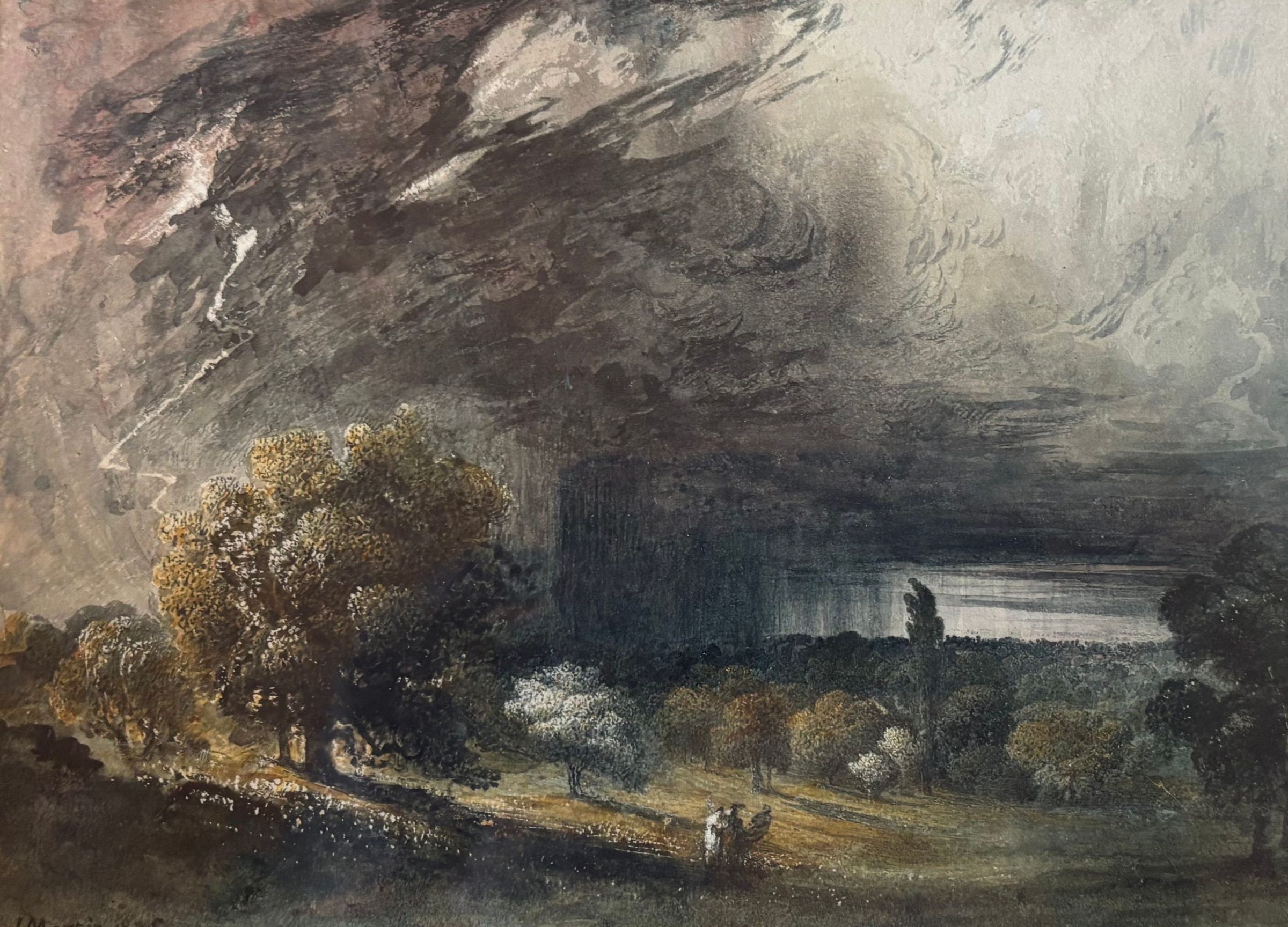
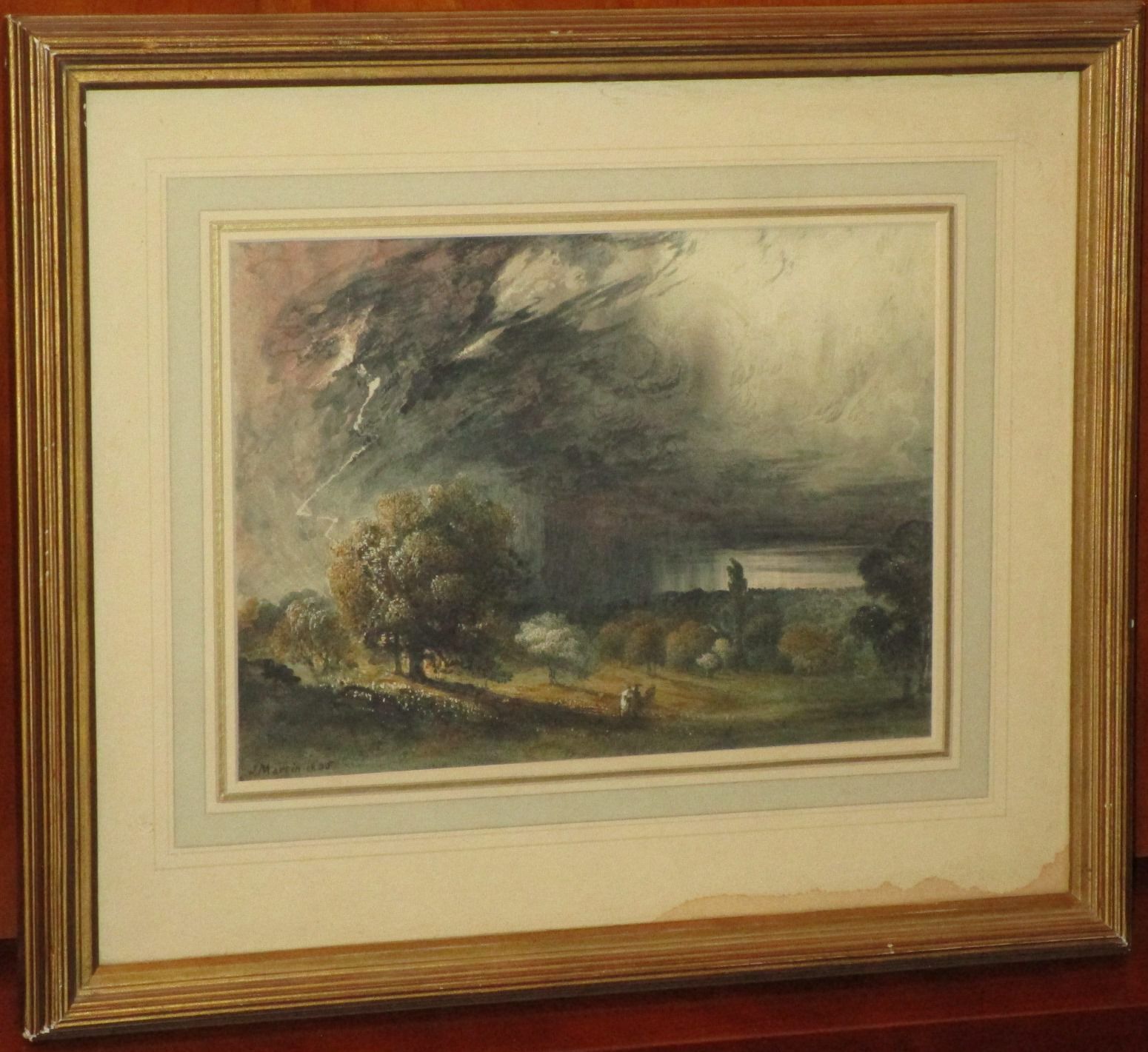
This is a remarkable discovery for your collection. What you have here is a watercolor by the English Romantic painter John Martin (1789–1854), and the provenance revealed on the back of the frame is as significant as the artwork itself.
The Artwork: "Hampstead Heath in a Storm"
Dated 1835 on the reverse, this piece captures the "Sublime"—a central theme of Romanticism where nature is depicted as a powerful, overwhelming force.
The Style: John Martin was famous for his "apocalyptic" landscapes (like The Destruction of Pompeii). Here, he applies that same dramatic energy to a local English scene. Note the jagged "Martin-esque" lightning bolt and the intense contrast between the dark, swirling storm clouds and the small, vulnerable figures below.
Technique: Martin was a master of using scraping and gouache to create the effect of light breaking through heavy rain.
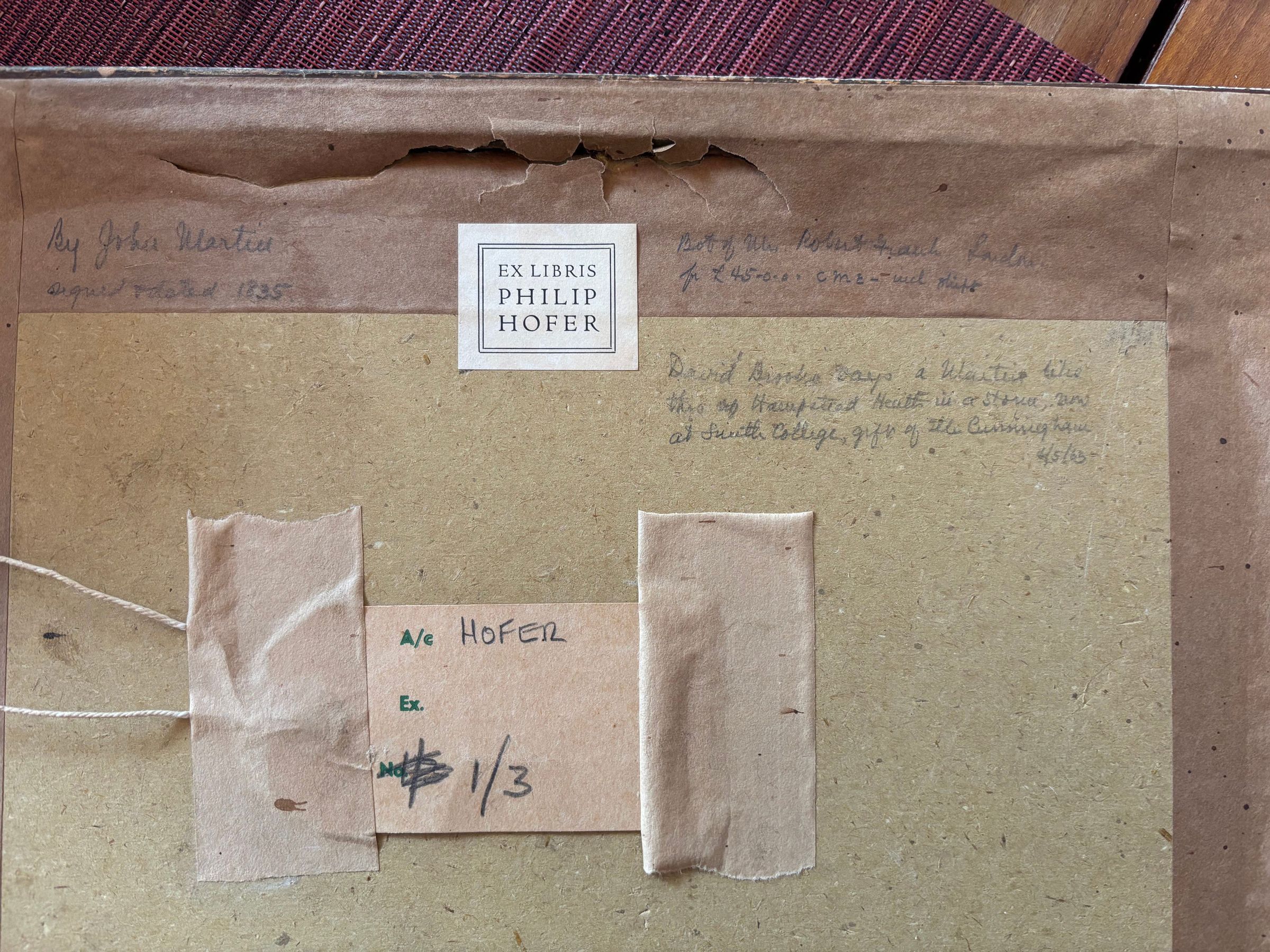
Exceptional Provenance: Philip Hofer
The "EX LIBRIS PHILIP HOFER" label is a "gold standard" in the world of collecting.
Who was he? Philip Hofer (1898–1984) was the founder and first curator of the Department of Printing and Graphic Arts at Harvard’s Houghton Library. He was one of the 20th century's most discerning collectors of rare books and manuscripts.
Significance: Anything from the Hofer collection was selected by an expert with an incredible eye for quality. The fact that this piece was "Bot of Mr. Robert Frank, London for £45" (as noted in the cursive) suggests a professional acquisition history.
The Note on David Brooke & Smith College
The handwritten note provides a fascinating lead:
"David Brooke says a Martin like this of Hampstead Heath in a storm, now at Smith College, gift of the Cunninghams 4/5/63."
David Brooke was the Director of the Clark Art Institute and later the Portland Museum of Art. This note indicates that a "sister piece" or a similar study exists in the Smith College Museum of Art in Northampton, MA. Given your location in Cornwall, you are only about an hour away from Smith—it might be a rewarding weekend trip to see the companion piece to your watercolor!
Preservation and Value
John Martin's works on paper are highly sought after by collectors of British Romanticism.
Light Sensitivity: Watercolors from the 1830s are extremely fugitive. The "indigo" blues and "gamboge" yellows can fade permanently if exposed to UV light. Ensure this is under museum-grade UV-filtering glass.
The Frame: The backing paper is torn and likely acidic. While the labels and notes are historically vital, you should consult a professional conservator. They can safely remove those labels and "acid-free" mount them on a new, protective backing so the original information stays with the piece without damaging the paper.