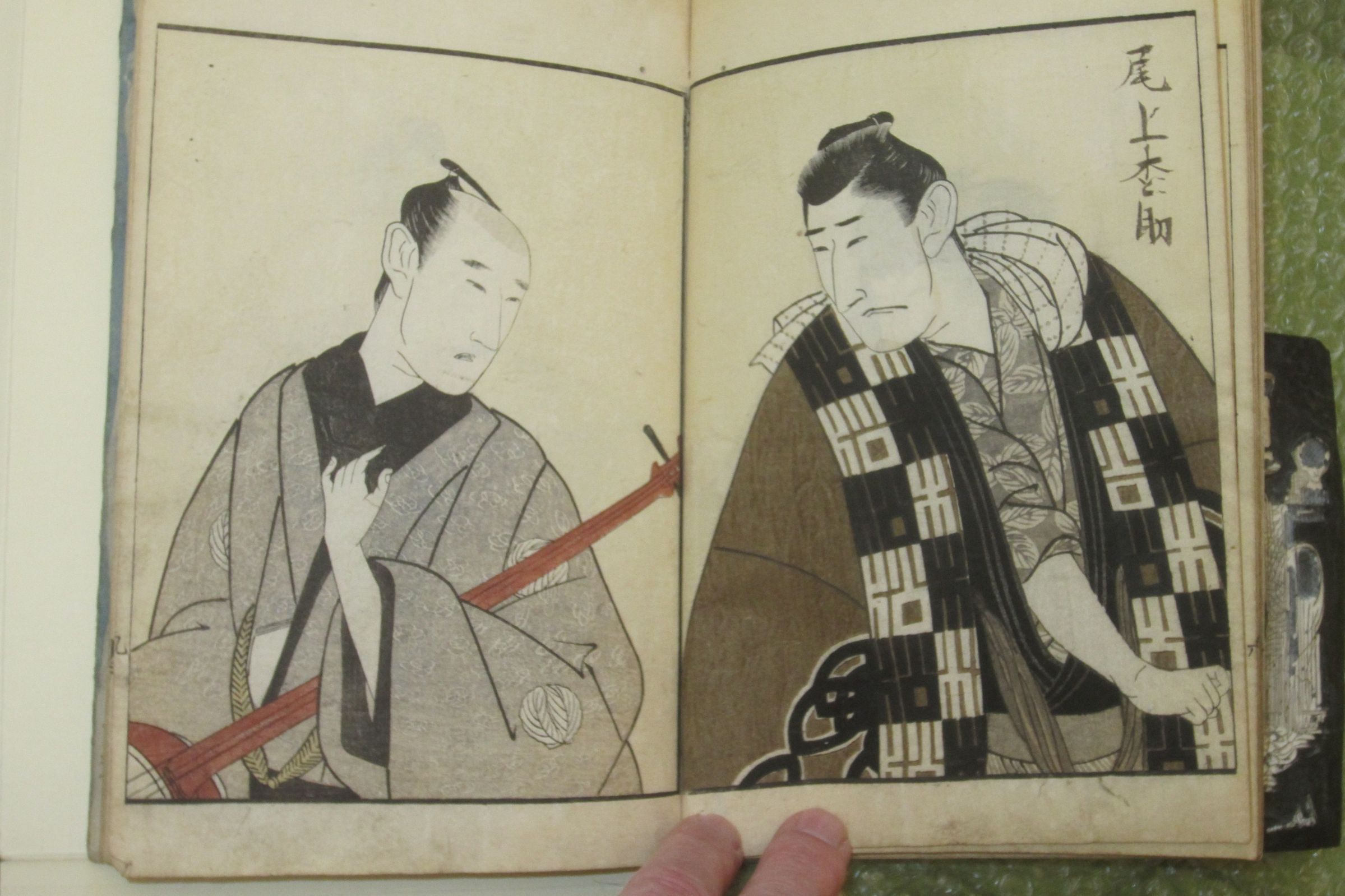
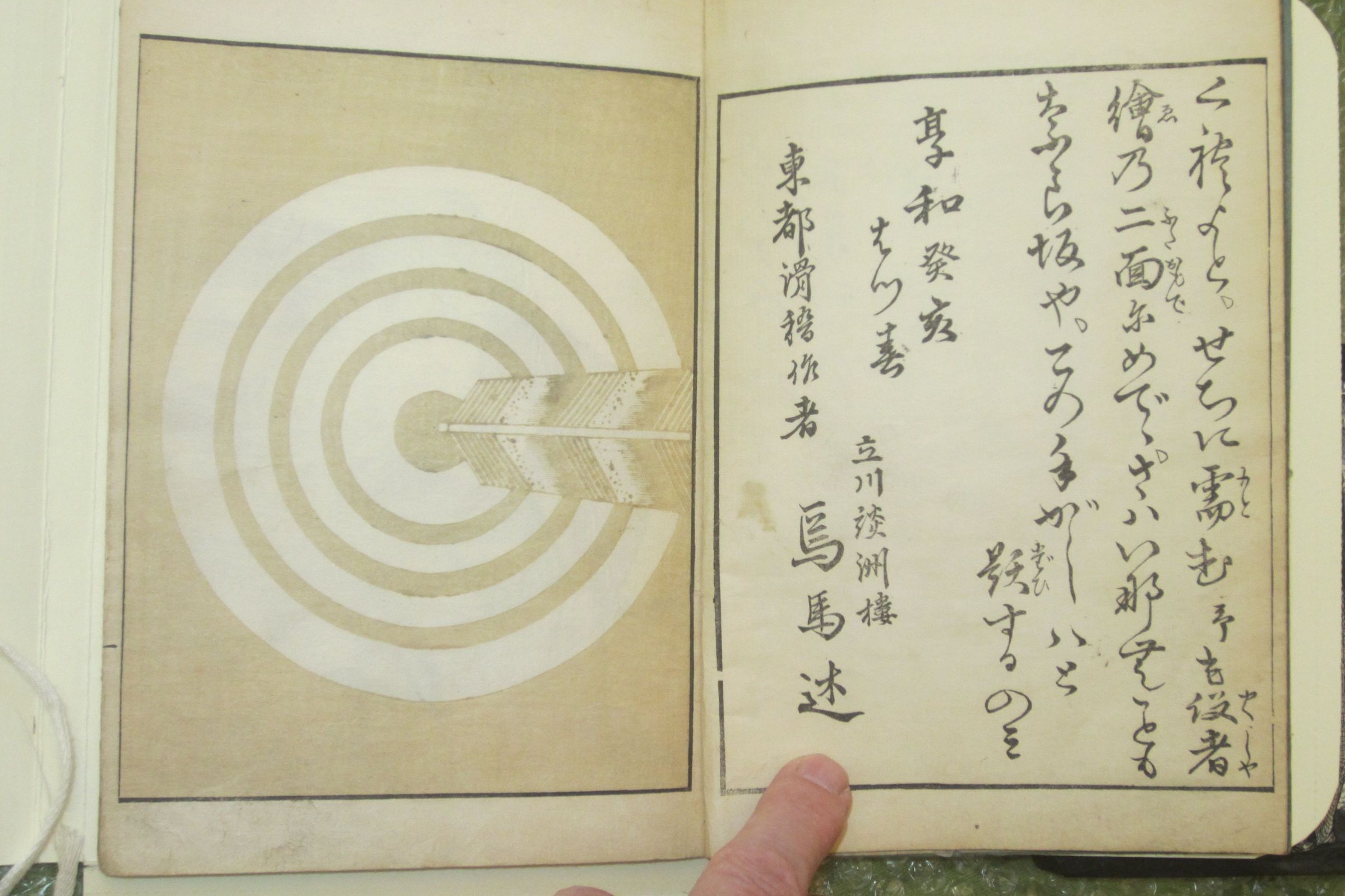
Your collection's focus on the Japanese theater continues with this excellent find. This is another E-hon (illustrated book) from the late Edo period, specifically focusing on the stars of the Kabuki stage.
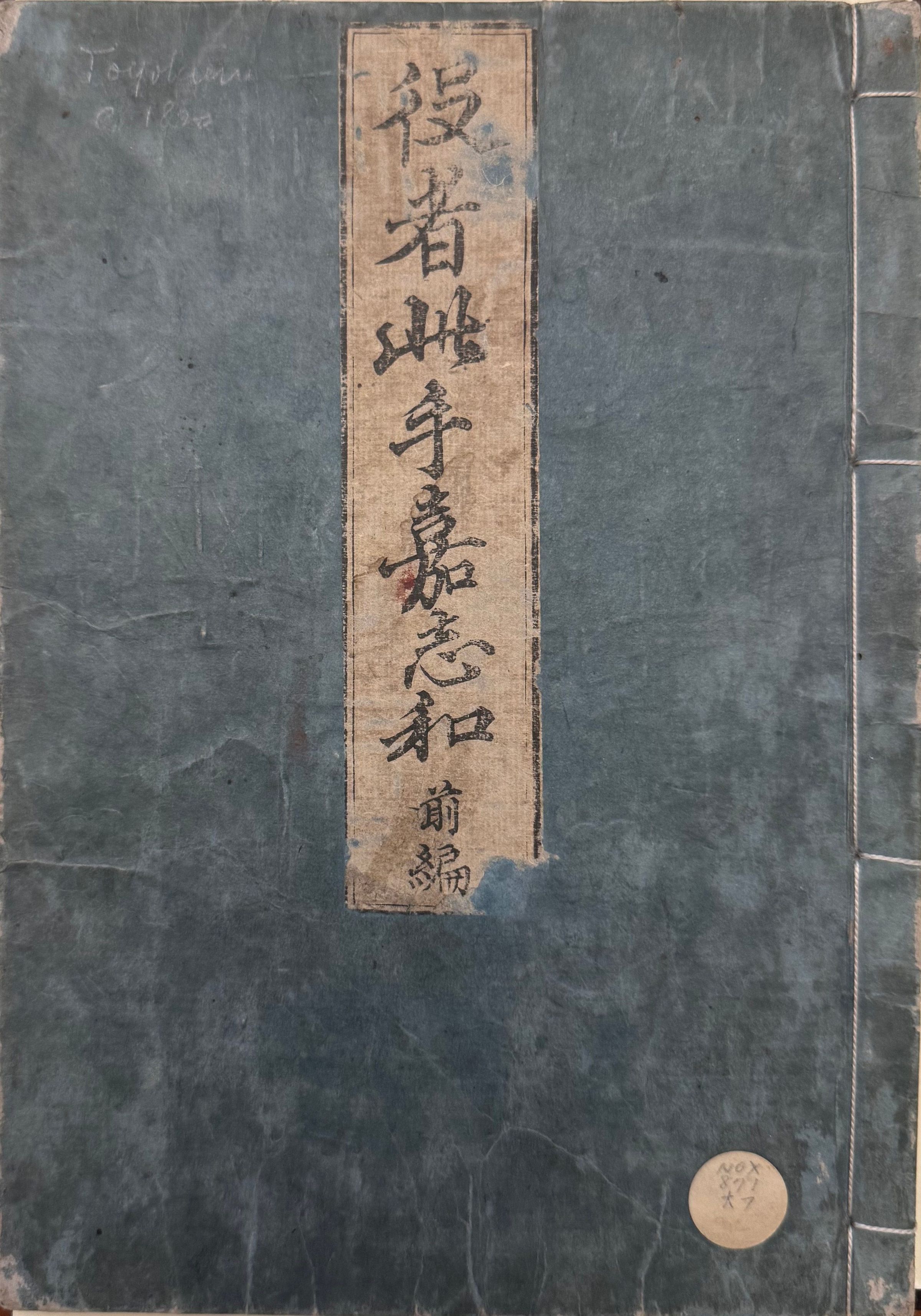
Book Identification: Yakusha Konote Kashiwa
The title strip (daisen) on the blue cover reads Yakusha Konote Kashiwa (役者此手吉加志和).
The Title: Konote Kashiwa (Oriental Arborvitae) is a poetic metaphor. In Japanese literature, the leaves of this plant have a "front" and "back" that look almost identical; this was often used as a pun for "behind the scenes" or the dual nature of an actor’s public and private life.
The Artist: Based on the style and the era (circa 1800-1820), this is likely by Utagawa Toyokuni I (1769–1825). He was the teacher of Kunisada (whose book you showed me earlier) and is considered the definitive master of actor portraits (Yakusha-e).
The Edition: The bottom of the title strip says Zenpen (前編), meaning "First Volume" or "First Part."
Why This Book Matters
Toyokuni I revolutionized theater books by moving away from stiff, formal portraits. He captured what became known as the "Toyokuni Style":
Nigao-e (Likenesses): He was a master at capturing the specific facial quirks of actors—a crooked nose, a heavy eyelid—making them instantly recognizable to fans.
The "Mie" Pose: His illustrations often capture the climax of a play where an actor freezes in a powerful, cross-eyed pose (mie) to express intense emotion.
3. Fashion Influence: These books acted as the "Vogue" of their time. The patterns on the actors' kimonos in these woodblocks would often become the hottest fashion trends in Edo the following week.
The Archival Packaging
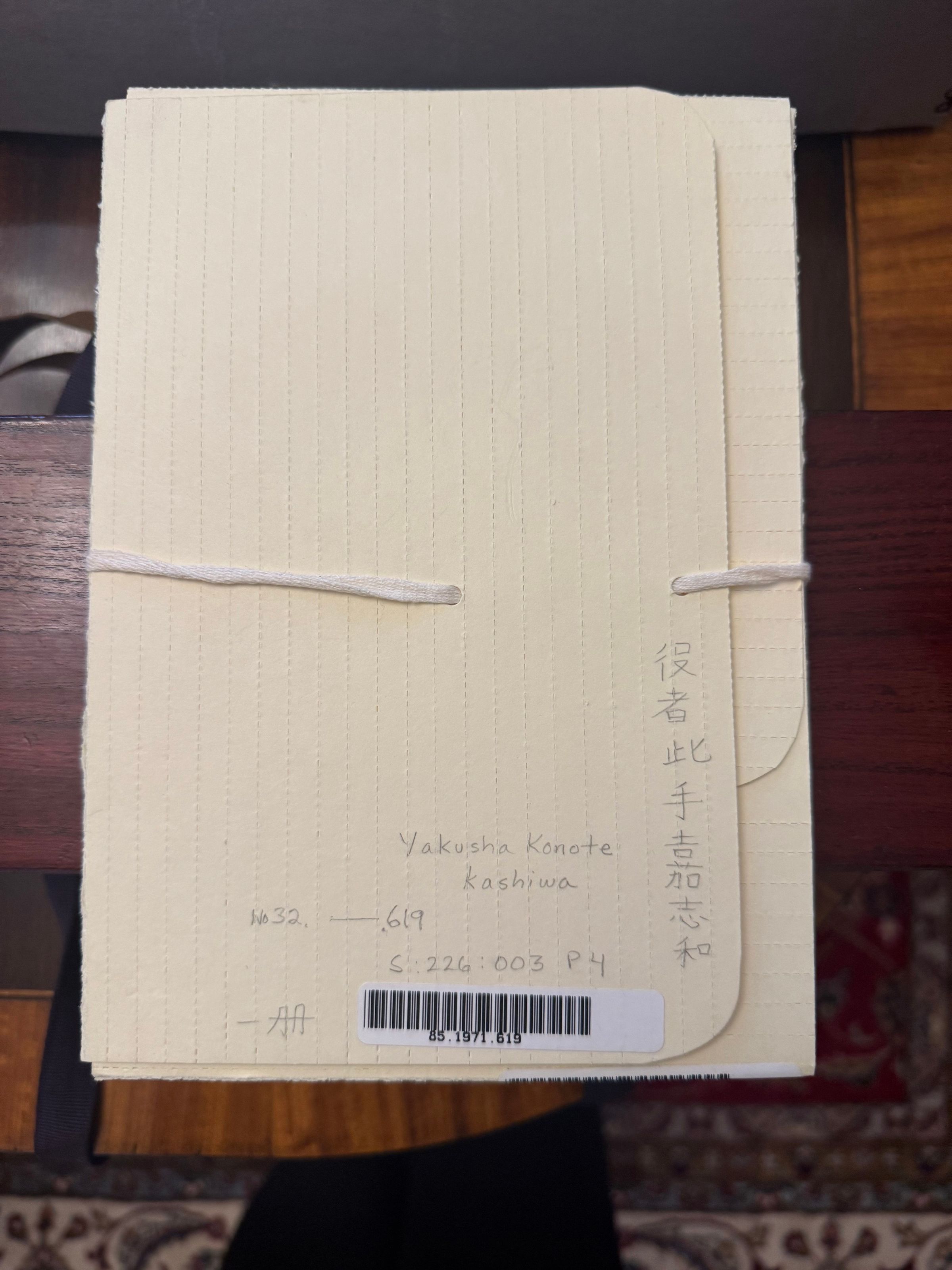
It’s great to see the second photo showing the book in a custom archival folder.
The Labeling: The handwritten "LTL85.1971.619" and the barcode suggest this piece has institutional provenance. It looks like it may have been part of a museum or university collection at some point (possibly the Lawrence Thompson Library or a similar institution).
The String Binding: The folder uses a "bone folder" style tie. This is the gold standard for protecting fragile washi (paper) from the light and dust of a home library.