Engine, outboard
Name/Title
Engine, outboardEntry/Object ID
1988.035.006Description
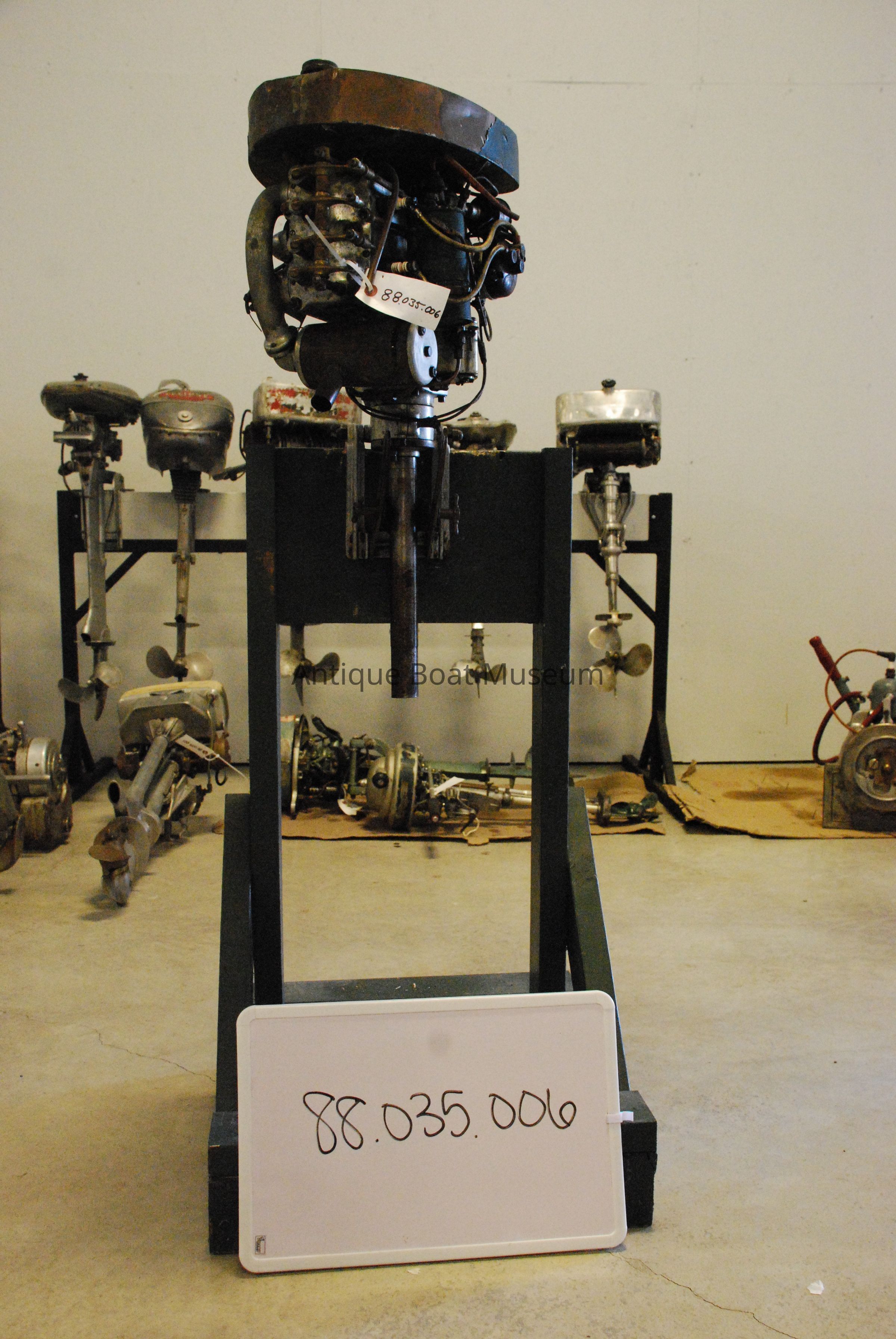
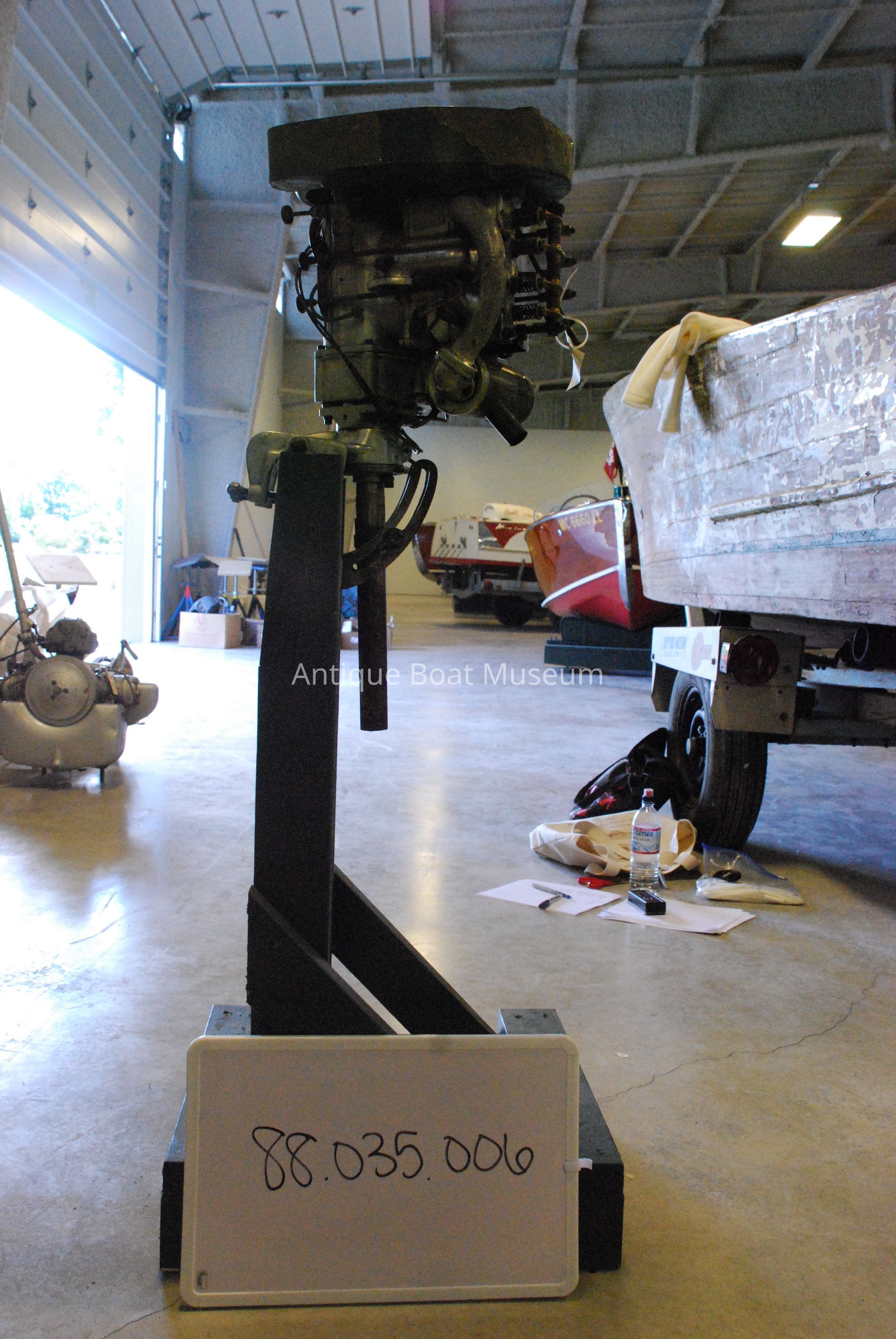
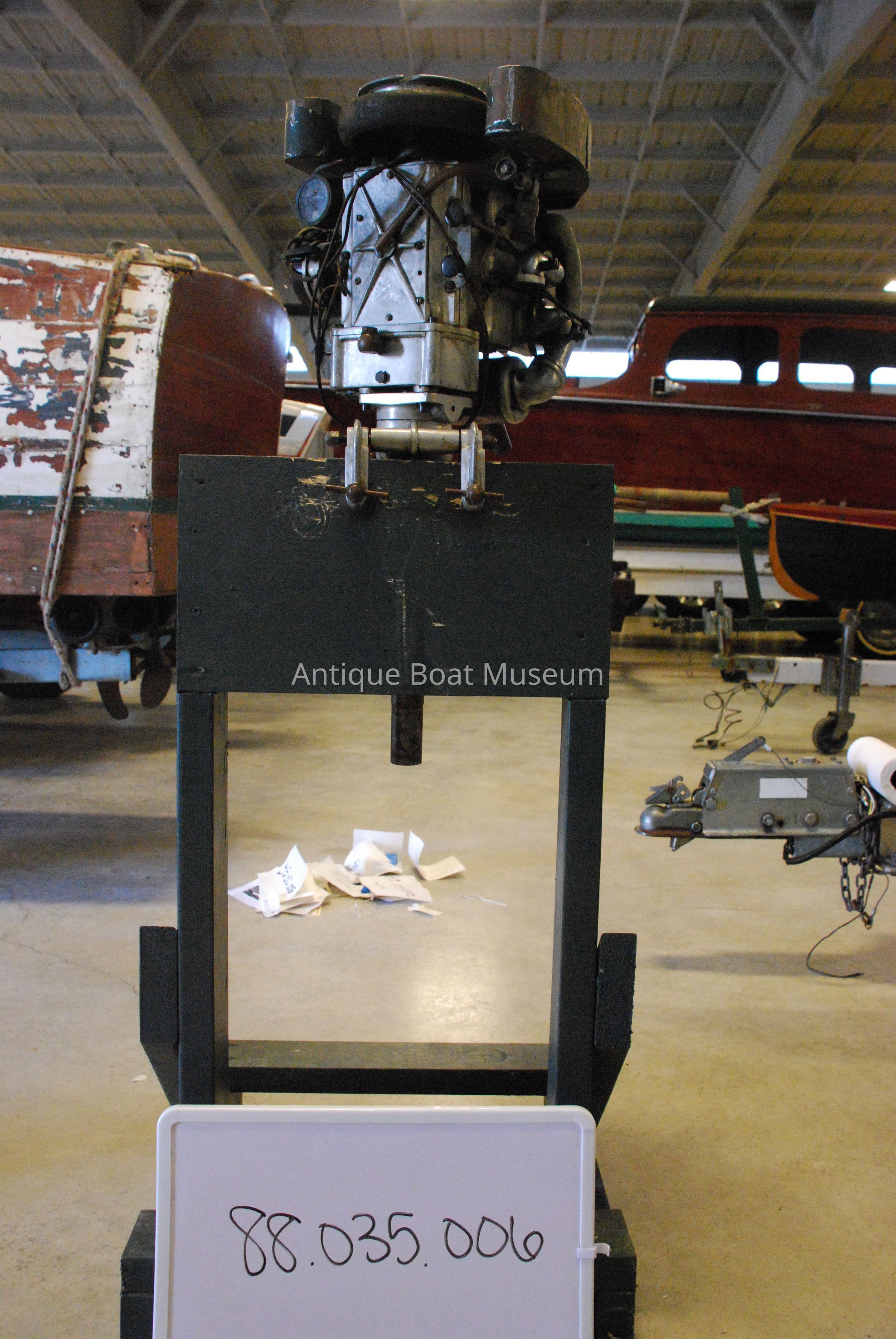
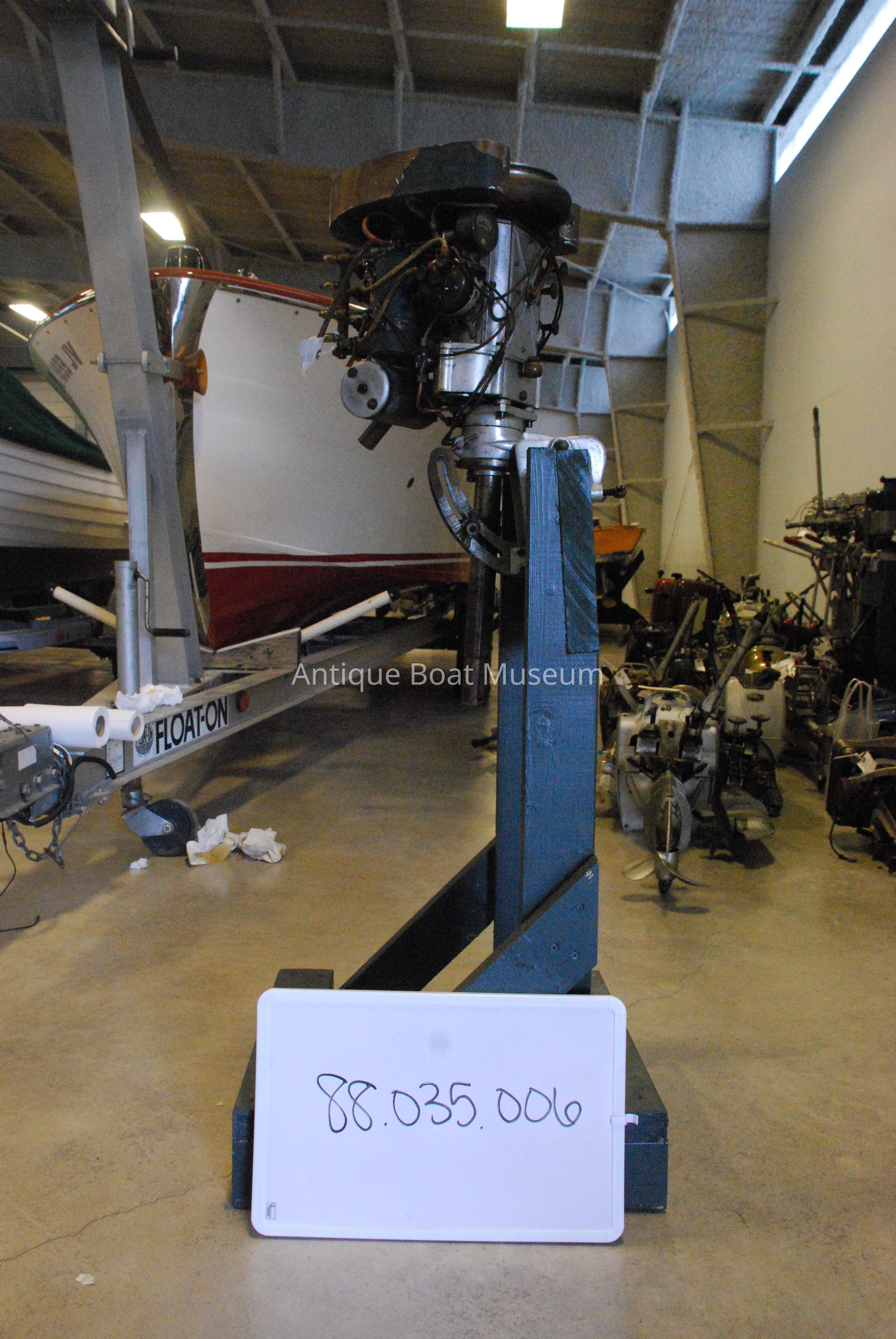
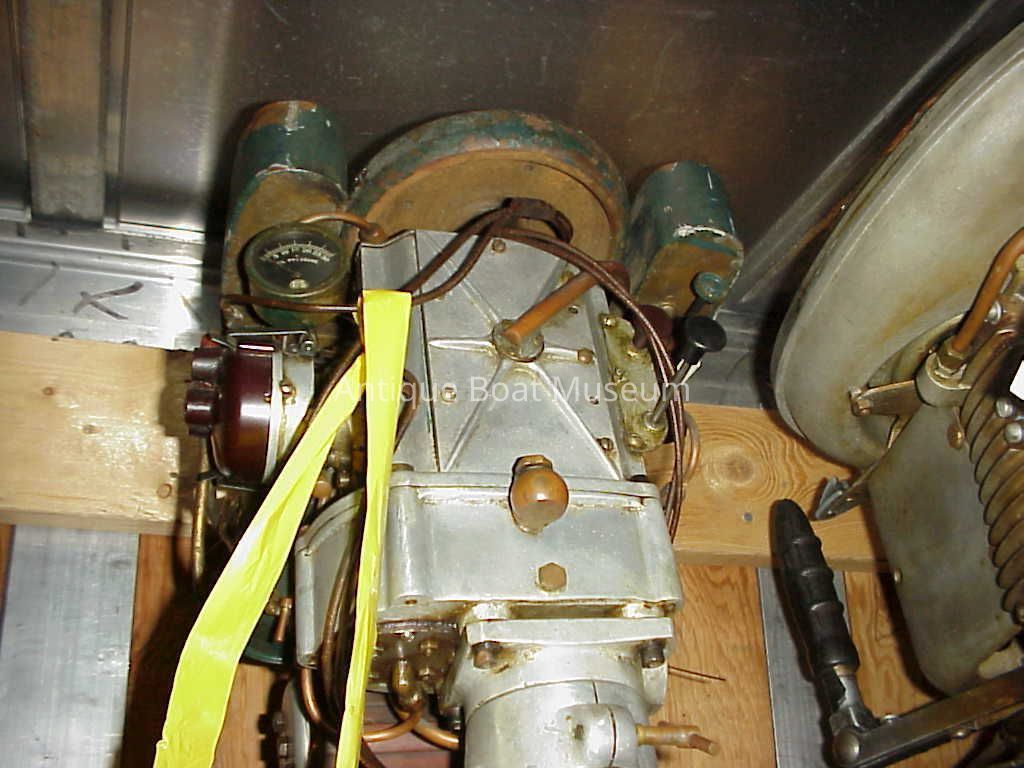
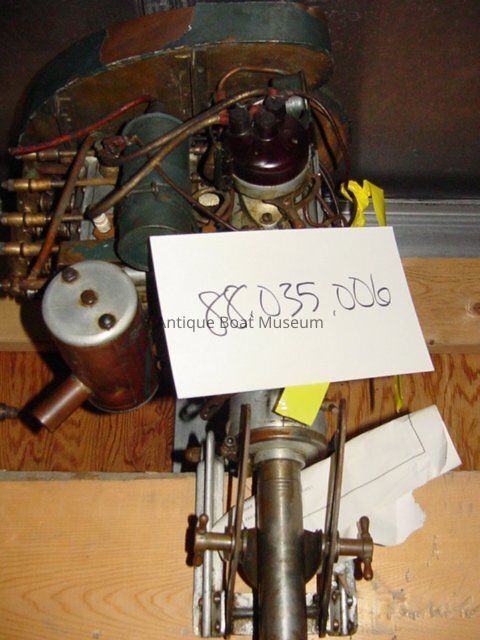
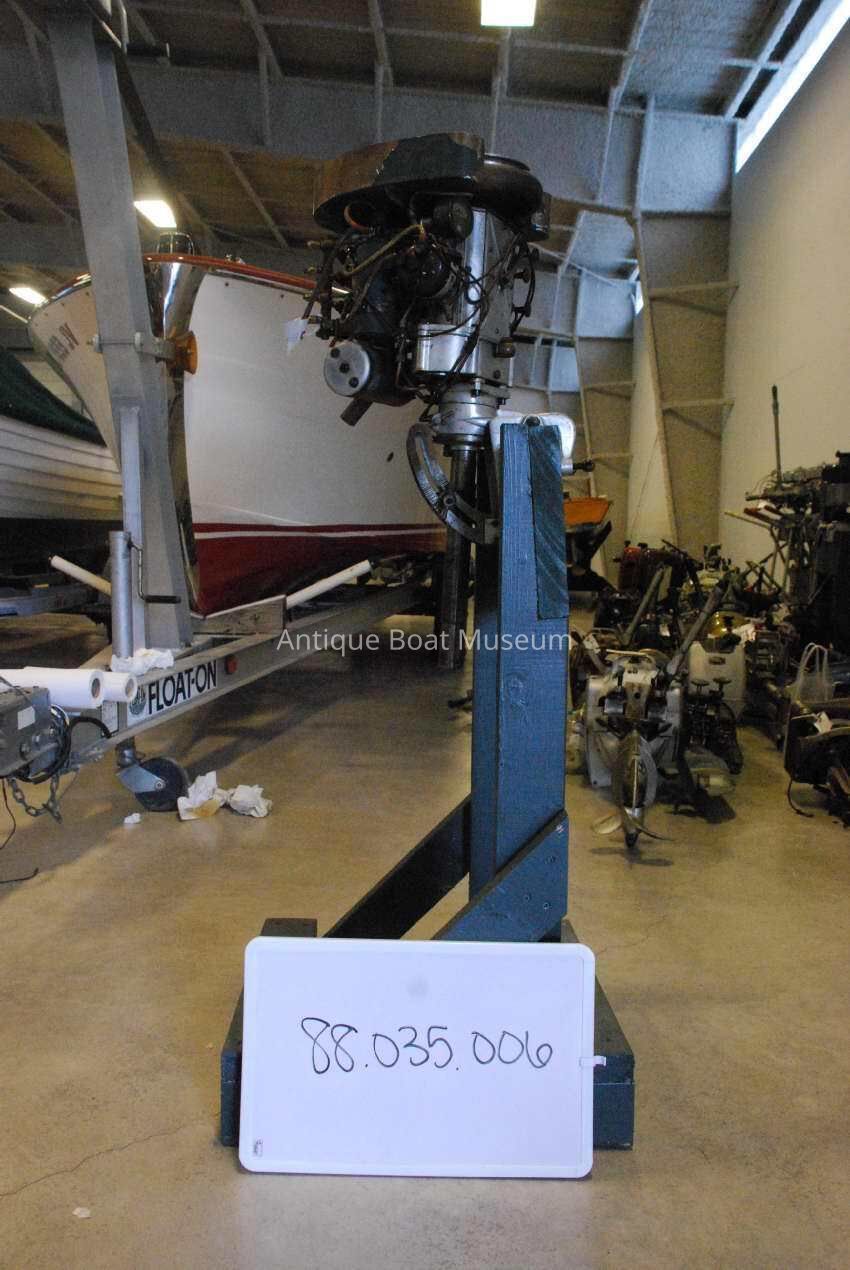
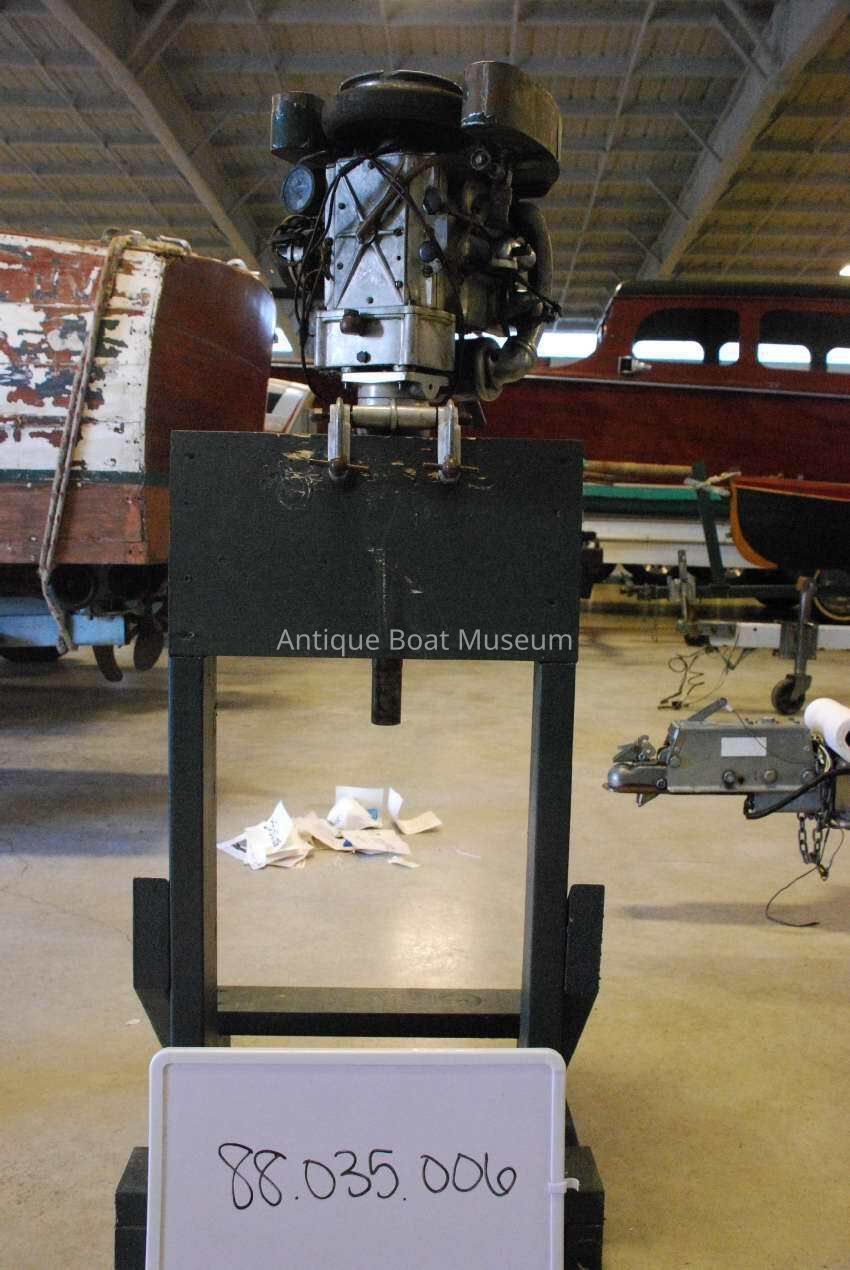
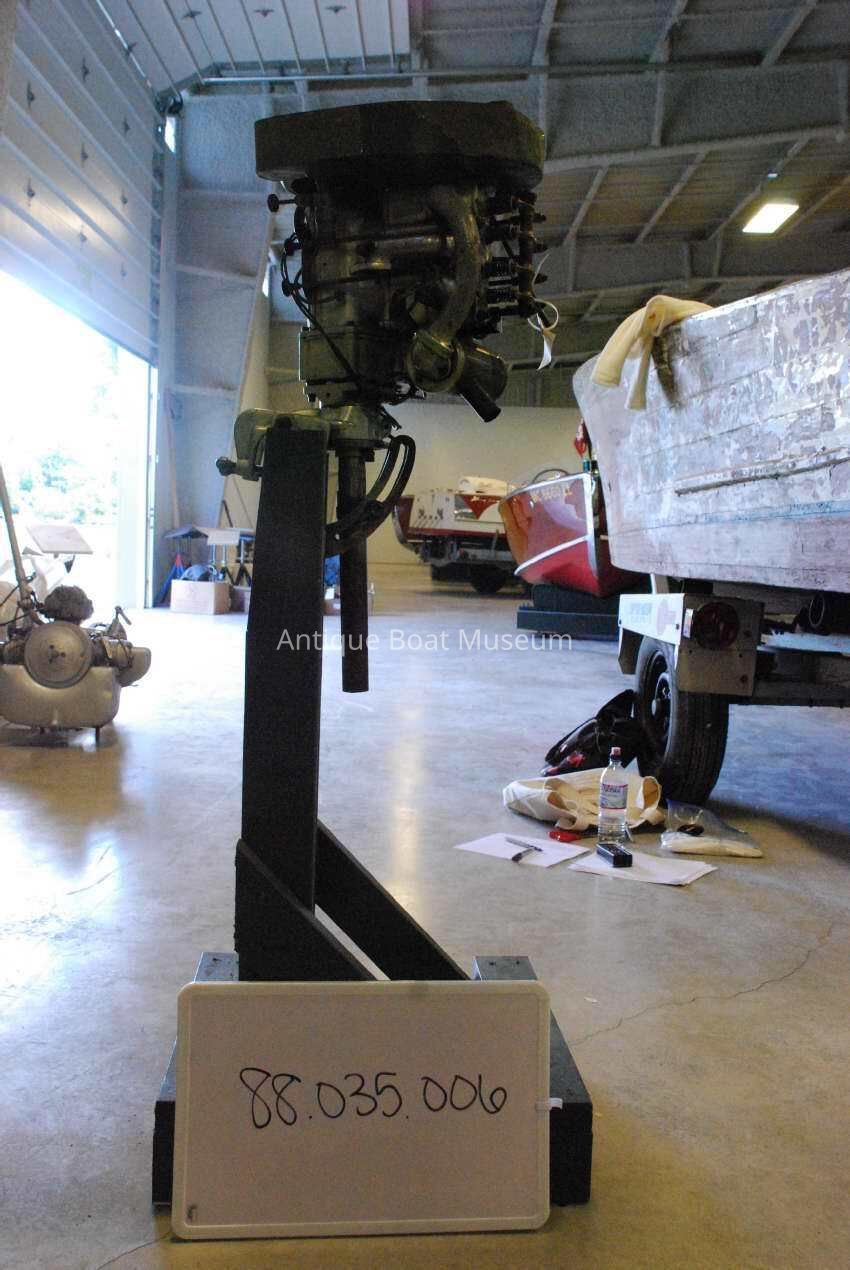
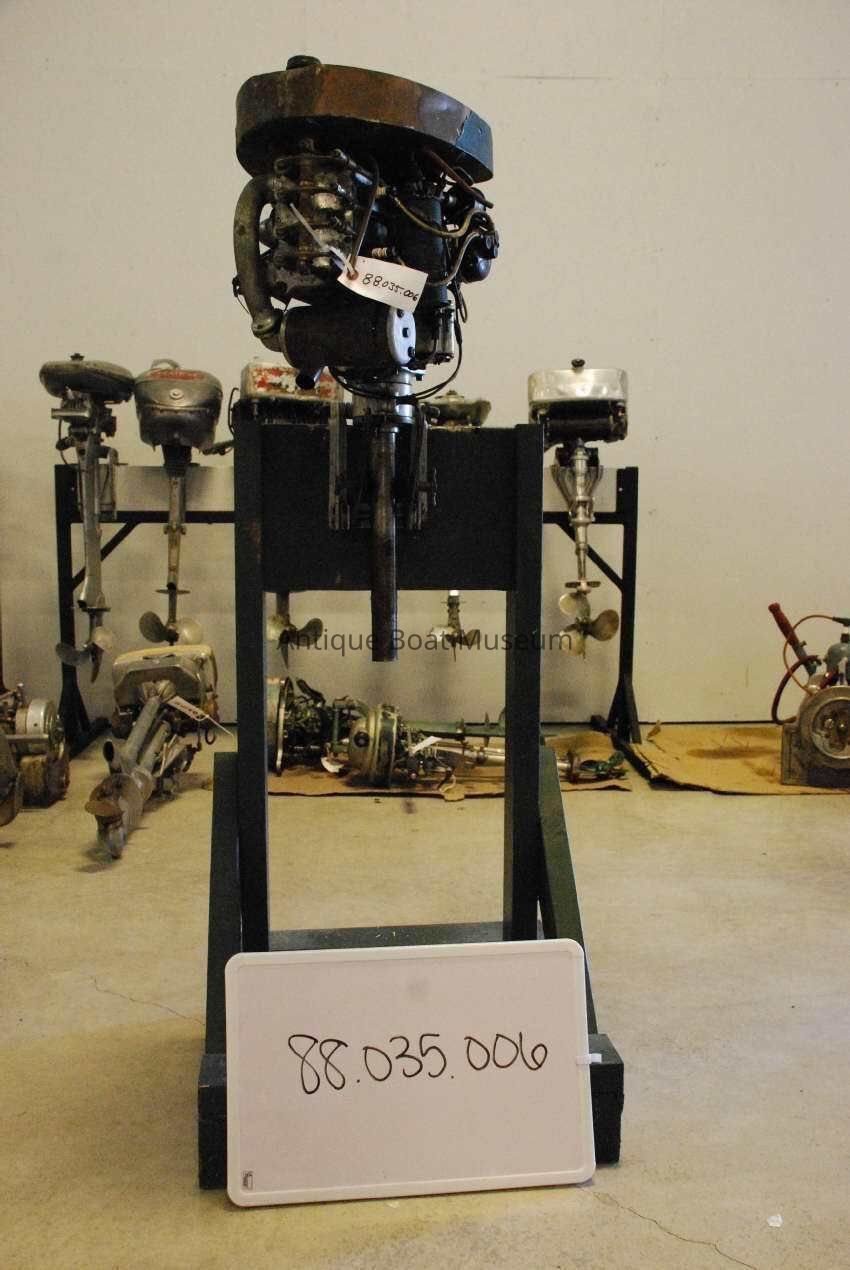
Outboard engine, unknown make, no lower unit Possibly a WAB 88.035.006 This is a very unusual engine with a maddening lack of identification. It is a very early four-stroke vertical-block in-line twin, perhaps one of the first four-stroke outboards and perhaps also one of the first horizontally-firing in-line twins. It is built very much like a regular four-stroke inboard of the early twenties or before, and this is the best way available of dating it. The block itself is cast-aluminum, which in itself is unusual and may suggest a later date, but other factors make it seem earlier. The block is four pieces, suggesting that it may have been hand-built rather than made on a production line. It has beautiful exposed brass rocker-arms in back controlled by rods running the length of the cylinders to a lengthwise protrusion in the crank case where a controlling rod or camshaft is doubtless housed. At the bottom end of this is a circular protrusion which is assumed to contain a timing gear. The exhaust manifold and intake manifold are cast aluminum, but unfortunately the carburetor is missing. Judging by the way it was mounted, it was probably an off-the-shelf carburetor bought from a company like Schebler, which is what most four-stroke engine companies did. There are push-pull cables leading from the front of the engine that probably controlled the throttle and choke. The ignition system is that of an early four-stroke inboard, with an induction coil and distributor, both with Bakelite tops. These two pieces and their wires look to be from the early twenties at the latest. There are wires present to run to a dry-cell battery inside the boat. The engine also has a sophisticated oiling system, complete with a pump and an Indian Head oil pressure gauge, which again suggests pre-twenties. There is a copper tube with a valve on the lower end which runs into the bottom of the block, and a tube which emerges from the top of the block, bends down until it is below the engine, and then ends. This is probably the cooling water system, though there is no evident water pump. Contributing to the theory that this was a hand-built engine is a copper tube which was soldered onto the bottom of the oil-pan plate and runs ten inches to end just under the gas tank facing backwards, probably to vent hot oil fumes from the crankcase. This was clearly an afterthought, probably added after experimentation showed it to be necessary. Many early four-stroke inboards also had direct-vented crank cases. The gas tank and exhaust canister were hand made out of sheet copper. In addition to the carburetor, this engine is missing its entire lower unit, which probably contained the missing water pump. This engine could be the result of a four-stroke inboard engine company experimenting with outboard mounting. Given the incredible variety of inboard-engine manufacturers as well as the great deal of experimentation with gas engine technology in the teens, it seems very plausible that one or more of these companies would try to move in this direction. The fact that it has no identifying plate or decorative marks anywhere suggests that it was never marketed, so it is likely an experimental build. The aluminum block, and copper gas tank, as well as other details, make it resemble the WAB outboard, acc. no. 88.035.005. It could also be a custom-made engine for outboard racing, but it seems unlikely that outboard racing was so sophisticated so early. A very interesting piece, worthy of further examination and research. Since both WAB engines came from the same source, Robert Sandreczki, he would be a good place to start looking for information. It starts with a rope and turns over well, but there is an audible leak somewhere.Collection
Outboard motorsAcquisition
Accession
1988.035.006Made/Created
Manufacturer
unknownNotes
Date: unk Engine: unknown Cylinders: 2Location
Wall
WestRoom
Bay 4Building
*Don Doebler Collections Storage Facility*Don Doebler Collections Storage Facility
Motor Trailer