Pomo Acorn Mush Basket
Twined Basket

-

Anytown Museum

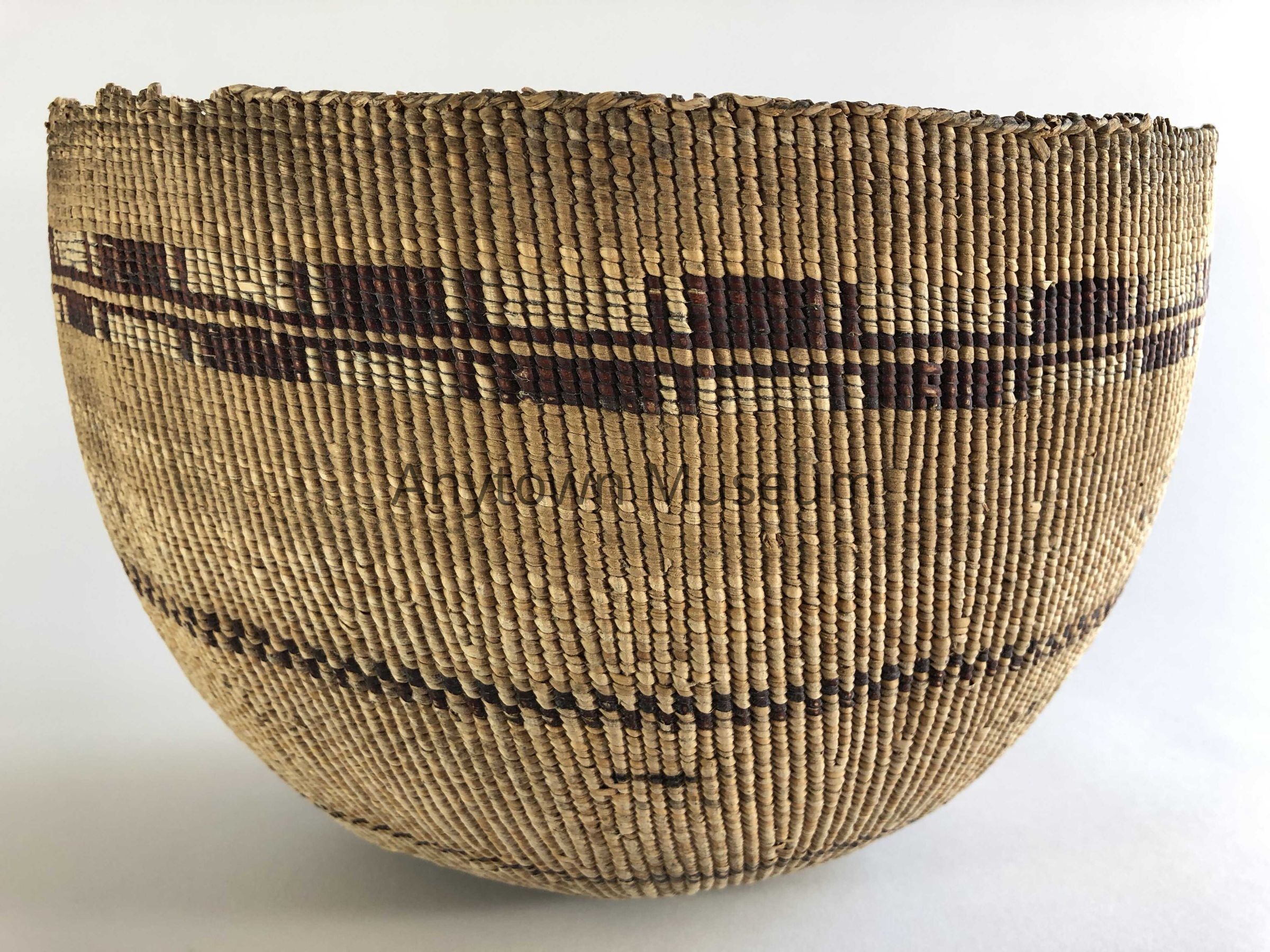
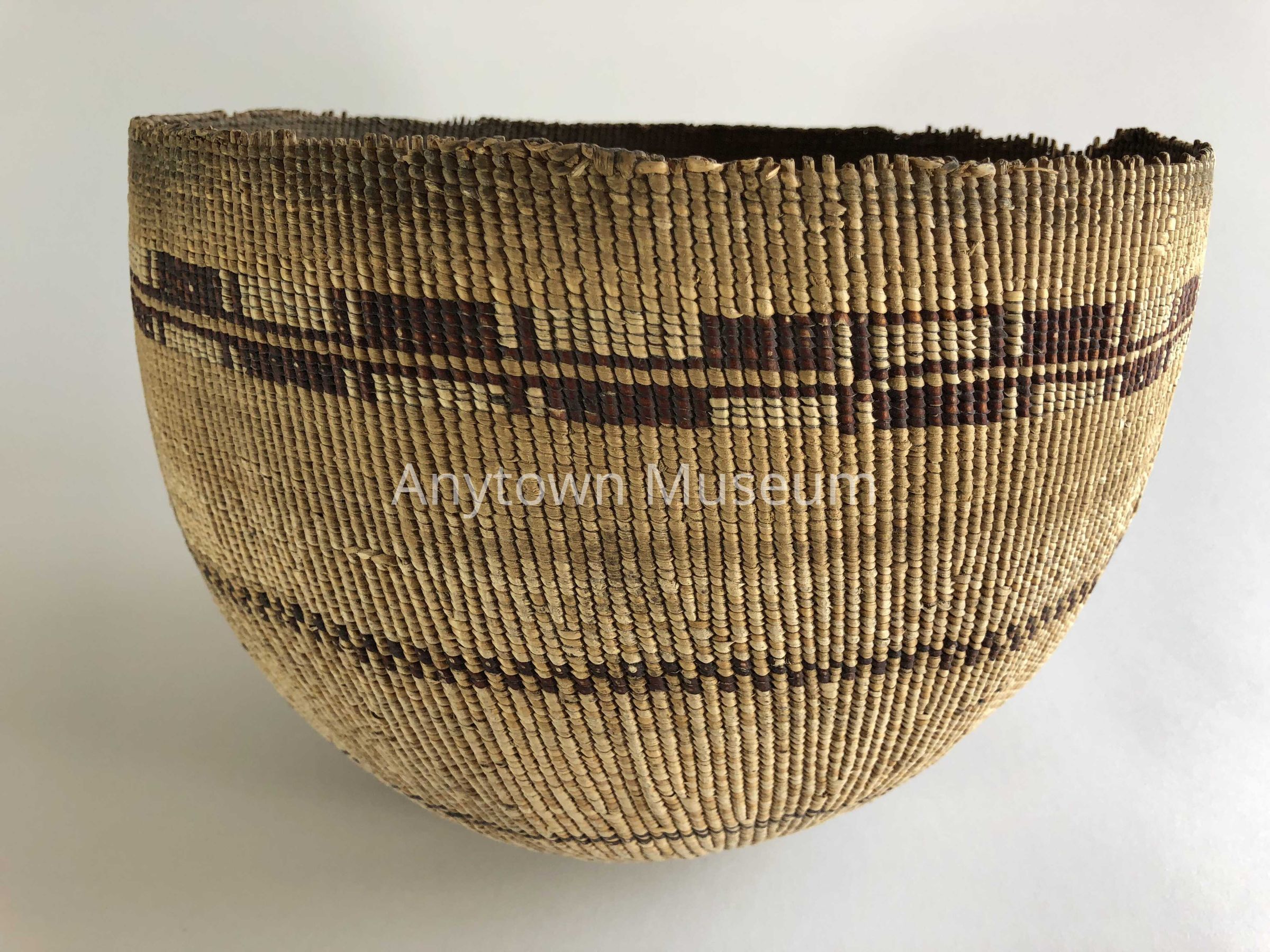
A tightly woven basketry vessel with a rounded, deep bowl form displays rectangular and square patterns in dark and light twining across its surface. The basket is presented in three-quarter view against a neutral background, highlighting its dense weave and subtle geometric decoration.: This cooking basket exemplifies Pomo basketweaving traditions of Northern California. The object is a hemispherical or bowl-shaped vessel constructed using the twining technique, a method in which horizontal weft elements are twisted around vertical warp strands. The basket exhibits a dense, regular weave characteristic of utility cooking baskets designed to hold liquids and withstand direct heat. The exterior surface is decorated with bands of rectangular and square patterns created through the use of contrasting materials—likely natural willow or sedge in light tones combined with darker-colored plant fibers, possibly redbud, to create the geometric designs that encircle the vessel. The patterns are organized in horizontal registers and do not feature the zigzag or diamond motifs sometimes found in Pomo basketry; instead, the design is based on rectilinear forms aligned with the structural grid of the twining itself. The rim appears finished with a binding or wrapped edge typical of functional vessels. The overall form suggests the basket was intended for cooking acorns, either for leaching, parboiling, or rendering the nuts for food preparation. The construction is executed with considerable technical skill, with uniform spacing and tension throughout. The object shows some age-related darkening and surface wear consistent with use and age, particularly visible in areas of the darker patterning.
A tightly woven basketry vessel with a rounded, deep bowl form displays rectangular and square patterns in dark and light twining across its surface. The basket is presented in three-quarter view against a neutral background, highlighting its dense weave and subtle geometric decoration.

This cooking basket exemplifies Pomo basketweaving traditions of Northern California. The object is a hemispherical or bowl-shaped vessel constructed using the twining technique, a method in which horizontal weft elements are twisted around vertical warp strands. The basket exhibits a dense, regular weave characteristic of utility cooking baskets designed to hold liquids and withstand direct heat. The exterior surface is decorated with bands of rectangular and square patterns created through the use of contrasting materials—likely natural willow or sedge in light tones combined with darker-colored plant fibers, possibly redbud, to create the geometric designs that encircle the vessel. The patterns are organized in horizontal registers and do not feature the zigzag or diamond motifs sometimes found in Pomo basketry; instead, the design is based on rectilinear forms aligned with the structural grid of the twining itself. The rim appears finished with a binding or wrapped edge typical of functional vessels. The overall form suggests the basket was intended for cooking acorns, either for leaching, parboiling, or rendering the nuts for food preparation. The construction is executed with considerable technical skill, with uniform spacing and tension throughout. The object shows some age-related darkening and surface wear consistent with use and age, particularly visible in areas of the darker patterning.

Name/Title

Pomo Acorn Mush Basket

Entry/Object ID

1994.25.2

Description

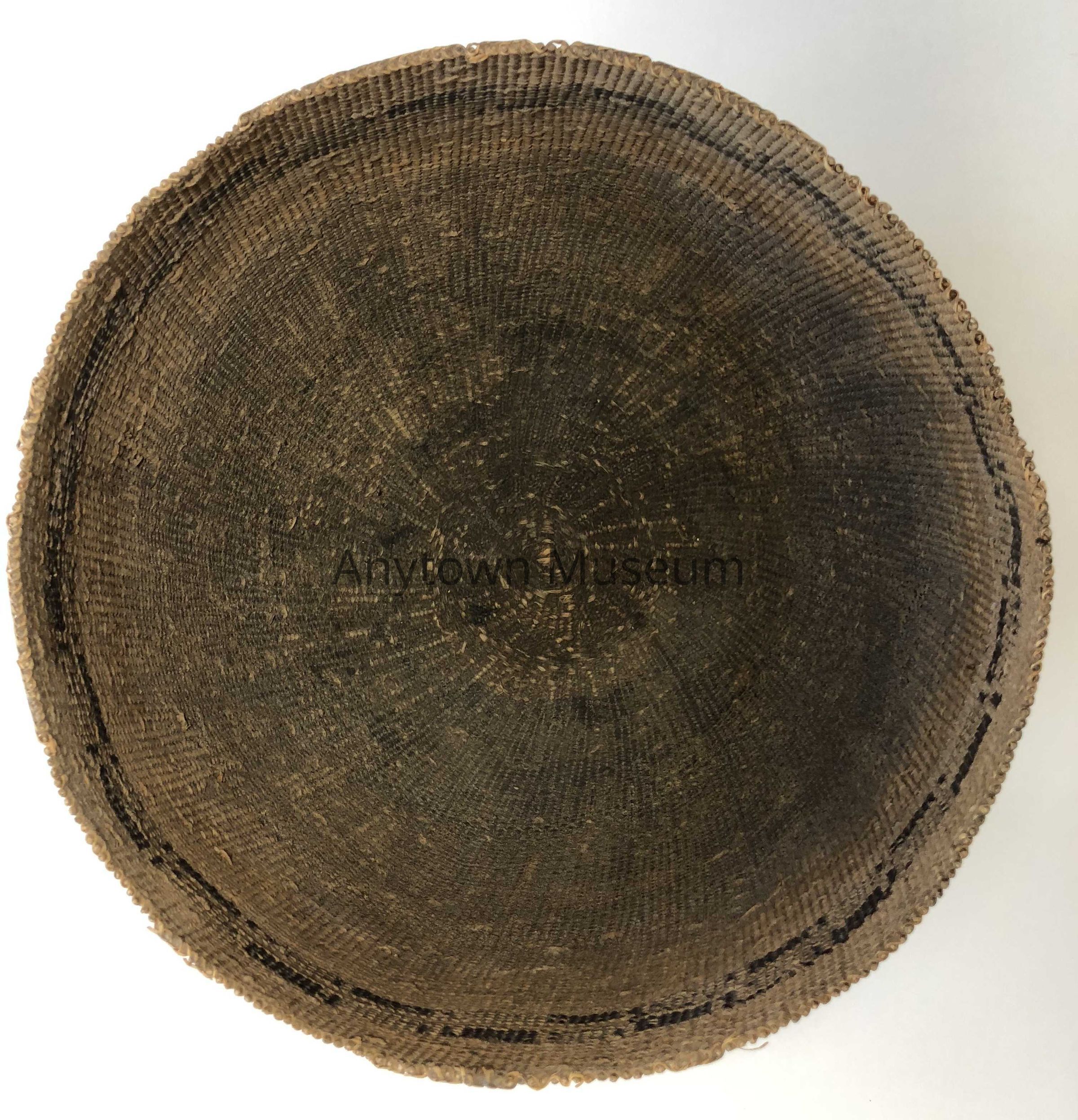
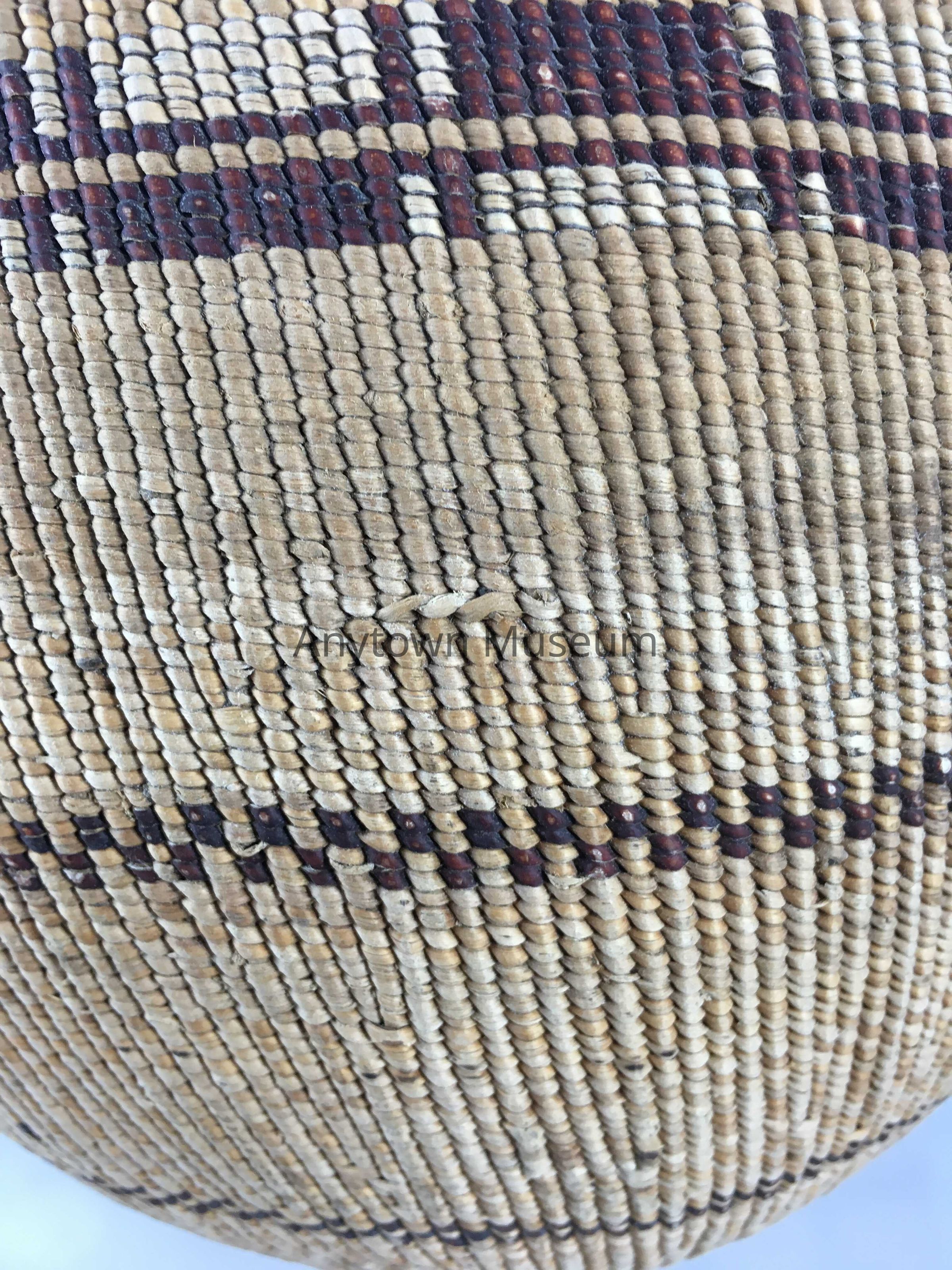
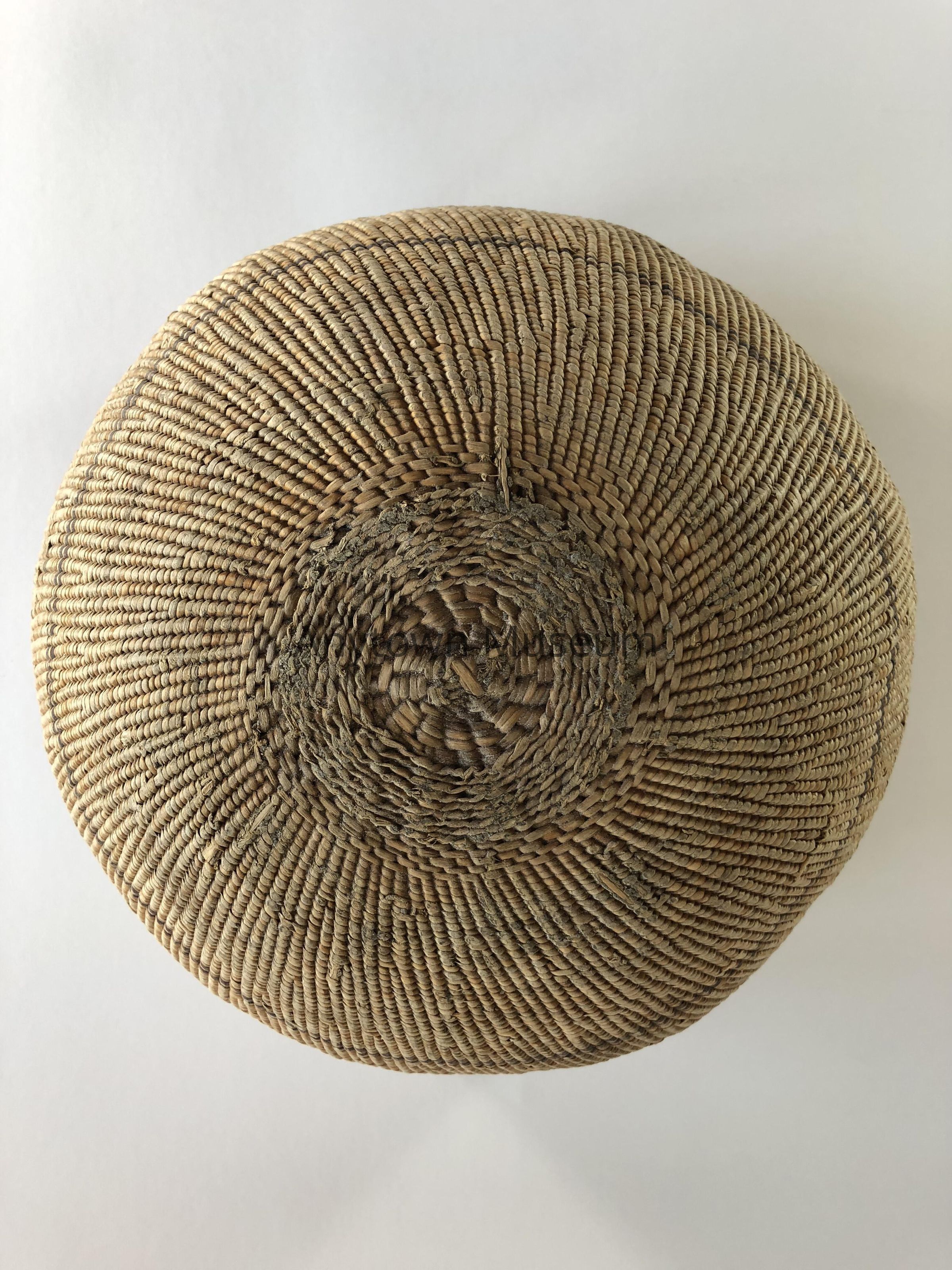
A mush bowl with much evidence of use including slight burn marks inside and a few minor burn marks on the outside. The bowl is decorated with two bands of half twist alternating red and white rectangles of peeled and unpeeled redbud approx. 1 1/2" below the rim, a non-twist "checkered" band of alternating rows of two redbud stitches about 2/3 down the basket and a second non-twist checkered band just above the shoulder.

Use

This basket is used to cook acorn mush / soup

Context

This twined acorn mush cooking basket was collected by Wes Adams around 1910 near the west end of Clear Lake in Northern California. Unfortunately, Wes didn't note the name of the maker or the family from whom he bought it. It is somewhat small for a cooking basket, yet exhibits much evidence of use- the telltale small burns from hot rocks being stirred in it to bring the acorn soup to a boil. Wes brought the basket home and gave it a prominent spot in the center of the bookcase behind his desk where it remained for over a century.

Collection

Adams Pomo Baskets

Category

Utilitarian
Baskets

Acquisition

Accession

1994.25

Source or Donor

Acquisition Method

Gift

Credit Line

In Memory of my Father who truly loved the Native People of California

Made/Created

Artist

Date made

circa 1900

Time Period

19th Century

Ethnography

Cultural Region

Culture/Tribe

Pomo
Native American

Lexicon

Nomenclature 4.0

Nomenclature Secondary Object Term

Basket, Cooking

Nomenclature Primary Object Term

Cookware

Nomenclature Sub-Class

Cooking Vessels

Nomenclature Class

Food Processing & Preparation T&E

Nomenclature Category

Category 04: Tools & Equipment for Materials

LOC Thesaurus for Graphic Materials

Baskets, Cooking, Native peoples

Dimensions

Height

8 in

Diameter

11-3/8 in

Material

Hazel, Sedge, Redbud

Twined Basket Details

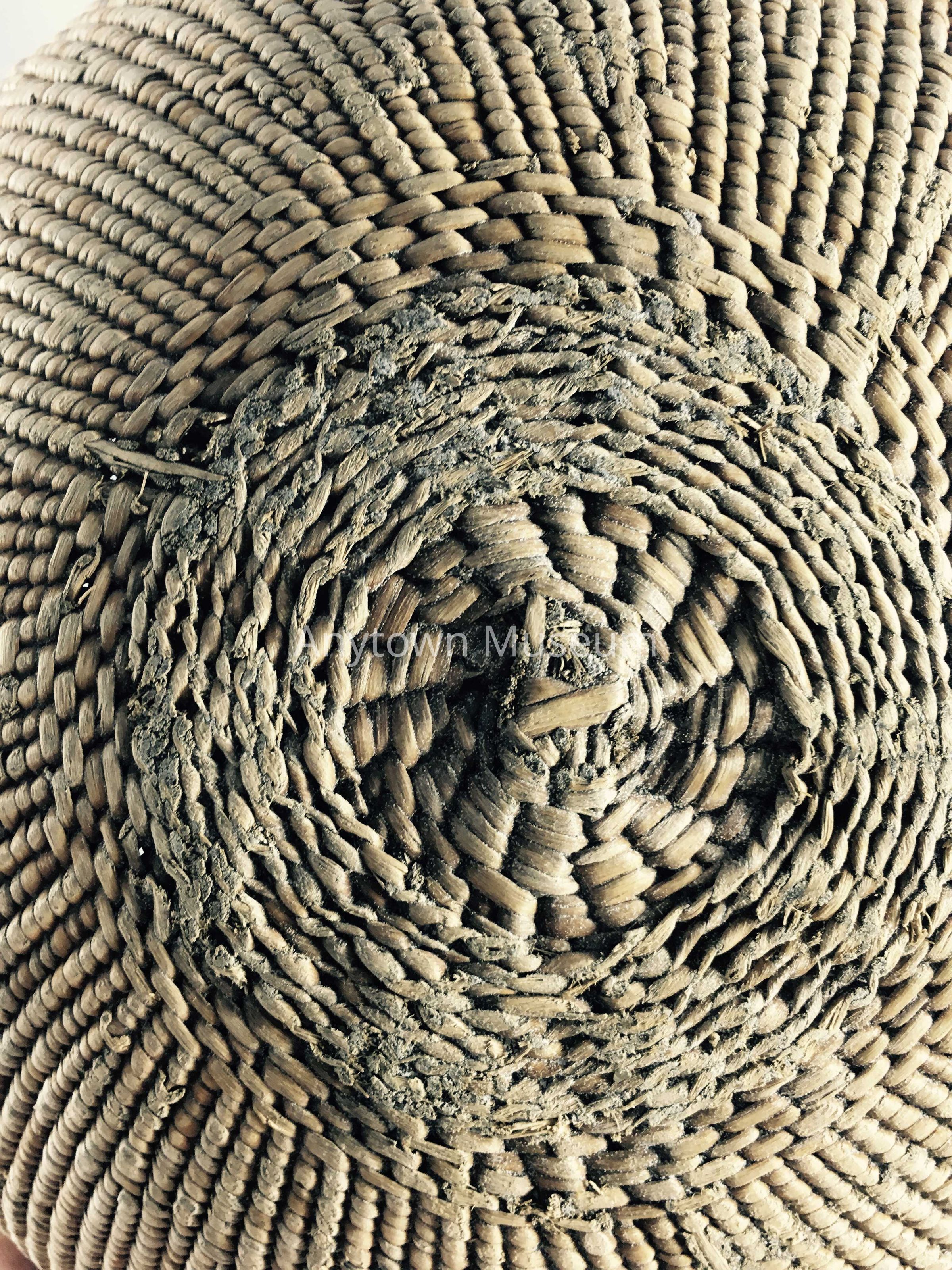
Twined Start

Intersecting interwoven spokes

Twined Finish

Compound binding, plaited or braided finish

Open/Closed Twining

Predominantly Closed Twined

Predominant Twining Type

Plain Twining

Twining Design Techniques

Half Twist Overlay, Non-Twist Overlay

Warp ("Vertical" Elements)

Warp material

Hazel

Primary Warp Type

Simple: Plain or parallel arrangement

Weft ("Horizontal" Elements)

Weft material

Sedge, Redbud

Weft Slant

S Slant (up to left)

Relationships

Related Person or Organization

Person or Organization

Outgoing Loans

Loan Out

OL2026.1