Notes
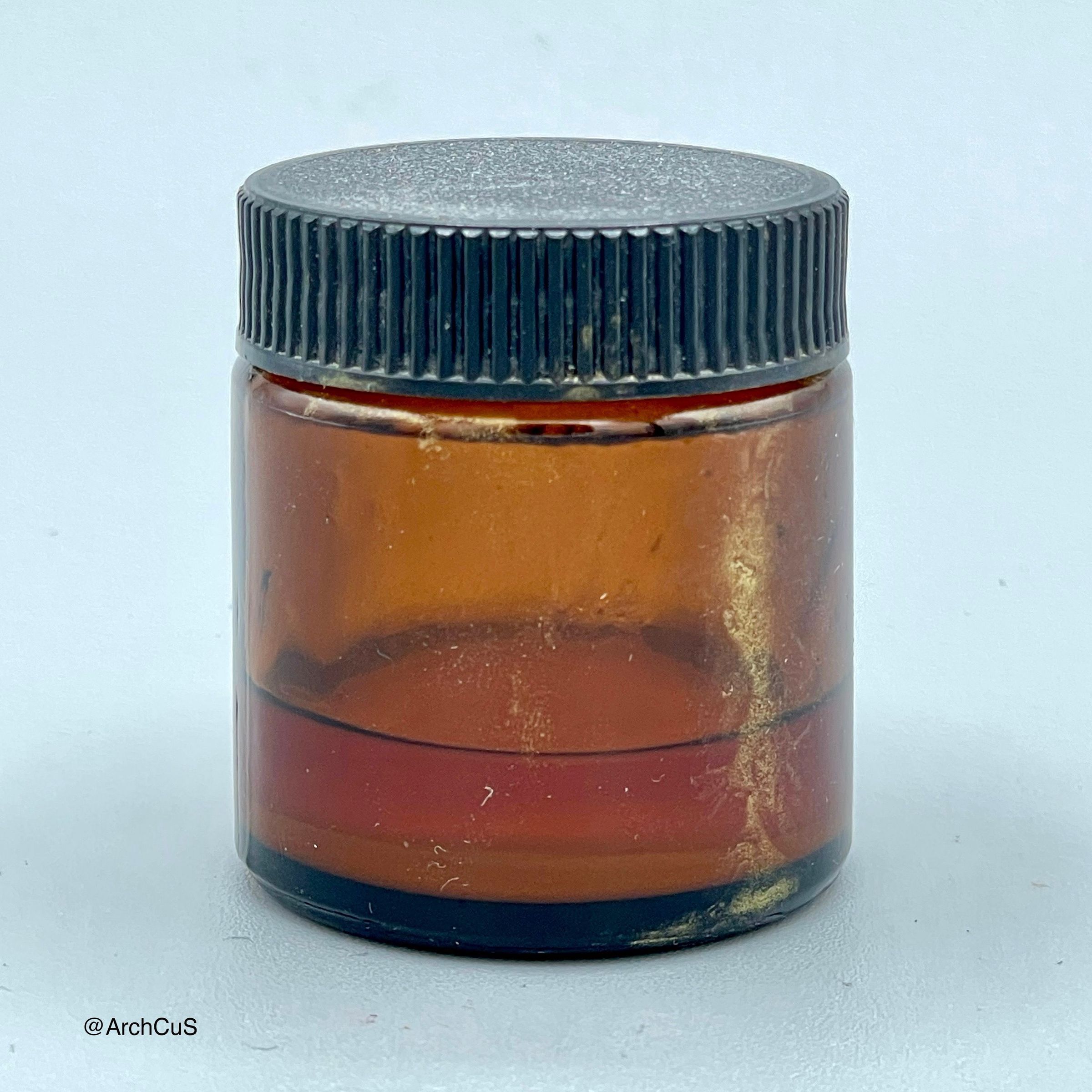
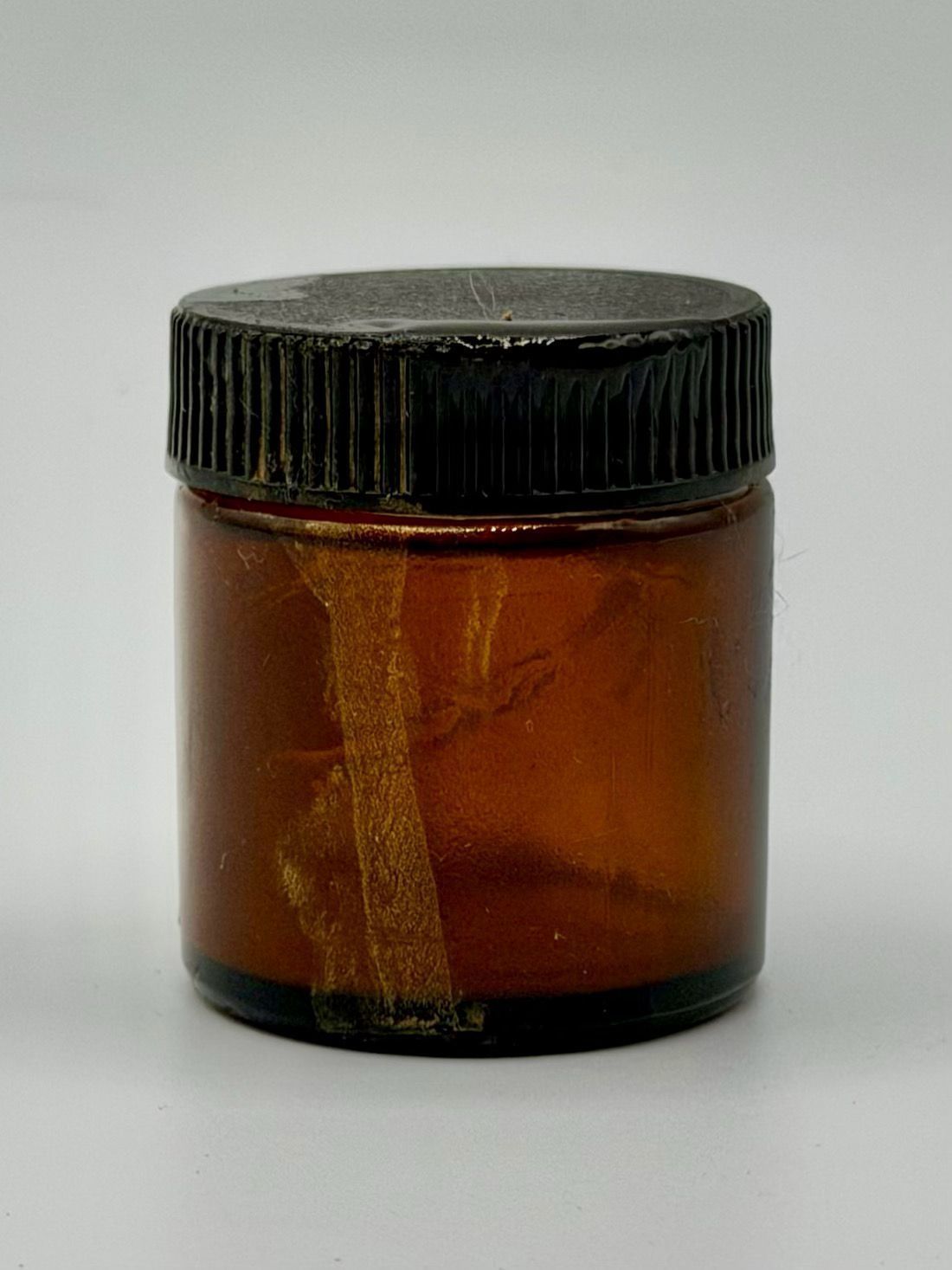
Amber/brown glass has been the standard pharmaceutical container color since the late 19th century because the color (produced by adding sulfur, iron, and carbon to the glass batch) filters out ultraviolet and short-wavelength visible light, protecting light-sensitive contents from photodegradation. This made it the universal pharmacy and laboratory color worldwide from the 1880s onward.
The deeply ribbed black plastic screw cap is the workhorse pharmaceutical closure of the 20th century. Early versions (1920s–1950s) were typically phenolic plastic (Bakelite-family thermoset), which gave the cap its characteristic deep-black color and slight brittleness. From the 1960s onward, polypropylene and other commodity thermoplastics progressively replaced phenolic for cost reasons, often with the same external rib pattern preserved by molding convention.
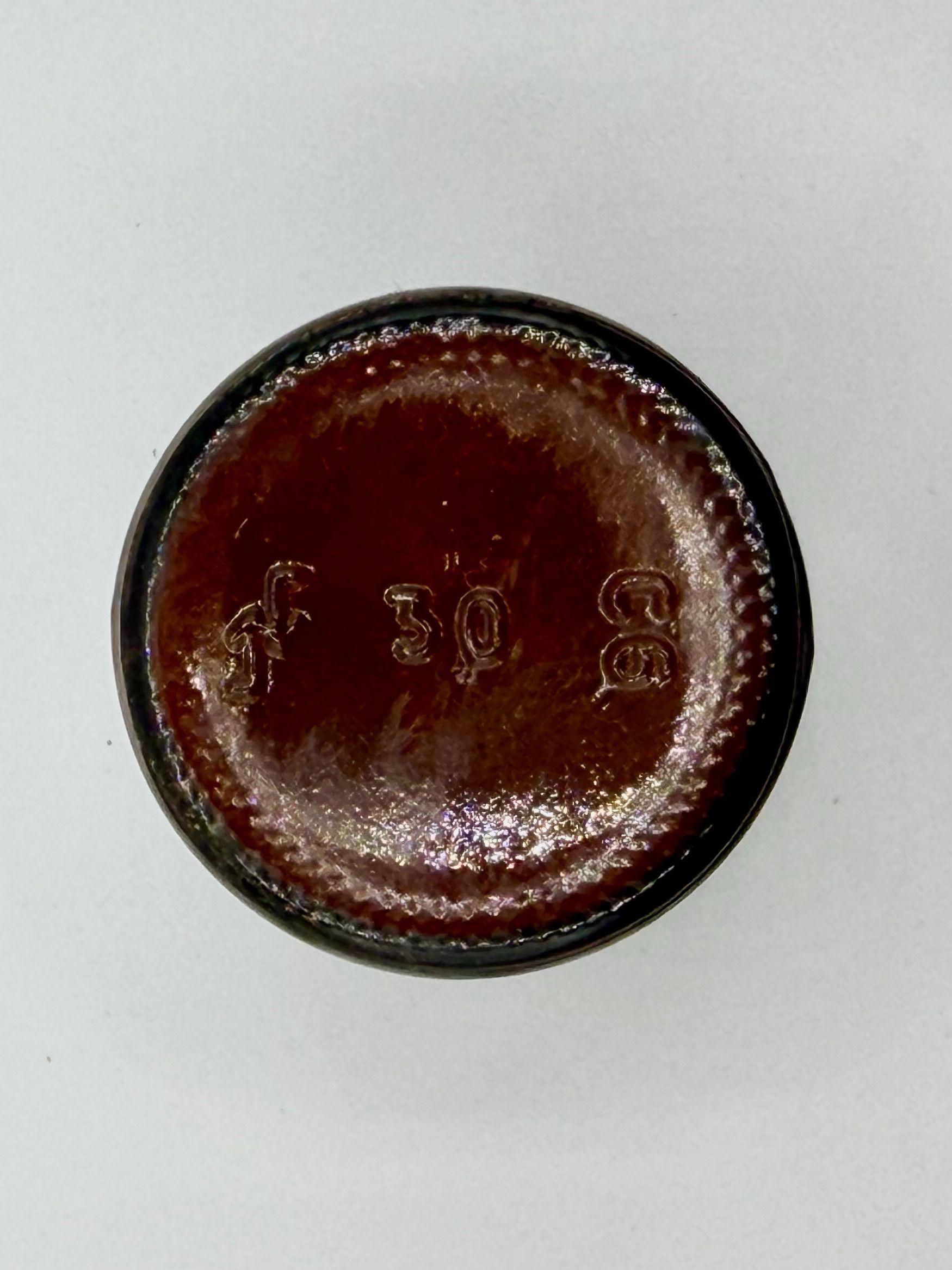
The right mark — two stacked oval forms — is characteristic of European glassworks trademarks but has not been positively identified against published glassworks-mark catalogs. Identifying the specific glassworks for this jar would require consultation with reference resources such as: David Whitten's Glass Bottle Marks online database (glassbottlemarks.com); specialized European glassworks-mark catalogs (German, Czech, French, Italian, Spanish); and possibly Cuban-specific pharmaceutical-glass archives (which are limited and not centrally catalogued, but the Museo Farmacéutico in Matanzas may have comparative collections). Until the specific glassworks is identified, the country of manufacture remains uncertain.
The 30 ml capacity context. The 30 ml volume is a standard small-format size for topical pharmaceutical and cosmetic preparations — used internationally for: skin creams (face creams, hand creams, eye creams, night creams); medicinal ointments and salves; small balms (lip balms, healing balms); cosmetic emulsions; and various other topical preparations. The size is small enough to fit comfortably in a household medicine cabinet or vanity drawer, and large enough to provide several weeks to months of regular use depending on the product's application frequency.Notes
Cuba's pharmaceutical sector was nationalized after 1959 and consolidated under various state structures. Throughout the post-1959 period, ordinary Cuban pharmacies dispensed both pre-packaged medications and locally compounded preparations in containers like this one. Vernacular pharmaceutical jars and bottles are an under-archived category of Cuban material culture: they document the everyday infrastructure of healthcare delivery, the persistence of compounding pharmacies, and the resourcefulness of households that often re-used such containers for other purposes (storing spices, sewing pins, small fasteners) once empty.