Name/Title
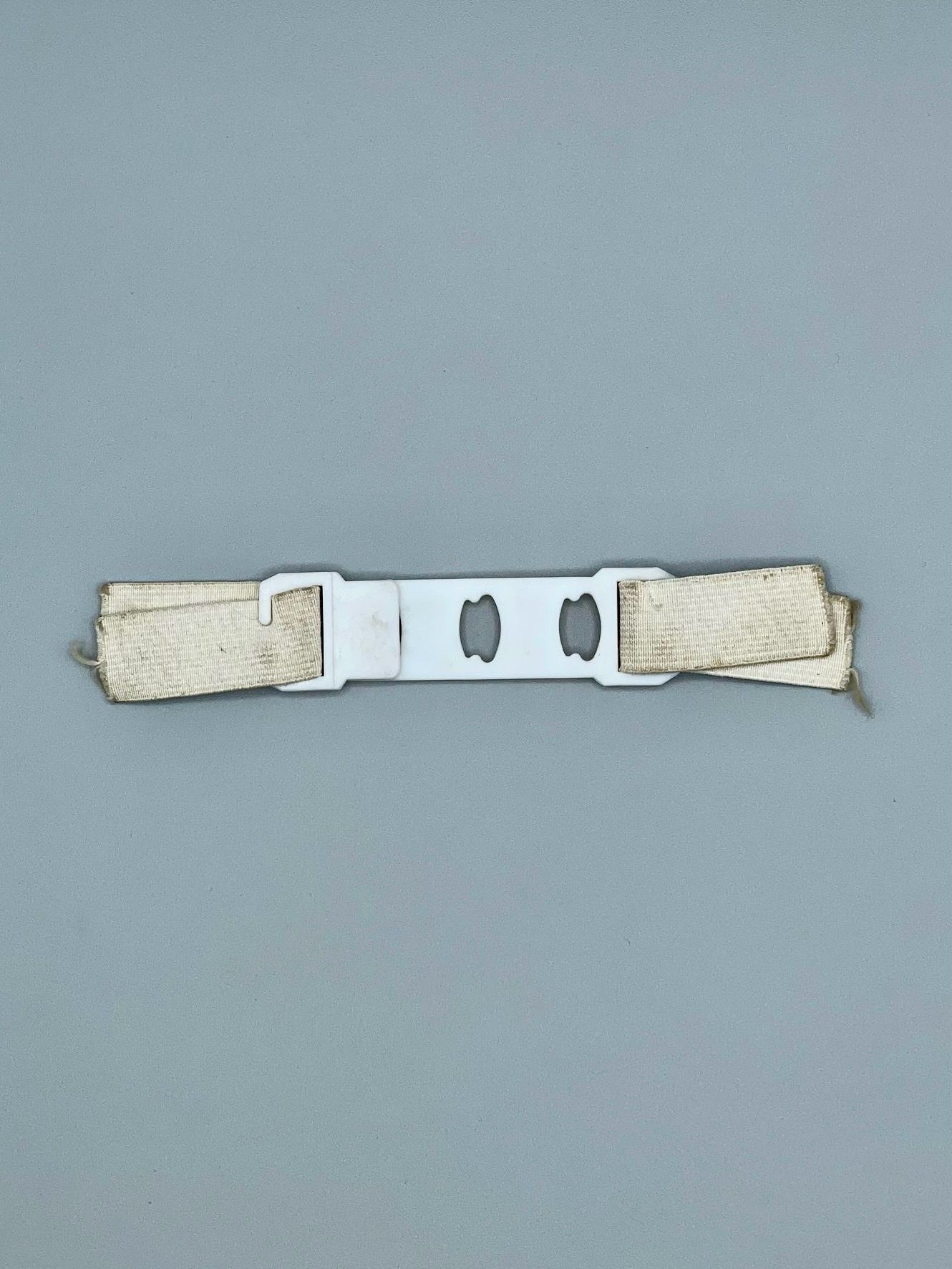
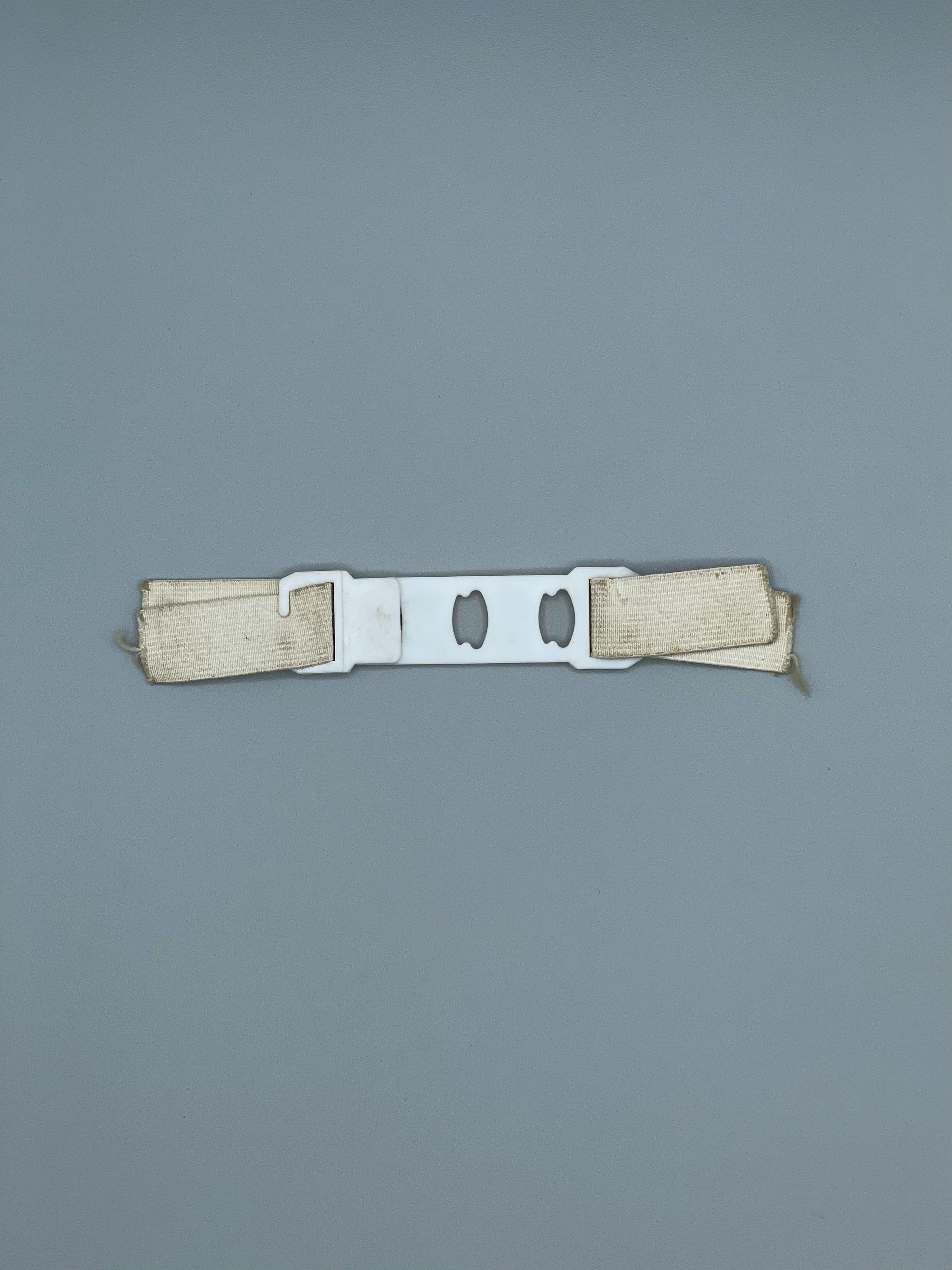
Brassiere strap component, elastic with plastic slide-and-hook adjusterEntry/Object ID
2025.1.45Description
A length of cream/off-white woven cotton elastic strap fitted with a flat molded white plastic adjuster, salvaged from a discarded brassiere and kept for possible reuse. The plastic piece is a small rectangular plate with an open hook at one end and two oblong slots through its body; the elastic passes into the plate and is threaded back on itself so that the length can be set, while the hook is the attaching point — the standard adjustable slide-and-hook hardware of a bra strap. The webbing is about an inch wide, plain-woven, lightly soiled, with frayed cut ends where it was removed from the rest of the garment. There are no visible maker's marks, sizes, or text on either the plastic or the elastic.Use
Gertrudis Caraballo Gálvez kept it with her sewing materials.Collection
The Cabrera Arús family collection, Gertrudis Caraballo Gálvez collecitionMade/Created
Notes
MAKER: Unknown. No maker's mark, brand, or country indication is present on the visible surfaces.
DATE / PERIOD: Not marked; undetermined. The molded white plastic fastener indicates a mid-twentieth-century or later date (such plastics became common from roughly the 1940s onward), and the cotton elastic webbing is consistent with mid-century manufacture.
ORIGIN: Unknown. Nothing on the object indicates where it was made.Relationships
Related Person or Organization
Person or Organization
Gertrudis Caraballo GálvezNotes
ownerRelated Places
Place
City
HavanaCountry
CubaRegion
Caribbean, Central AmericaNotes
preservationResearch Notes
Notes
This is a single piece of brassiere hardware — the molded plastic slide-and-hook adjuster — deliberately removed from a worn-out bra and retained so the still-serviceable fastener could be reused. The object's significance lies less in its manufacture than in that act of preservation: it is a physical record of a make-do-and-mend, salvage-and-reuse practice, in which functional fittings (sliders, hooks, buttons) were harvested from discarded garments and set aside as spare parts. The frayed cut ends are the direct trace of that salvage.
This use-history is meaningful in the broader Cuban context of consumer-goods scarcity, where saving and reusing components from worn items was a common household response to limited supply.Created By
María A. Cabrera ArúsCreate Date
September 16, 2025Updated By
María A. Cabrera ArúsUpdate Date
June 20, 2026