Name/Title
"Álbum Zoológico" — collectible postalita album (Ediciones Mariví)Entry/Object ID
2025.17.1Description
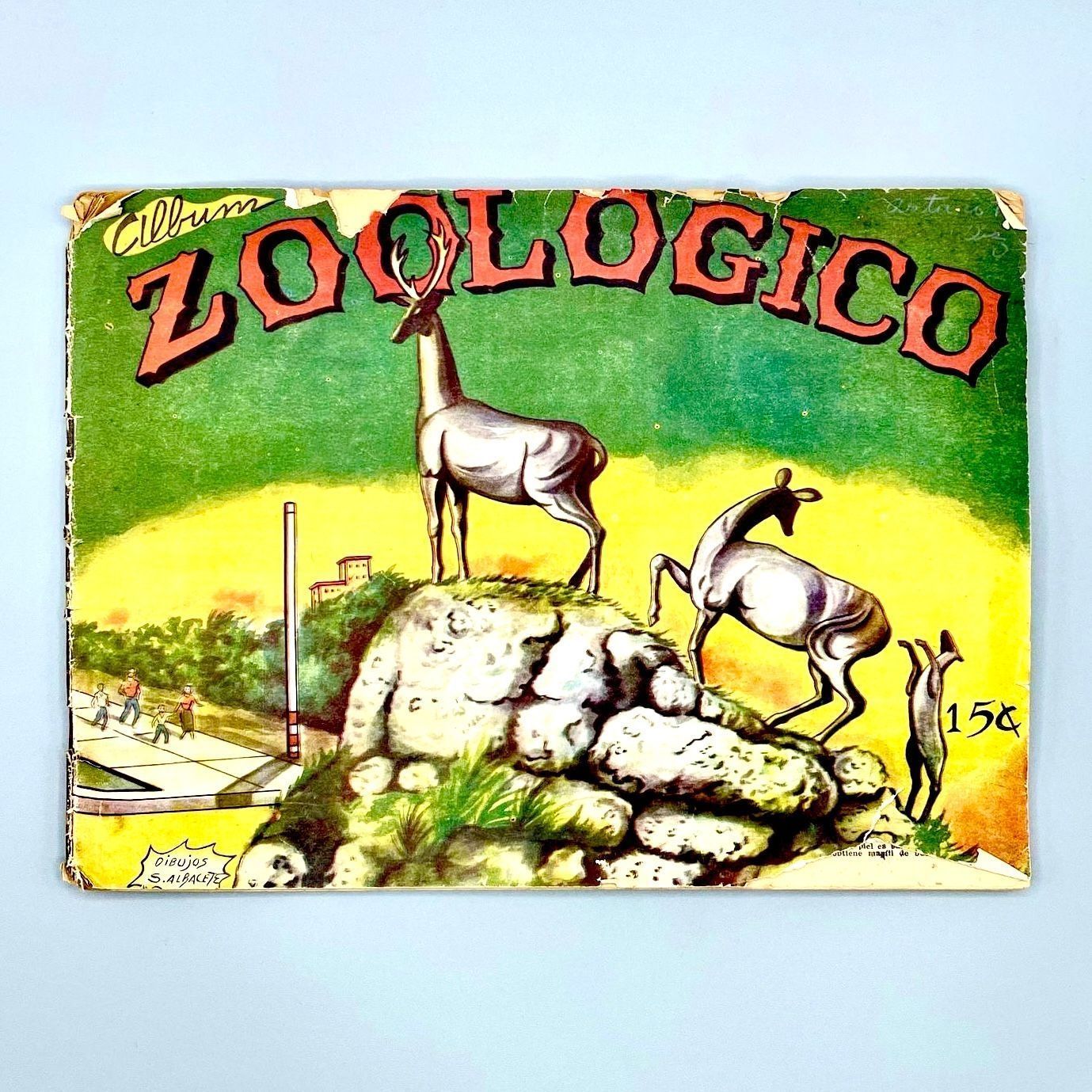
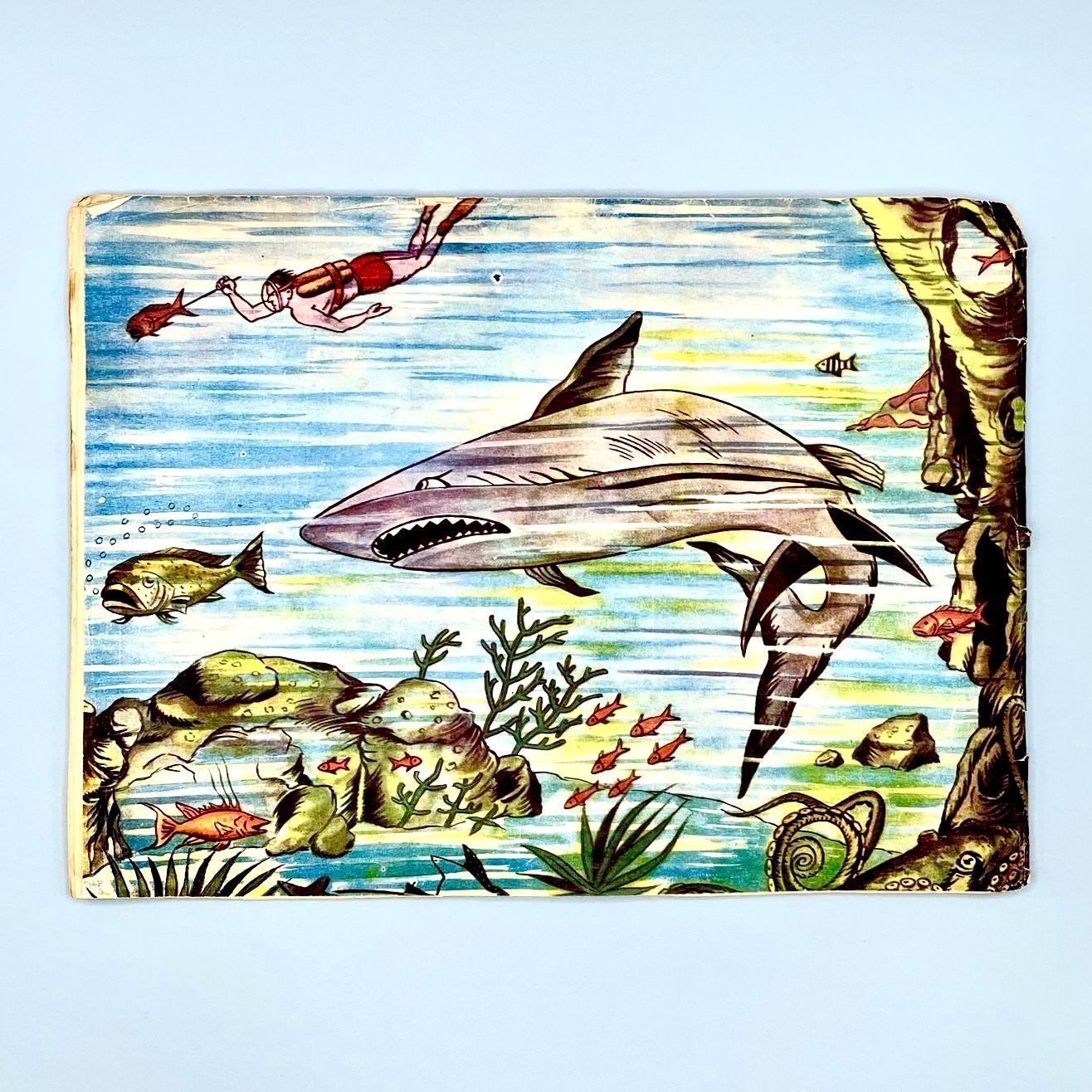
Landscape-format saddle-stitched paper album for Cuban postalitas (collectible trading cards), into which a numbered series of animal cards was pasted on interior text pages. Front cover bears a color-illustrated zoo scene — antlered and leaping deer/antelope on a rocky outcrop above a zoo path with strolling visitors and a background tower — beneath the display title. Back cover carries a marine illustration (large shark, free diver with speared fish, reef fish, octopus, coral) representing the album's aquarium section. The published series comprised 192 numbered cards spanning mammals, fish, reptiles, amphibians, invertebrates, and birds drawn from Havana's zoo and aquarium (per cataloged series description).Acquisition
Accession
2025.17Source or Donor
José BediaAcquisition Method
GiftPublication Details
Publication Type
BookIllustrator
Salvador AlbacetePlace Published
City
HavanaCountry
CubaRegion
Caribbean, Central AmericaDate Published
circa 1959Publication Language
SpanishPublication Subjects
Zoo animalsNotes
Date: Circa late 1950s–early 1960s. Production year not printed on the object; tentative and straddling the 1959 boundary (see flag). Definitively not later than 1962.
Place of Origin: Cuba (Havana inferred for Ediciones Mariví; not stated on the cover) — tentative.Inscription/Signature/Marks
Notes
Front cover display title: "Álbum ZOOLÓGICO"
Artist credit in a starburst cartouche: "DIBUJOS S. ALBACETE"
Price: "15¢" (15 centavos)Relationships
Related Person or Organization
Person or Organization
José BediaNotes
ownerRelated Places
Place
City
HavanaCountry
CubaRegion
Caribbean, Central AmericaNotes
useResearch Notes
Notes
Postalitas were a central form of mid-20th-century Cuban youth material culture, sold in installments and pasted into themed albums; the commercial trade tapered off in the early 1960s. For the collection's revolutionary-era frame, this item sits at or just before the 1959 threshold and is best treated as a boundary/transitional object pending a firmer date. Maker and artist verified; a precise imprint year, printer, and place would resolve the date question if an interior colophon survives.Created By
María A. Cabrera ArúsCreate Date
May 14, 2025Updated By
María A. Cabrera ArúsUpdate Date
June 18, 2026