Name/Title
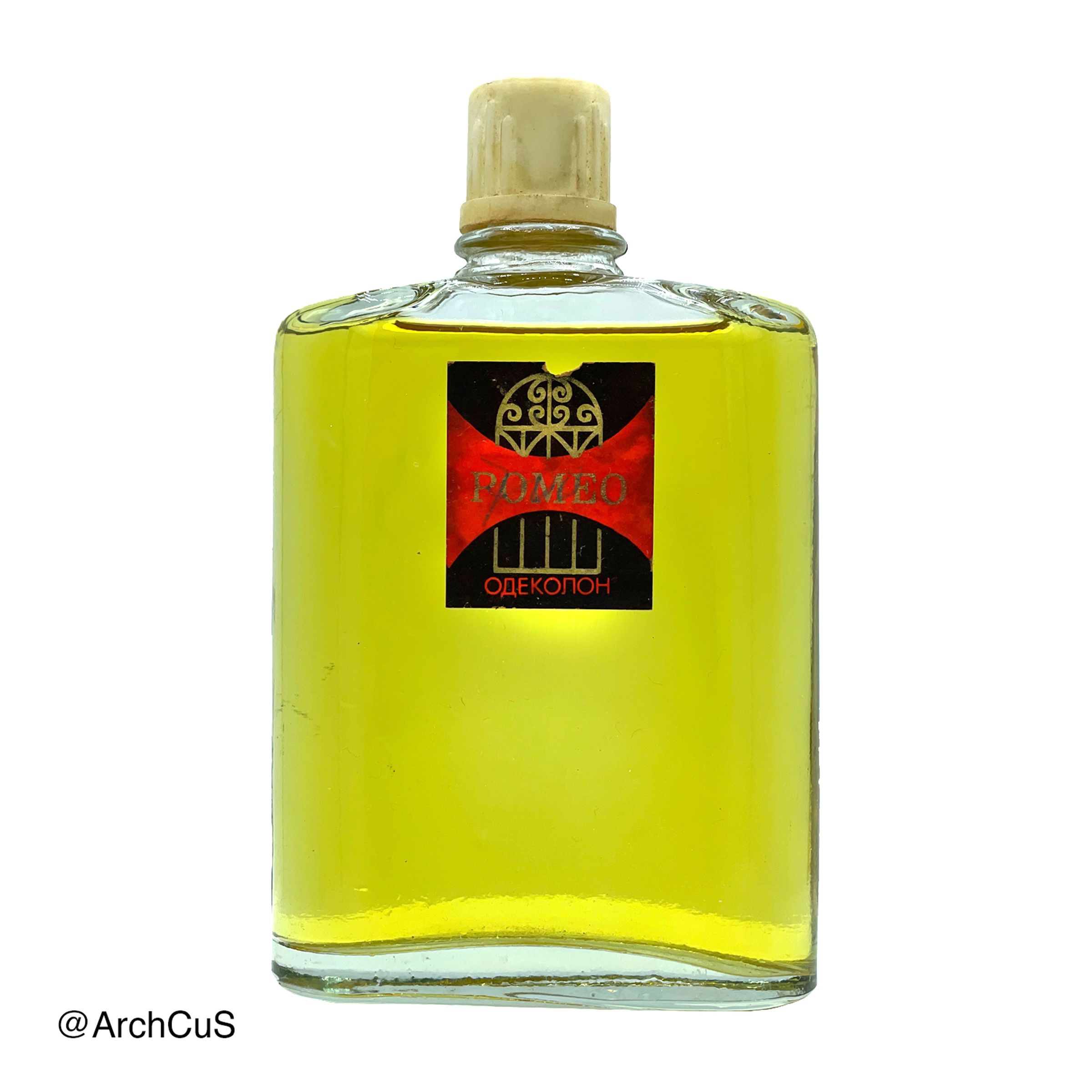
"РОМЕО" (Romeo) Eau de cologneEntry/Object ID
2025.1.271Description
Rectangular flask-shaped clear-glass cologne bottle, nearly full of pale-yellow liquid, with a ribbed cream plastic screw cap. The front paper label (black ground) carries a gold Art-Nouveau arch/gate — a Verona architectural motif — over a red field, with "РОМЕО" in gold and "ОДЕКОЛОН" (eau de cologne) in red below.Collection
The Cabrera Arús family collection, María A. Arús Caraballo collectionMade/Created
Manufacturer
Severnoye SiyanieTime Period
20th CenturyPlace
City
LeningradCountry
U.S.S.R.Region
Eastern EuropeContinent
EuropeEdition
RomeoNotes
Maker: Attributed to Фабрика «Северное Сияние» (Severnoye Siyanie / "Northern Lights"), Leningrad, USSR — originator of the Soviet Shakespeare fragrance line that includes "Romeo." The producing factory is not independently legible on the visible label (Soviet scents were sometimes made by multiple factories), so the attribution rests on the documented line.
Date: Circa mid-1960s–early 1980s (production era of the Soviet Shakespeare fragrance line).Inscription/Signature/Marks
Type
LabelLocation
bottle frontTranscription
Pomeo, ОДЕКОЛОНLanguage
RussianTranslation
Romeo, cologneMaterial/Technique
LabelDimensions
Height
11.5 cmWidth
7 cmDepth
2.5 cmParts
Glass bottle (with contents — cologne liquid, nearly full)
Ribbed plastic screw capMaterials
Material
Glass, Plastic, PaperMaterial Notes
It contains perfGlass (bottle); plastic (cap); paper (label); alcohol-based cologne (contents).umeRelationships
Related Person or Organization
Person or Organization
María A. Arús CaraballoNotes
ownerRelated Places
Place
City
HavanaCountry
CubaRegion
Caribbean, Central AmericaNotes
use, acquisitionPlace
City
LeningradCountry
U.S.S.R.Region
Eastern EuropeContinent
EuropeNotes
productionResearch Notes
Notes
"Romeo" is the masculine half of the Soviet "Romeo & Juliet" pairing within Severnoye Siyanie's Shakespeare fragrances (alongside the "Hamlet" cologne and "Ophelia" perfume). The Romeo–Juliet set was issued unchanged from the mid-1960s to the early 1980s, packaged with a red-and-gold depiction of an old Verona square on the inside of the lid — consistent with the gold Verona-arch graphic on this bottle's label.Notes
The exact producing factory is not confirmable from the visible label; verify via any mark, GOST number, volume, and price on the base/reverse.Created By
María A. Cabrera ArúsCreate Date
March 31, 2022Updated By
María A. Cabrera ArúsUpdate Date
June 15, 2026