Notes
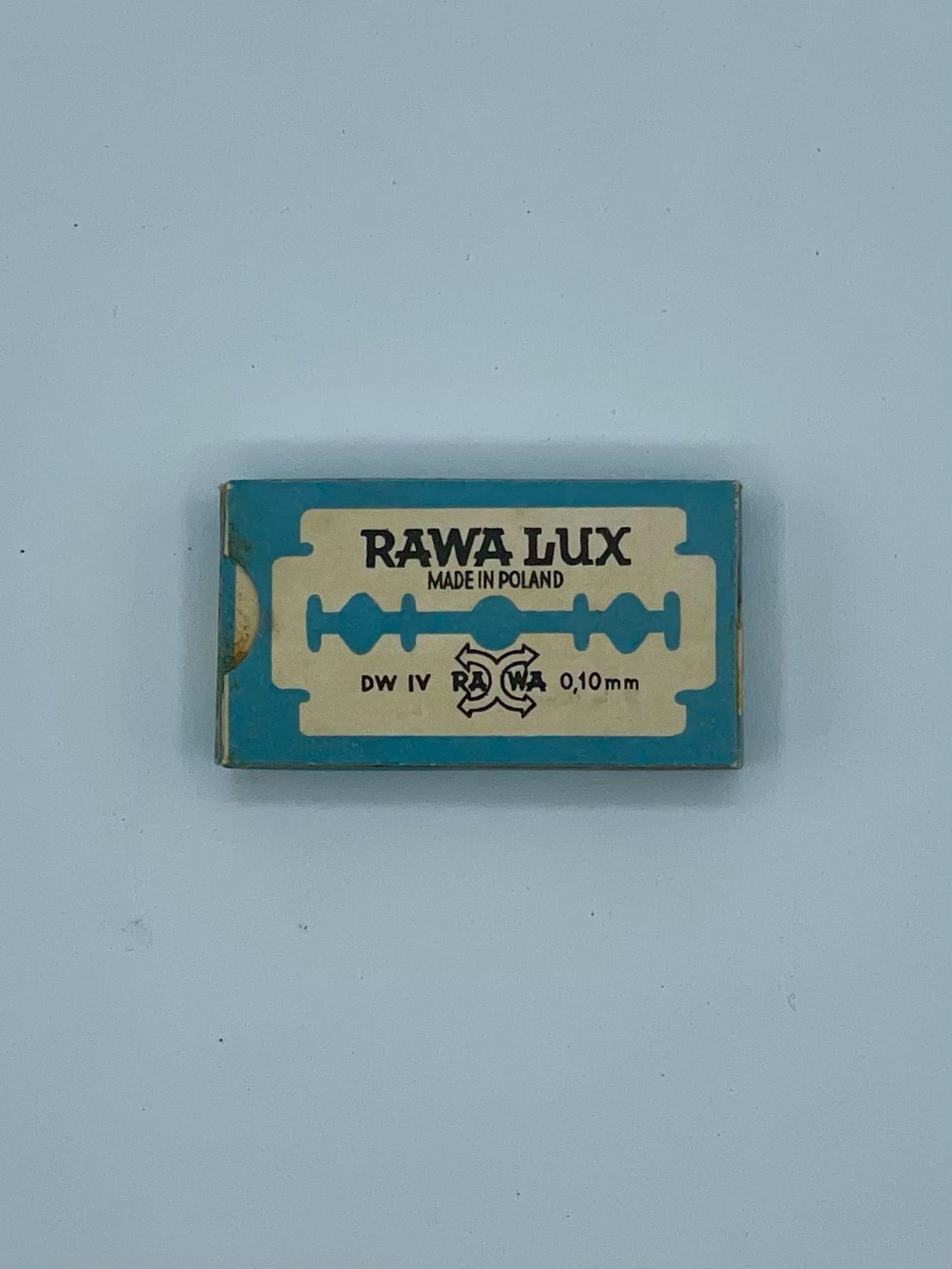
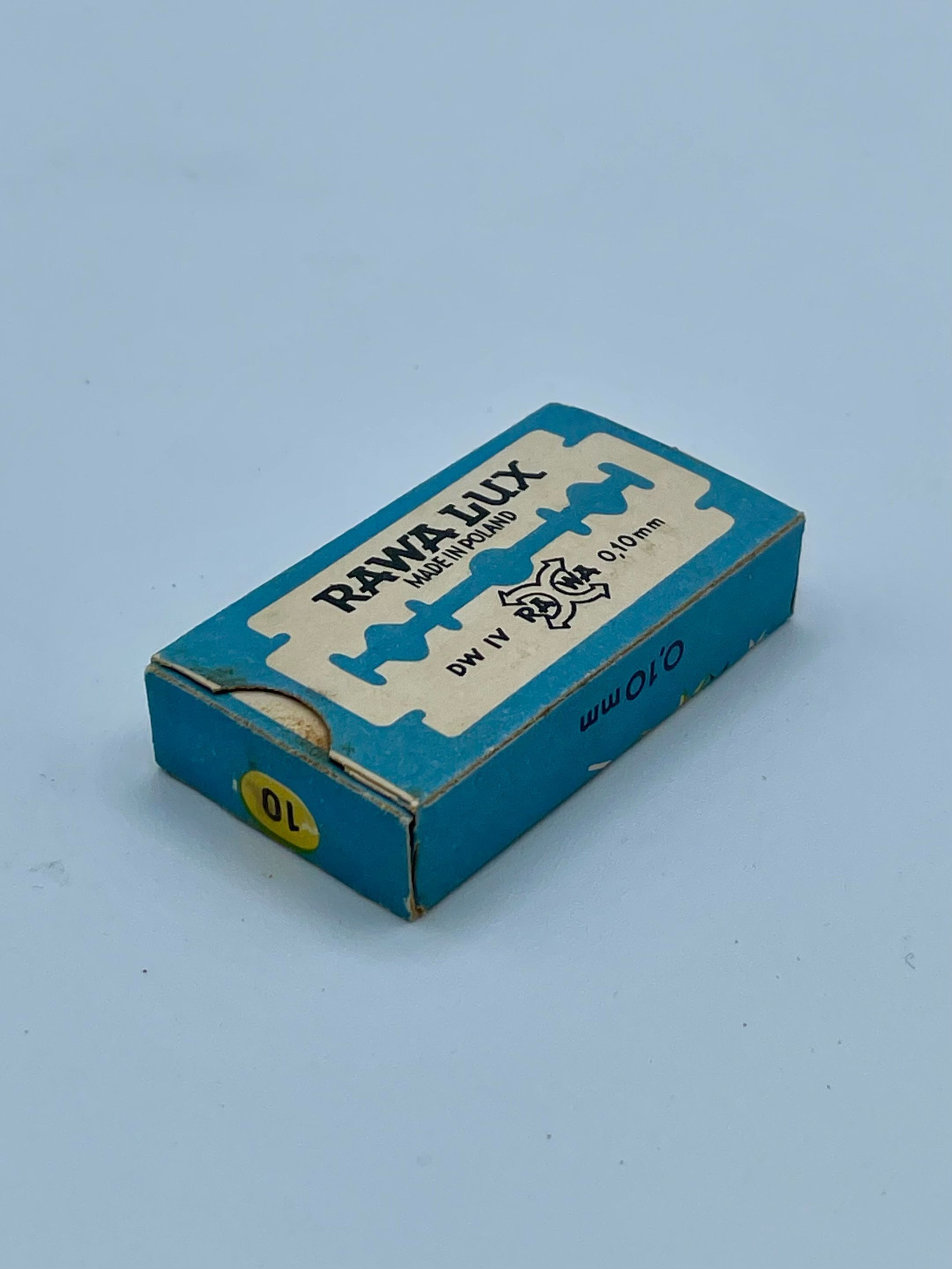
Rawa-Lux razor blades were produced in Poland, and after their production was discontinued, the Wizamet factory in Łódź became the only manufacturer of razor blades in Poland, exporting to countries around the world. Rawa Lux was the Polish state razor-blade brand named after its production city, Rawa Mazowiecka — a town in central Poland's Łódź Voivodeship. The crossed "RA-WA" logo visible on the interior label is the factory's signature trademark, encoding the city's name in a typographic mark. The brand was discontinued at some point before 1992 (when Wizamet, the surviving Polish razor-blade manufacturer, was privatized and 80% acquired by Gillette).
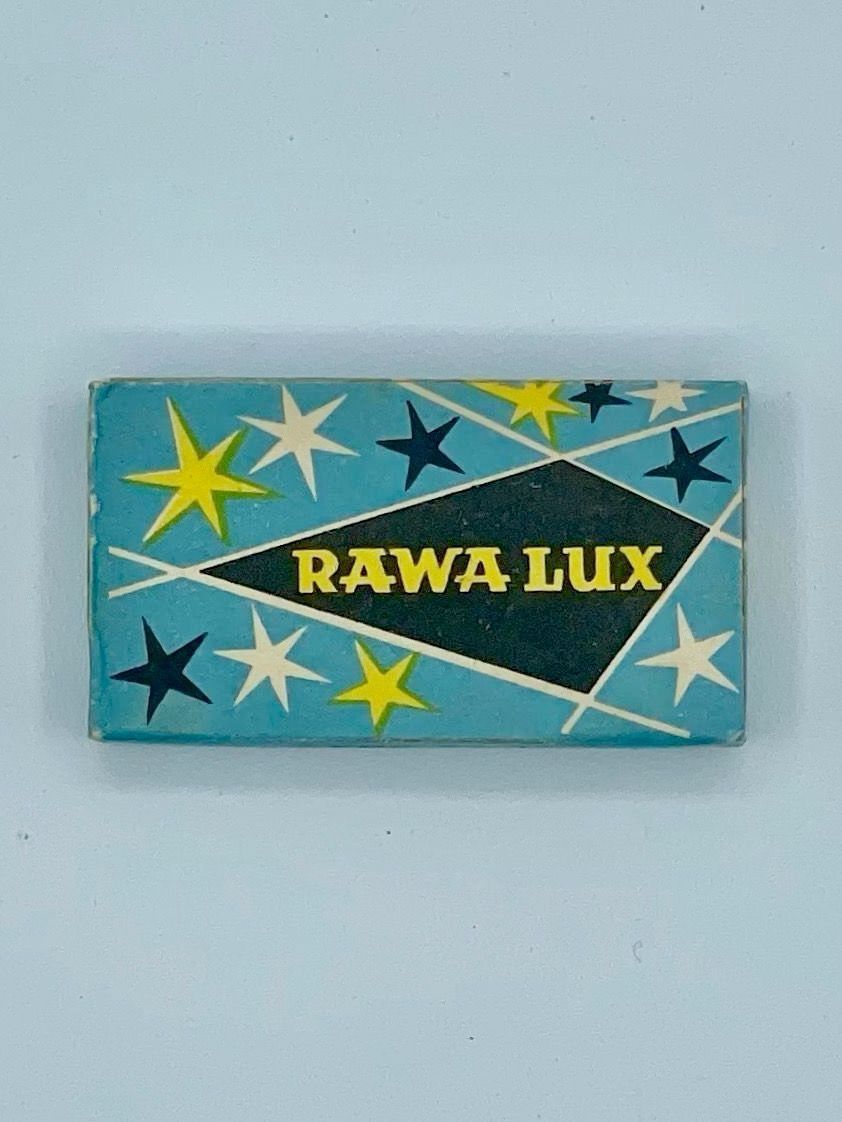
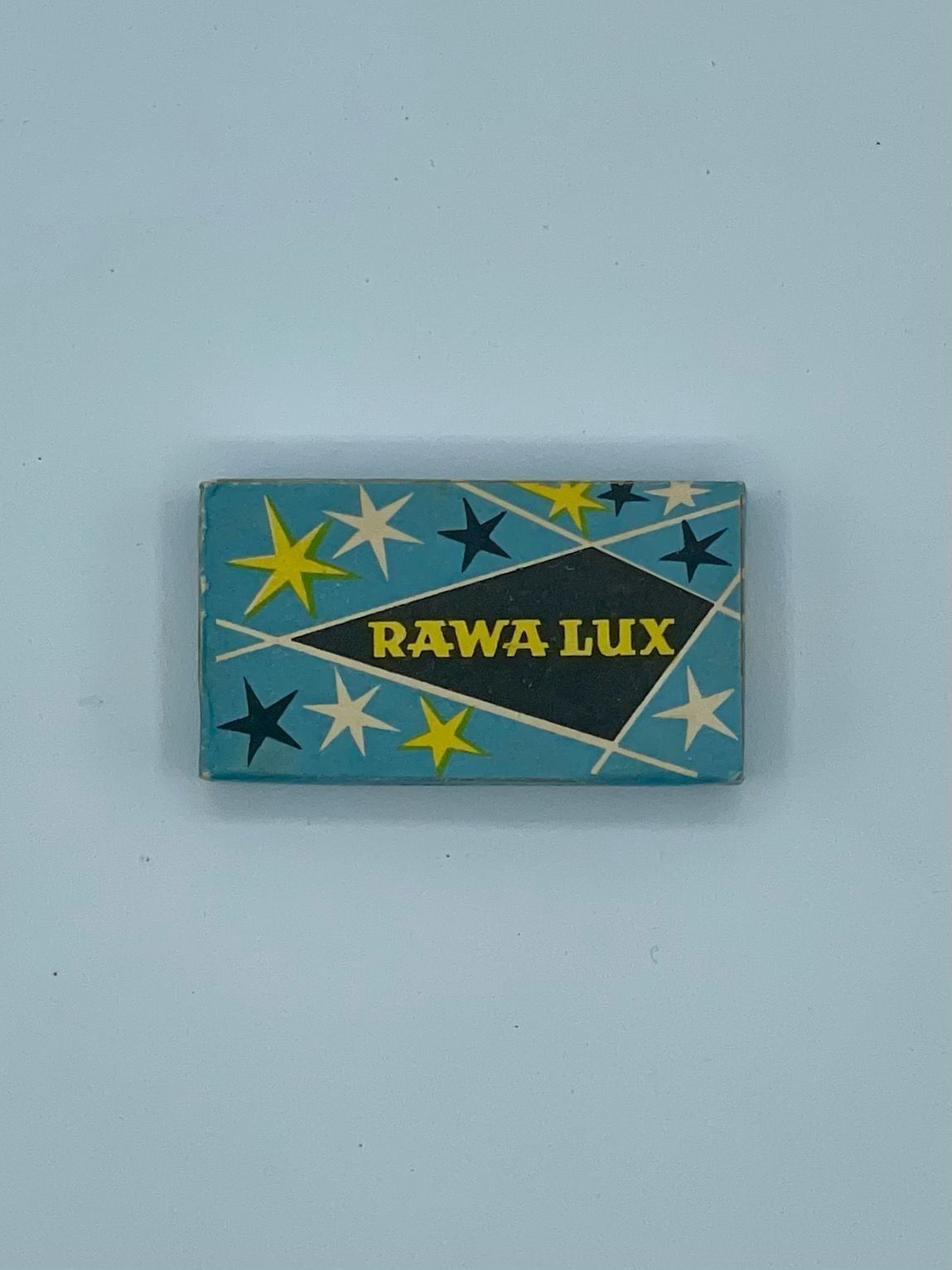
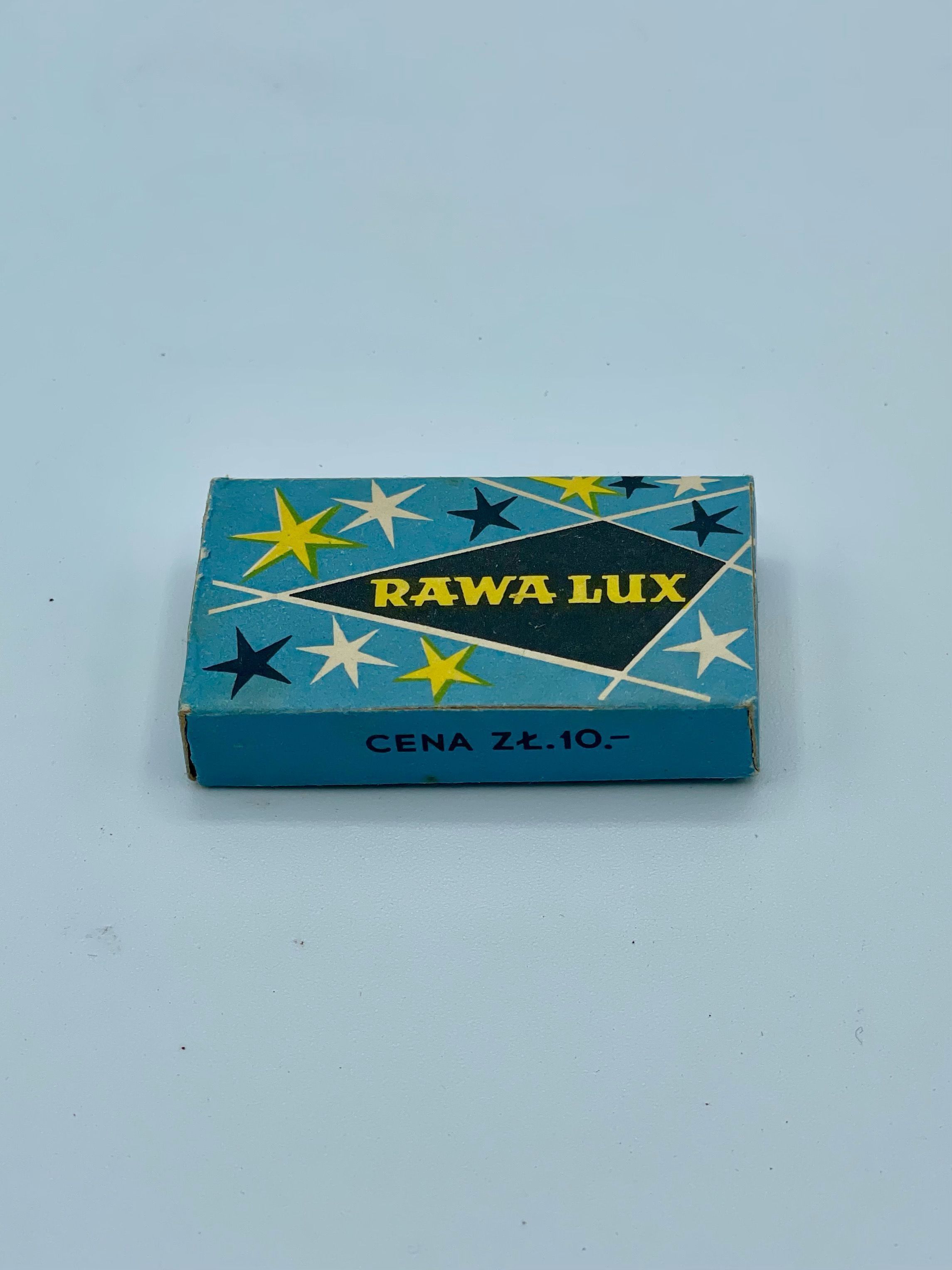
The graphic design of the Rawa Lux box is a small but real example of the famed Polish School of Posters (Polska Szkoła Plakatu) era and Polish graphic-design culture of the late 1950s through the 1960s — internationally celebrated for its bold, painterly, modern aesthetic. Polish state enterprises during this period produced consumer-goods packaging of unusually high graphic-design quality, often by serious commercial artists working in the same modernist visual vocabulary as the famous Polish poster designers (Henryk Tomaszewski, Jan Lenica, Roman Cieślewicz, etc.). The starburst pattern — with its scattered yellow, white, and navy stars on a turquoise ground, intersected by diagonal white "X" lines — is unmistakably "atomic age," echoing the Sputnik-era visual fascination with stars, atoms, and cosmic motifs that characterized international graphic design from the late 1950s through the early-to-mid 1960s. Polish design particularly excelled at this register. As an object, this small razor-blade box is therefore a tiny but high-quality example of PRL-era state consumer-goods graphic design.
Polish-Cuban trade context: Poland and Cuba had strong COMECON trade relations throughout the 1960s–1980s. Polish exports to Cuba included a wide range of industrial and consumer goods: passenger cars (Polski Fiat 126p, Polski Fiat 125p — the "Polski"), tractors, machinery, electronics, small household items, and personal-care products. Polish razor blades (Rawa Lux and later Polsilver / Wizamet) were a standard COMECON consumer good available in Cuban state retail outlets. A Polish razor-blade box in a Cuban family collection most likely arrived through this regular state-retail import channel, rather than via personal-travel acquisition — Cuban men of all classes used Eastern Bloc razor blades as a routine shaving consumable.Notes
A note on the blade specification. "DW IV / 0,10 mm" indicates a double-edge ("dwuostrzowy") blade in Series IV at 0.10 mm thickness. The 0.10 mm dimension is the standard double-edge razor blade thickness across all global manufacturers (Gillette, Wilkinson Sword, Feather, Astra, etc.) — it's a global industry standard that allows blades from any maker to fit any standard double-edge safety razor. The "DW IV" series designation may indicate a specific blade-coating, edge-grinding, or carbon-vs-stainless variant within the Rawa Lux product line.