Name/Title
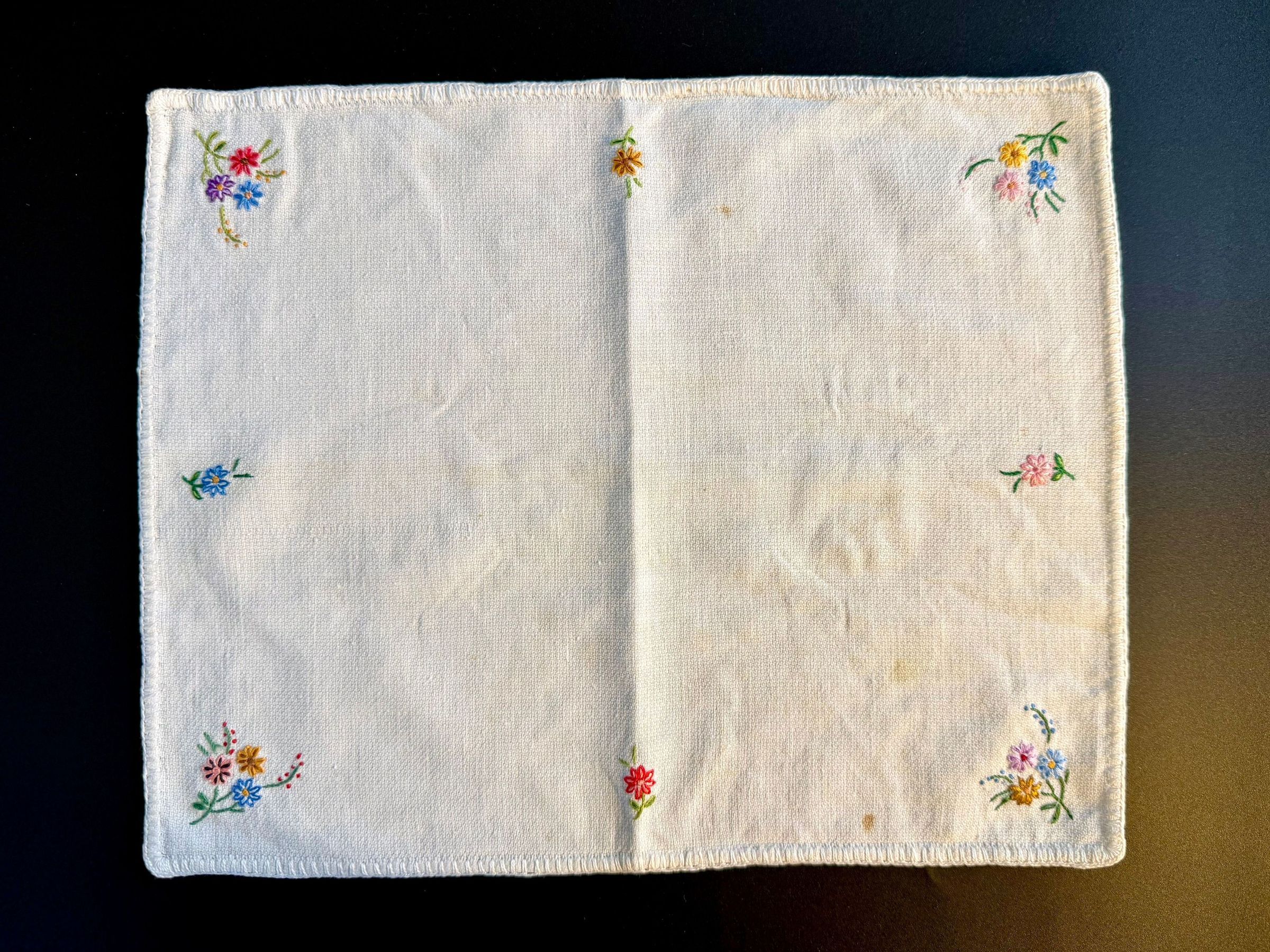
Embroidered Fabric with Polychrome Floral SpraysEntry/Object ID
2025.1.399Description
Single rectangular fabric of plain-weave cream/white linen (or linen-cotton), hand-embroidered with small multicolored floral sprays — clusters in the four corners and single small flowers at the midpoints of the sides, worked in satin and straight stitches in red, blue, pink, purple, yellow/gold, and green. The edge is finished with a machine overlock/whip stitch in matching cream thread.Textile Type
Embroidered PanelUse
Belonged to Gertrudis Caraballo GálvezContext
A hand-embroidered domestic linen (mat, tray cloth, or small centerpiece). Decorative embroidered linens of this type were widely made and used in the home across many cultures, Cuba included, where domestic needlework was common. Origin (made in, imported to, or acquired in Cuba) cannot be determined from the object itself and depends on provenance documentation.Collection
Gertrudis Caraballo Gálvez collecition, The Cabrera Arús family collectionMaterials
Material
FabricMaterial Notes
Plain-weave linen or linen-cotton ground; cotton/stranded embroidery floss (multicolor); cream overlock thread. Fiber identification to be confirmed hands-on.Relationships
Related Person or Organization
Person or Organization
Gertrudis Caraballo GálvezRelated Places
Place
City
HavanaCountry
CubaRegion
Caribbean, Central AmericaNotes
useResearch Notes
Notes
The embroidery style is the soft, naturalistic "garden flower" look associated with mid-20th-century European domestic embroidery (often Madeira, Austrian, German, or Hungarian commercial-cottage work).
The dating clue: the edge is finished with a machine overlock/serger stitch (the looped, even thread casing running continuously around all four sides). That matters. Mechanical overlock edging on small household linens became common in industrial and semi-industrial textile production from roughly the mid-20th century onward and is widespread in pieces from the 1950s–70s and later. It's distinctly not the hand-rolled or hand-buttonholed edge you'd expect on an early-20th-century piece. So the construction here is consistent with a post-war date and is compatible with after 1959 — unlike the previous coasters, this one doesn't show pre-1959 hallmarks.Created By
María A. Cabrera ArúsCreate Date
July 1, 2026Updated By
María A. Cabrera ArúsUpdate Date
July 1, 2026