Name/Title
Eraser, Koh-I-Noor Hardtmuth "plastic eraser" no. 4770, in printed paper sleeveEntry/Object ID
2025.1.429Description
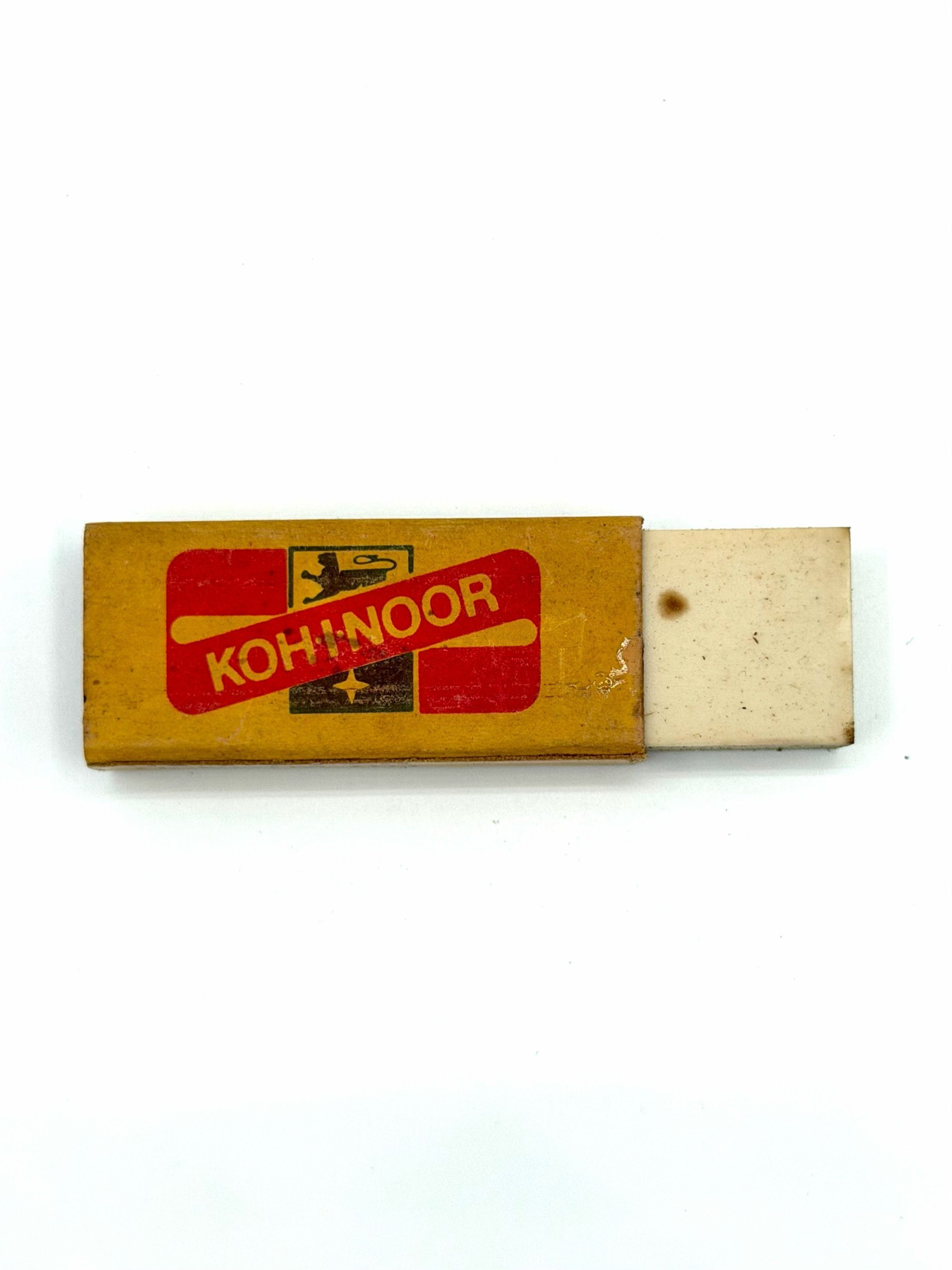
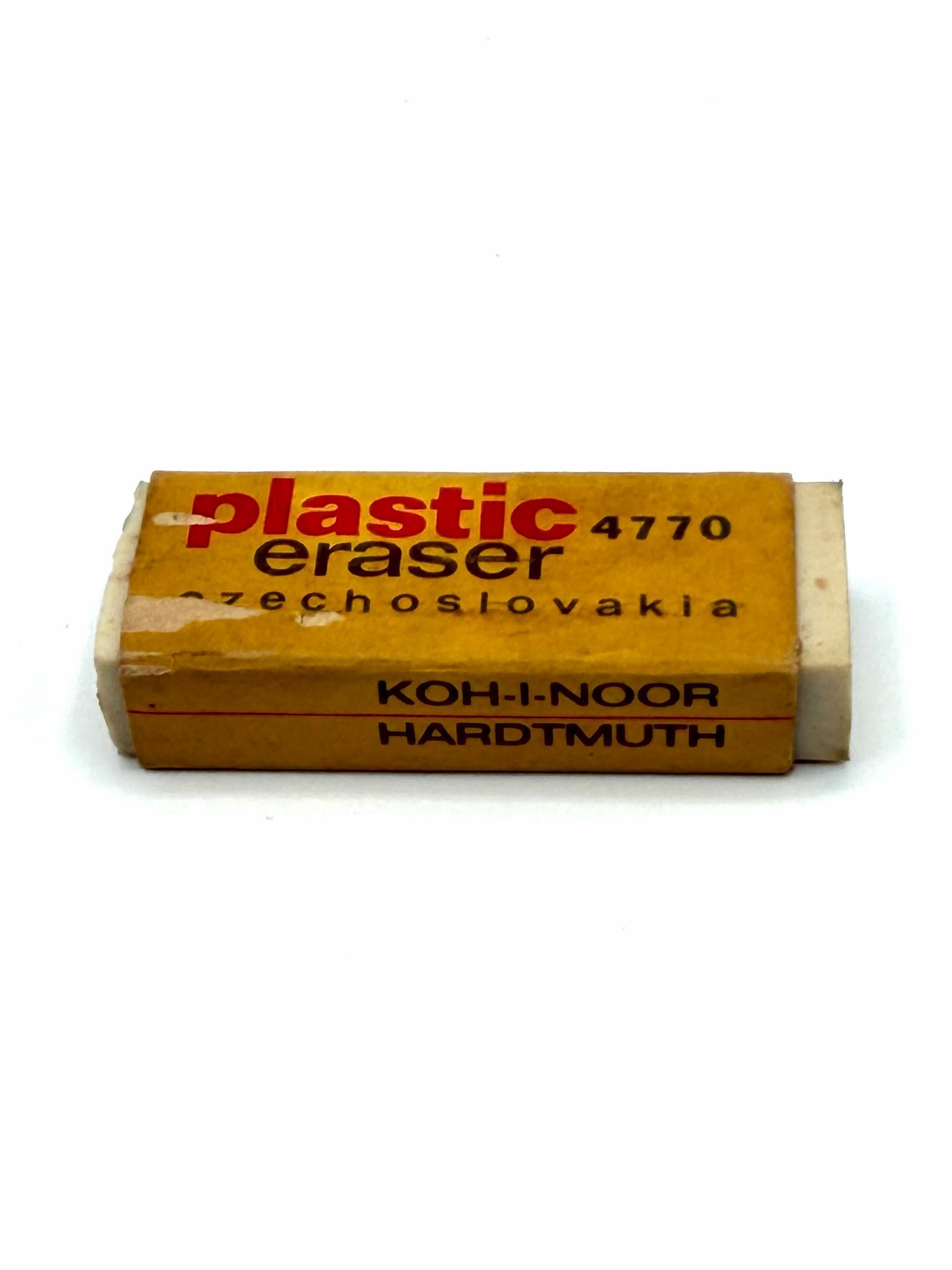
Rectangular white eraser in its original printed paper sleeve, the sleeve open at both ends so that the eraser protrudes.
Sleeve, ochre-yellow ground, printed in red and black:
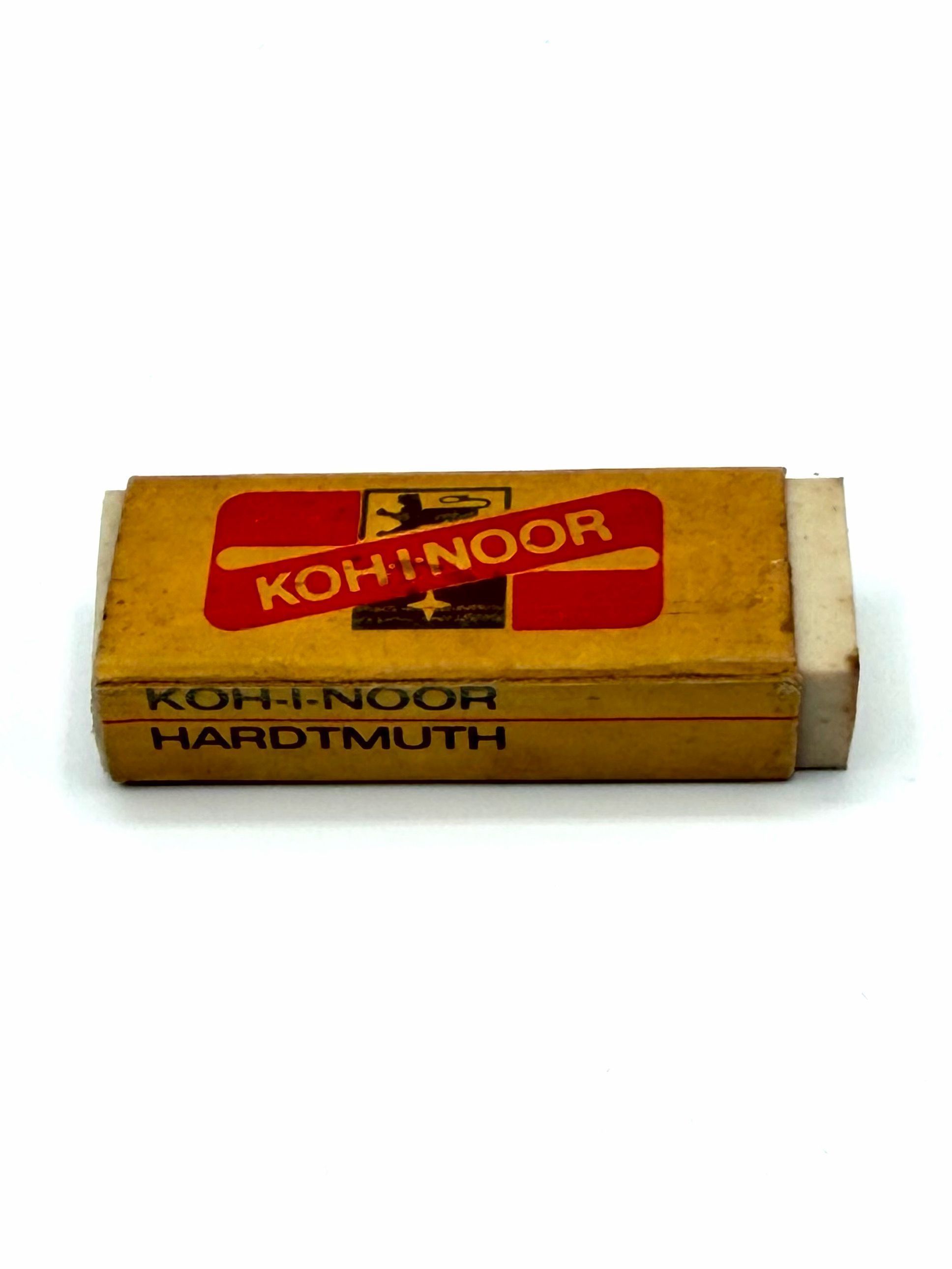
One broad face: the Koh-I-Noor device — a rectangular field quartered red and dark, with a lion rampant in the upper inner quarter and a four-pointed star or diamond in the lower inner quarter, crossed by a diagonal red band carrying KOH·I·NOOR reversed out in yellow, the band terminating in rounded ends.
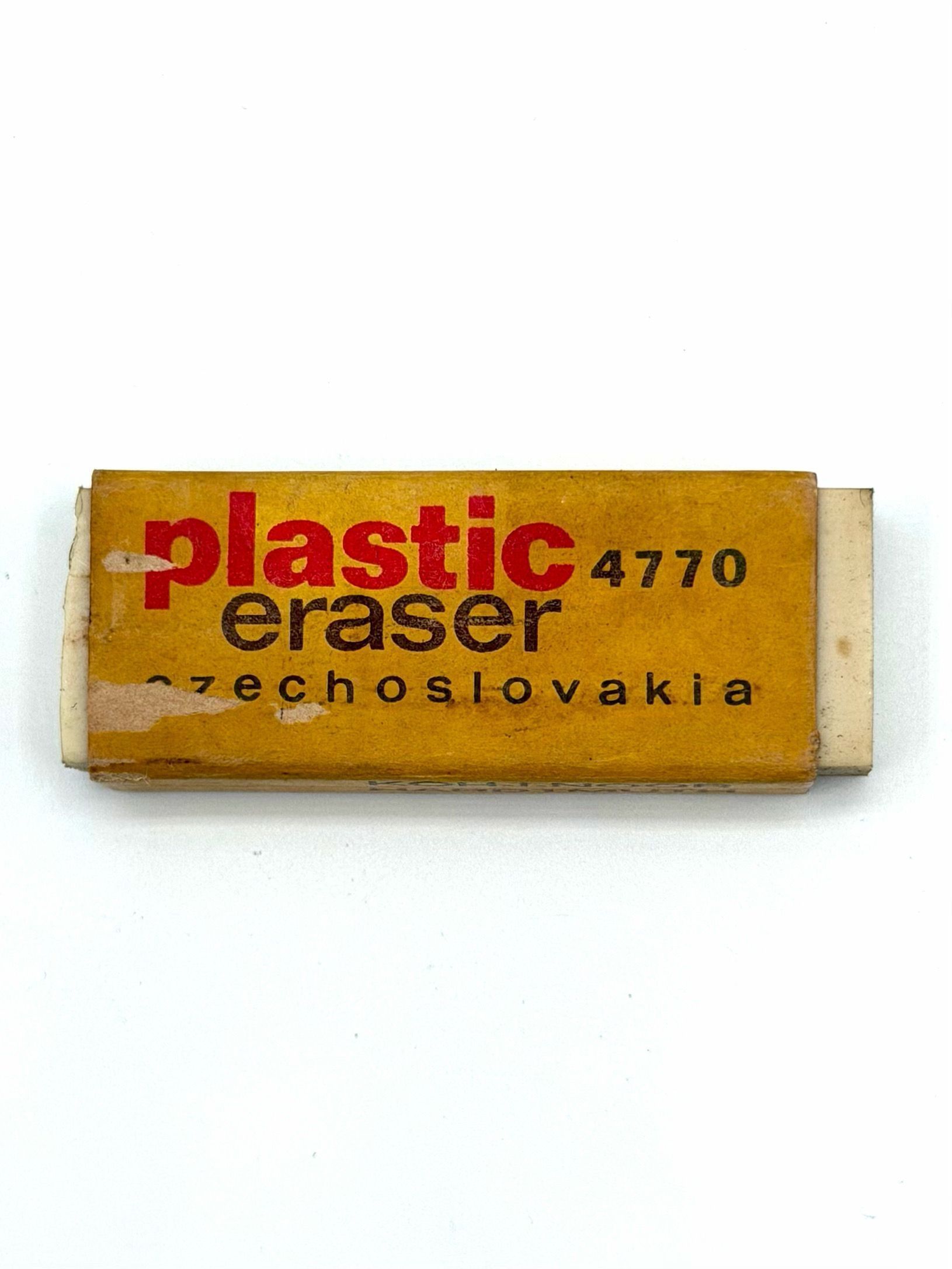
The opposite broad face: plastic in heavy red lowercase, 4770 in black beside it, eraser in black lowercase below, and czechoslovakia in spaced black lowercase beneath that.
One long edge: KOH-I-NOOR over HARDTMUTH in black capitals, separated by a thin red rule.
Eraser: plain white or off-white block, rectangular, no molded lettering visible on the exposed ends.Context
Czechoslovak goods reaching Cuba is a documented trade relationship — machinery above all but also consumer goods — and Cuban technicians travelling there; Koh-I-Noor stationery is exactly the kind of everyday socialist-bloc product that circulated in Cuban schools and offices.Collection
The Cabrera Arús family collectionMade/Created
Manufacturer
Koh-I-Noor HardtmuthEdition
model number 4770Notes
Trademark note: ⚠️ the elephant mark, registered 1896 and described as the fifth-oldest pictorial trademark in the world, is the mark associated with Koh-I-Noor's white eraser. This sleeve carries a lion and a star, not an elephant. Worth recording, and worth investigating — it may distinguish product lines, periods, or export packaging.Inscription/Signature/Marks
Transcription
KOH·I·NOOR — within the diagonal band of the device
plastic / eraser / 4770 / czechoslovakia
KOH-I-NOOR / HARDTMUTH — on the long edgeLanguage
EnglishNotes
Device: quartered field, lion rampant, four-pointed starParts
Eraser (1)
Printed paper sleeve (1)Materials
Material
Paper, PlasticMaterial Notes
Sleeve: printed paper, offset or letterpress in red and black on ochre stock.
Eraser: ⚠️ INFERRED as plasticized PVC. The sleeve's own term "plastic eraser" distinguishes it from a rubber eraser, and PVC was the standard material for that product category. Not confirmed. See the conservation note — this identification matters more than most on this record.Relationships
Related Person or Organization
Person or Organization
Leopoldo Arús GálvezRelated Places
Place
City
HavanaCountry
CubaRegion
Caribbean, Central AmericaPlace
Country
CzechoslovakiaRegion
Eastern EuropeContinent
EuropeResearch Notes
Notes
Sources: Encyklopedie Českých Budějovic (encyklopedie.c-budejovice.cz) — the strongest source here, a local scholarly encyclopedia; Koh-i-noor Hardtmuth corporate history pages; Kudy z nudy (CzechTourism); English Wikipedia, Koh-i-Noor Hardtmuth; age-management.cz; zlato.cz.
⚠️ Source conflicts recorded: the rebranding date is given as 1889 (Wikipedia, at the Paris World Fair) and the name's adoption into the company title as 1894 (Kudy z nudy); the move to České Budějovice is attributed to Carl alone in most sources and to Karl in 1847 by one dealer page, with a further account giving both sons Karl and Ludwig taking over in 1848. Follow the Encyklopedie account: Josef founded 1790 in Vienna, Carl relocated, buildings 1846–47, production from 1848, Vienna pencil-making until 1853.
⚠️ Principal gap: the firm's status under Czechoslovak socialism. Corporate and tourism sources skip from the interwar period to the 1990s privatization. For this collection, the missing decades are the relevant ones.
⚠️ Not researched successfully: the date of model 4770; the date of the sleeve design; the sleeve designer; why this package carries the lion-and-star device rather than the elephant mark associated with Koh-I-Noor erasers.Created By
María A. Cabrera ArúsCreate Date
September 10, 2026Updated By
María A. Cabrera ArúsUpdate Date
September 11, 2026