Name/Title
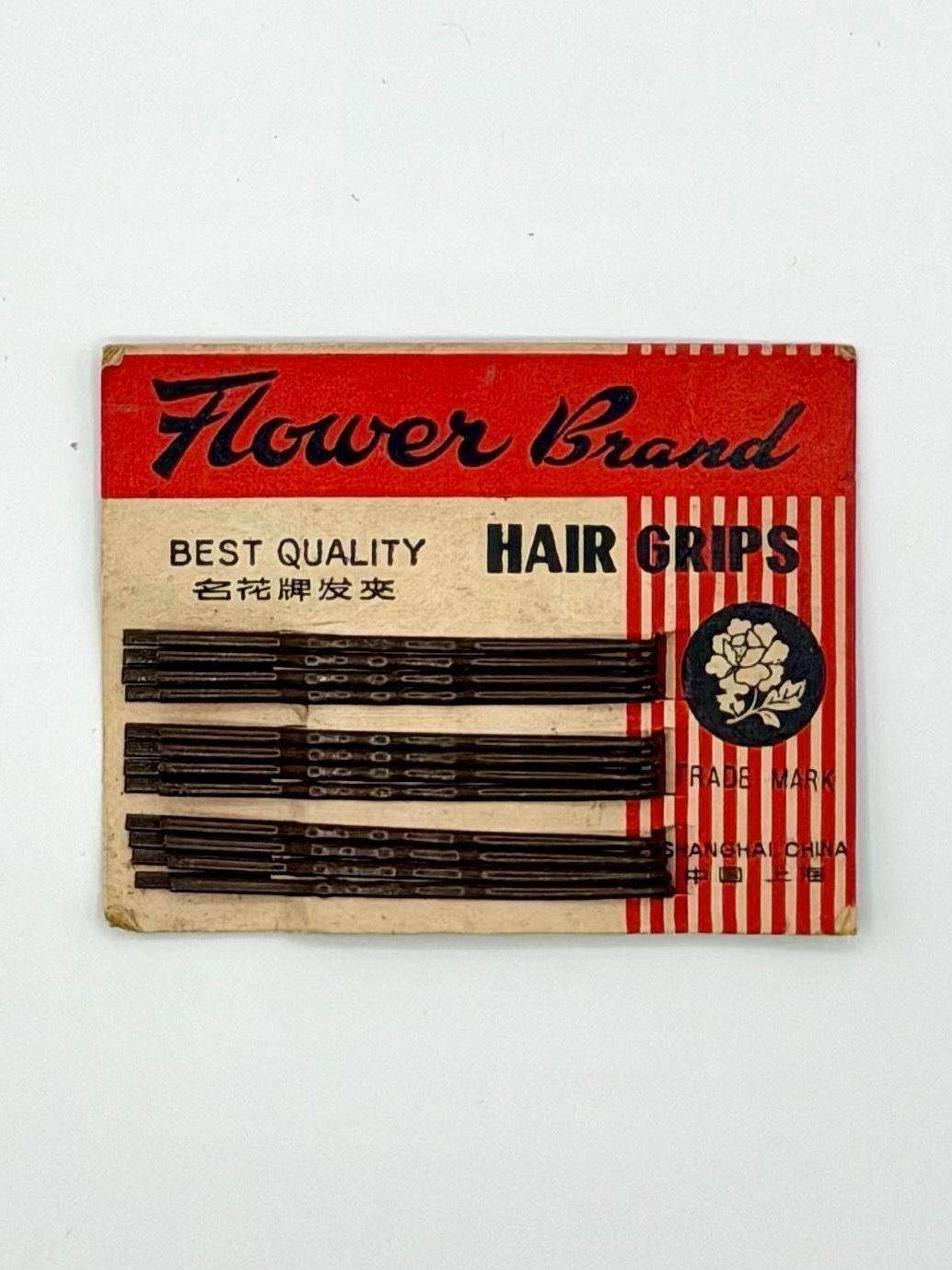
"Flower Brand" hair grips (bobby pins) on original cardEntry/Object ID
2026.1.4Description
A retail card of black metal hair grips (bobby pins), with about 18 pins held in three rows under cross-bands on a printed card. The card has a red banner with Flower Brand in script; below, BEST QUALITY and the Chinese name 名花牌发夹 at left, HAIR GRIPS at right over a red-and-white striped panel; a black roundel with a white rose/peony device labeled TRADE MARK; and at the foot SHANGHAI CHINA / 中国上海.Collection
María Teresa Cornide Hernández collectionAcquisition
Accession
2026.1Notes
Belonged to María Teresa CornideMade/Created
Place
City
ShanghaiCountry
People's Republic of ChinaContinent
AsiaNotes
Maker: "Flower Brand" (名花牌), a Shanghai hair-grip/bobby-pin make — a long-running Chinese export product (still supplied today, e.g., via Shanghai Yangming Imp. & Exp.). Specific factory/date not indicated on the card.
Date: Not closely datable. The brand has been produced for decades, so it doesn't fix a date; no year is printed. The card's mid-century graphic style and the simplified Chinese characters (发夹/中国上海 — post-1956 script reform) indicate a later-20th-century date, plausibly within range, but it cannot be firmly confirmed within 1959–1990 and may fall outside it. (Undatable from the object; leans mid-to-late 20th c.)Inscription/Signature/Marks
Notes
Flower Brand; BEST QUALITY; 名花牌发夹; HAIR GRIPS; TRADE MARK (rose/peony roundel); SHANGHAI CHINA / 中国上海. No date or lot number.Materials
Material
Metal, CardboardMaterial Notes
Materials: Lacquered/japanned steel hair grips (black finish); printed paper/card backing with cotton retaining bands.
Technique: Stamped and bent sprung-steel bobby pins with black lacquer finish; lithographed retail card; pins held by sewn/folded cloth bands.Relationships
Related Person or Organization
Person or Organization
Maria T. Cornide HernándezNotes
ownerRelated Places
Place
City
HavanaCountry
CubaRegion
Caribbean, Central AmericaResearch Notes
Notes
Dating cue is the card, not the brand: the simplified characters (post-1956 reform) and the litho style suggest mid-to-late 20th century; a precise year isn't recoverable from the packaging.Created By
María A. Cabrera ArúsCreate Date
January 30, 2026Updated By
María A. Cabrera ArúsUpdate Date
June 18, 2026