Notes
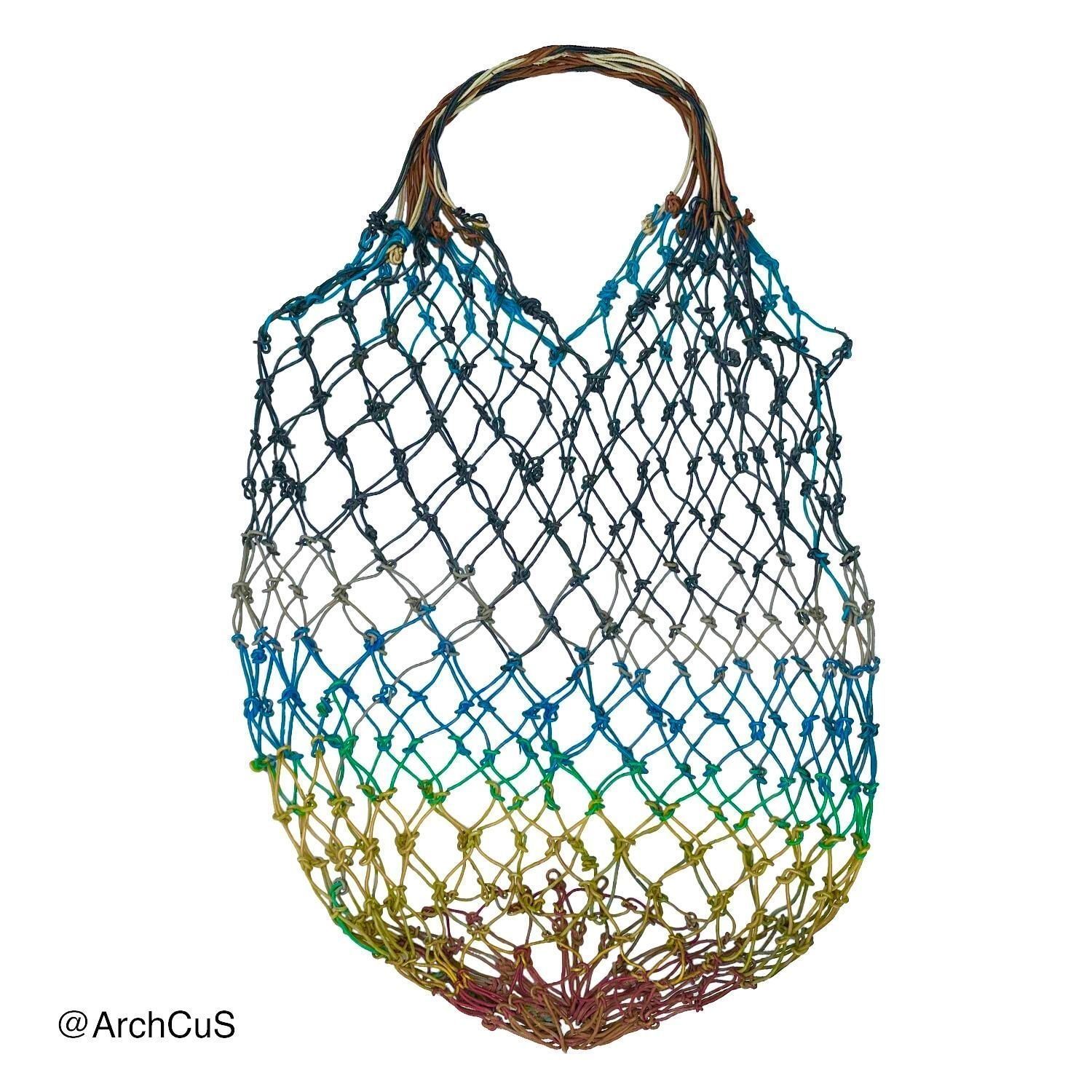
Cuban net shopping bag ("jaba"), here improvised from salvaged telephone wire — an example of everyday material reuse/ingenuity ("resolver"/invento) characteristic of Cuban material culture under shortage. The multicolor banding follows the standard color‑coding of telephone cable conductors.Notes
"An essential item in a Soviet woman's survival kit, the avos'ka (from avos', "perhaps"), was a string shopping bag, infinitely expandable 'just in case" she came across toilet paper, bananas, or some other scarce commodity. Such spontaneous purchasing was not the same as impulse buying in the western sense, a notorious aspect of consumer capitalism's invidious appeals to women's "irrational" desires. Rather, it was a strategy for dealing with the specificity of Soviet shopping: shortages and poor distribution. Apart from its elasticity, the avos'ka is also distinguished by its transparency, its openness to inspection: bulging out through its holes, the fruits of the woman's resourcefulness and persistence as procurer on behalf of her family can be seen by all. The avos'ka, empty, waiting to be filled, and monitored by others, is a useful synecdoche for the Soviet consumer as, I want to argue, she was constructed in the thaw." Susan Reid, "Cold War in the Kitchen"