Leather Cross-Body Purse
Name/Title
Leather Cross-Body PurseEntry/Object ID
2025.1.18Description
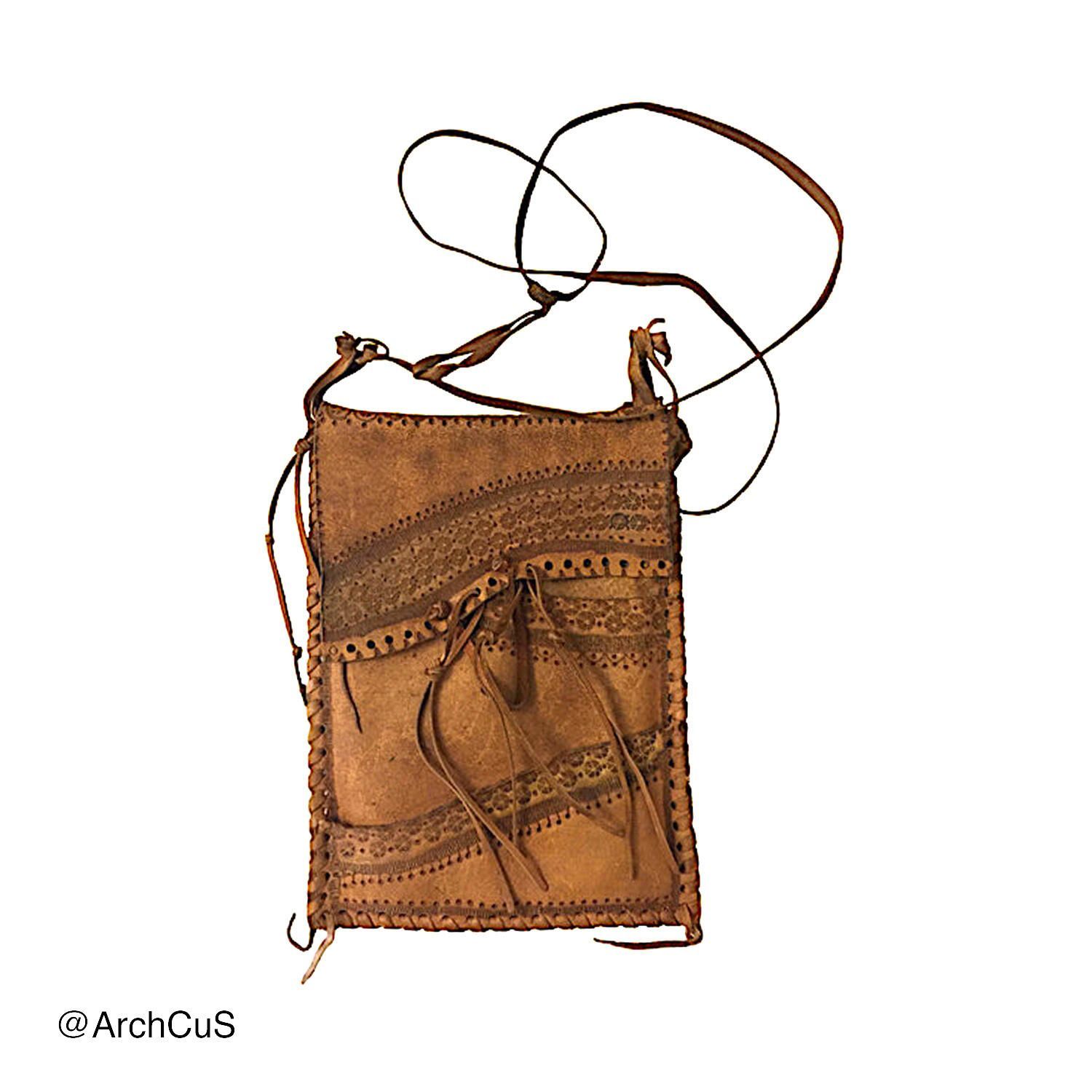
SUMMARY: Small artisanal brown leather shoulder/cross-body purse with hand-tooled decorative bands, whip-stitched leather-thong edges, fringe ties, and a long thin leather strap; purchased at a Cuban artisan market after 1978. DESCRIPTION: A small, soft rectangular cross-body purse of medium-brown leather. The body is constructed from two front-to-back panels joined at the edges by a continuous whip-stitched leather thong lacing, which forms a decorative dotted/punched border around the entire outline. The front face carries the principal decoration: two horizontal bands of stamped/tooled geometric ornament running across the body, with smaller decorative bands and a small front pocket or applied panel finished with hanging cut-leather fringe ties. A long, thin leather strap is attached at the top corners for cross-body carry; the strap shows curl-set from long use. A few thin leather thong ends hang loose at the bottom corners, an intentional fringe element rather than damage. Surface tone is uneven, with handling patina and slight darkening from use.Use
Used throughout the 1980s by María A Arús CaraballoCollection
The Cabrera Arús family collection, María A. Arús Caraballo collectionAcquisition
Accession
2025.1Notes
Belonged to María A. Arús CaraballoMade/Created
Place
Country
CubaRegion
Caribbean, Central AmericaNotes
early-1980'sDimensions
Width
23.5 cmLength
56.5 cmDimension Notes
23.5 (without handles)Parts
1Materials
Material
LeatherMaterial Notes
Hand-cut leather panels; whip-stitched leather-thong edge lacing; hand-tooled / stamped decorative bands (geometric punch- or wheel-tooling characteristic of artisanal leatherwork); attached leather strap and fringe tiesCondition
Overall Condition
GoodRelationships
Related Person or Organization
Person or Organization
María A. Arús CaraballoNotes
ownerRelated Places
Place
City
HavanaCountry
CubaRegion
Caribbean, Central AmericaNotes
purchaseExhibitions
Cuban Finotype and Its Materiality
Fashioning Cuban Socialism
Cuban Revolutionary Fashion: With objects from the Cuba Material collection