Name/Title
Identity Booklet (Carné de Identidad)Entry/Object ID
2025.1.2Description
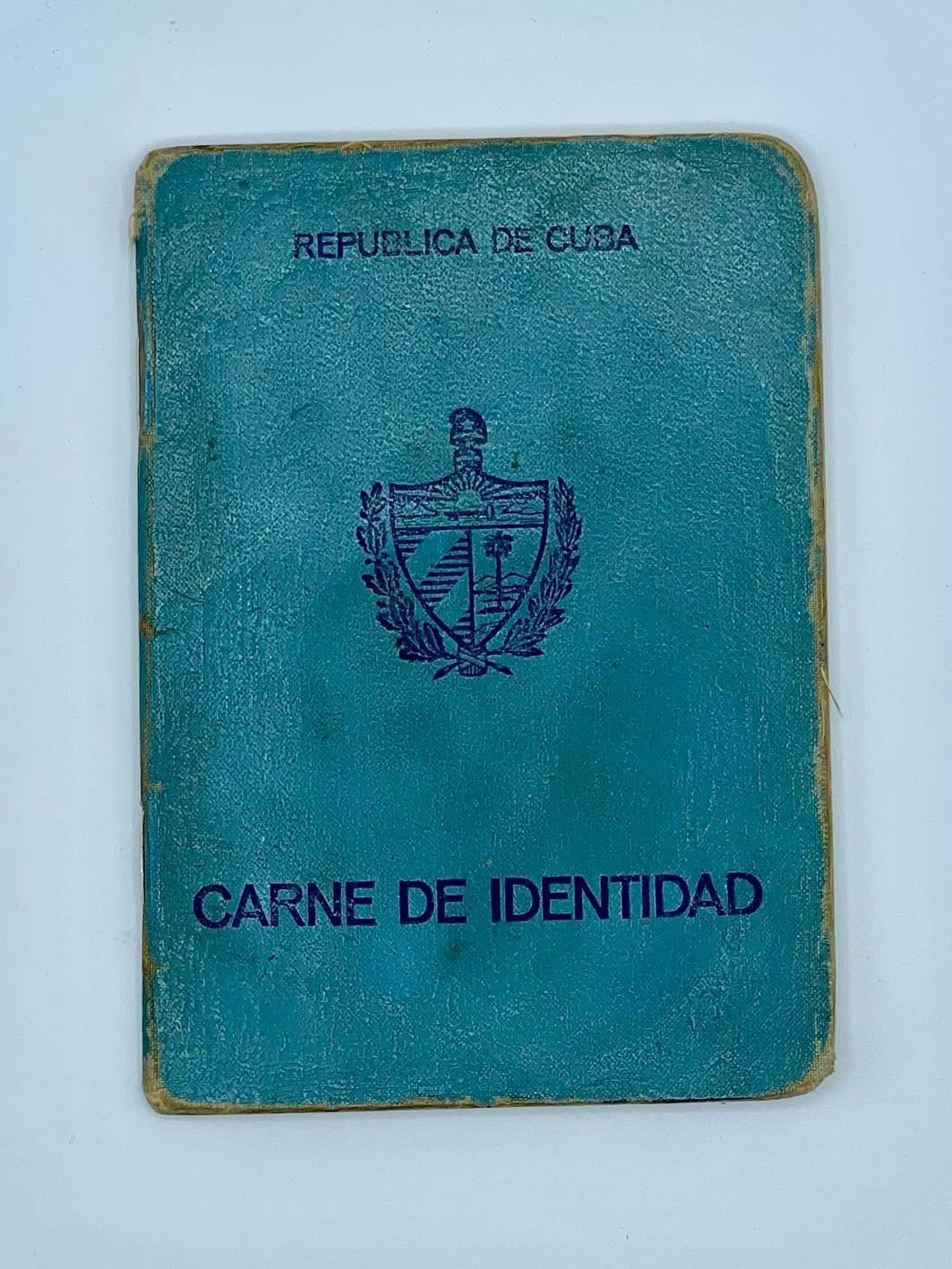
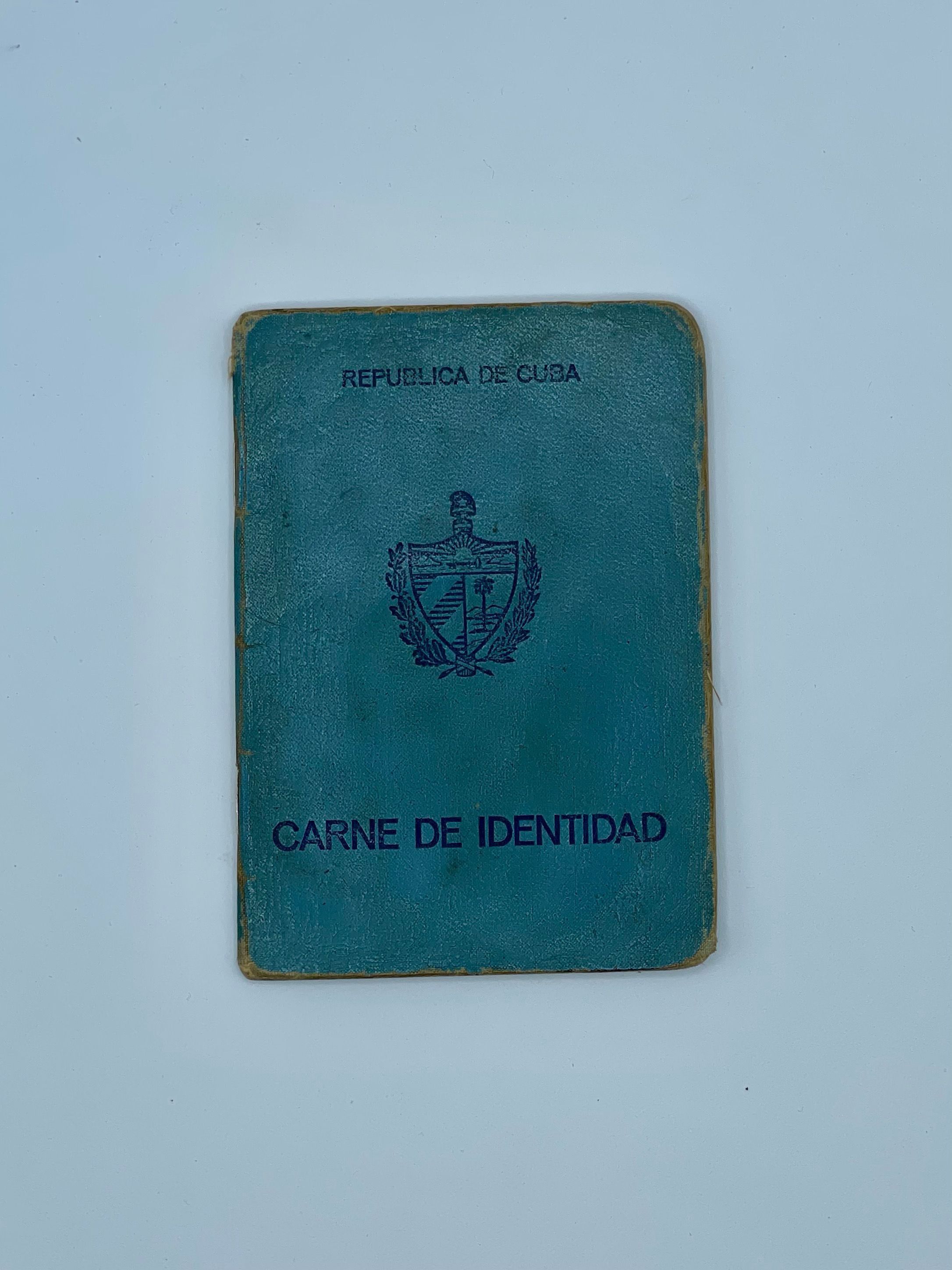
First-generation Cuban national ID booklet issued in Havana in 1975 to María A. Arús Caraballo — from the inaugural year of Cuba's national identity card system.
A small, soft-covered booklet with a blue/teal paper or paper-over-card cover. The front cover is embossed in dark-blue ink with "REPÚBLICA DE CUBA" across the top, the Cuban national coat of arms (shield with royal palm, key, rising sun, and supporting branches, surmounted by a Phrygian liberty cap) at center, and "CARNE DE IDENTIDAD" along the lower portion. The cover shows handling wear, especially at the corners and along the spine edge.Context
Mandatory useCollection
The Cabrera Arús family collection, María A. Arús Caraballo collectionMade/Created
Date made
1975Time Period
1970sNotes
Issued by the Government of Cuba (Ministerio del Interior / Dirección de Identificación, Inmigración y Extranjería)Materials
Material
PaperMaterial Notes
Blind- or ink-embossed/stamped cover; bound booklet.Relationships
Related Person or Organization
Person or Organization
María A. Arús CaraballoNotes
OwnerRelated Places
Place
City
HavanaCountry
CubaRegion
Caribbean, Central AmericaNotes
IssuanceRelated Events
Event
Law No. 1216 (1974), Ley 1234 del Carné de Identidad y Registro de la PoblaciónRelated Publications
Publication
The life of othersResearch Notes
Notes
This is a Cuban Carné de Identidad from 1975, the very first year the national identity card was issued in Cuba. The first carnés were handed out on February 12, 1975, in the municipality of Martí, Matanzas province, to twenty workers as part of a pilot program tied to the early "Poder Popular" experiment. The legal framework was Ley 1234 del Carné de Identidad y Registro de la Población (June 15, 1971), expanded by Ley 1278 (September 13, 1974) and Resolution 18. The system was the product of work that began with the 1970 national census and aimed to create a single unified identity document — replacing the patchwork of prior IDs (work cards, ration books, school cards, etc.) with one document tied to a permanent national identity number. Until 1975, Cubans had no unified national ID document.
The first-generation carné was a 24-page bound booklet.
Beyond its administrative function, the carné became (and remains) one of the most-handled objects in everyday Cuban life. It is required for legal procedures, banking, employment, schooling, healthcare, travel ticketing, voting, and rationing. Carrying it was (and is) legally obligatory. As a 1975 example, this booklet is a primary source for the founding moment of Cuba's Sistema Único de Identidad Nacional (SUIN).Created By
María A. Cabrera ArúsCreate Date
August 20, 2025Updated By
María A. Cabrera ArúsUpdate Date
June 18, 2026