Name/Title
Newborn Identification Bracelet (Manilla de Identificación de Recién Nacido)Entry/Object ID
2025.1.6Description
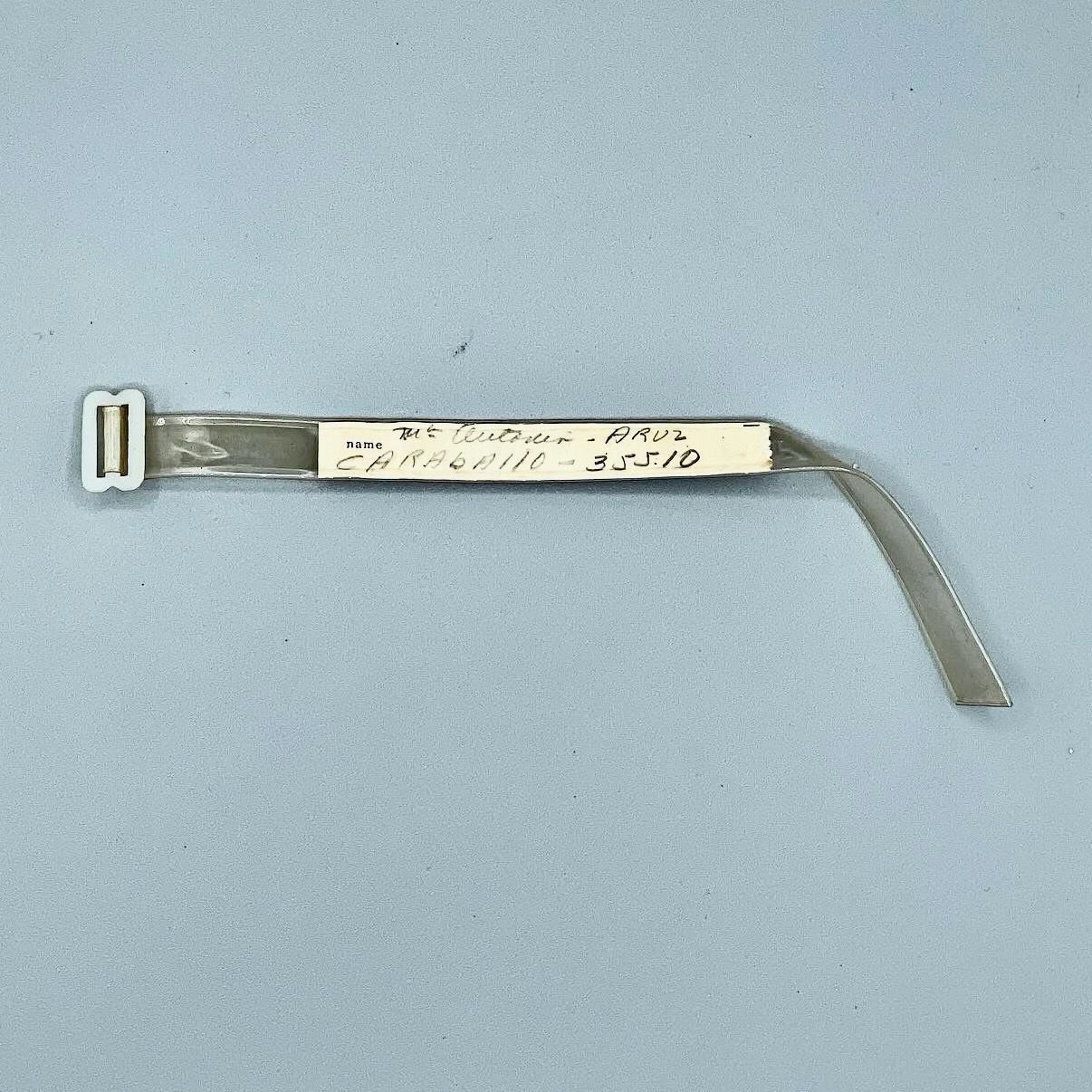
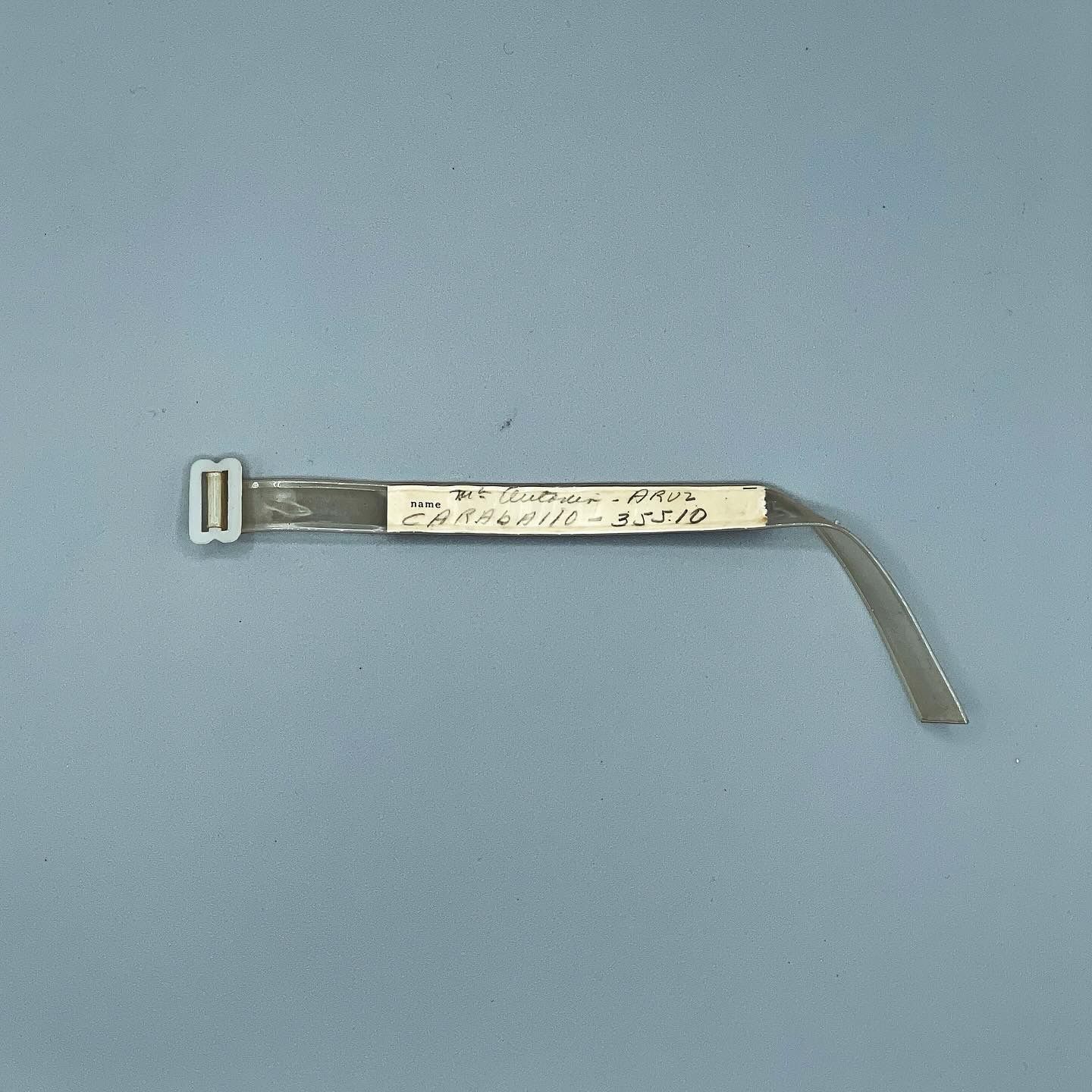
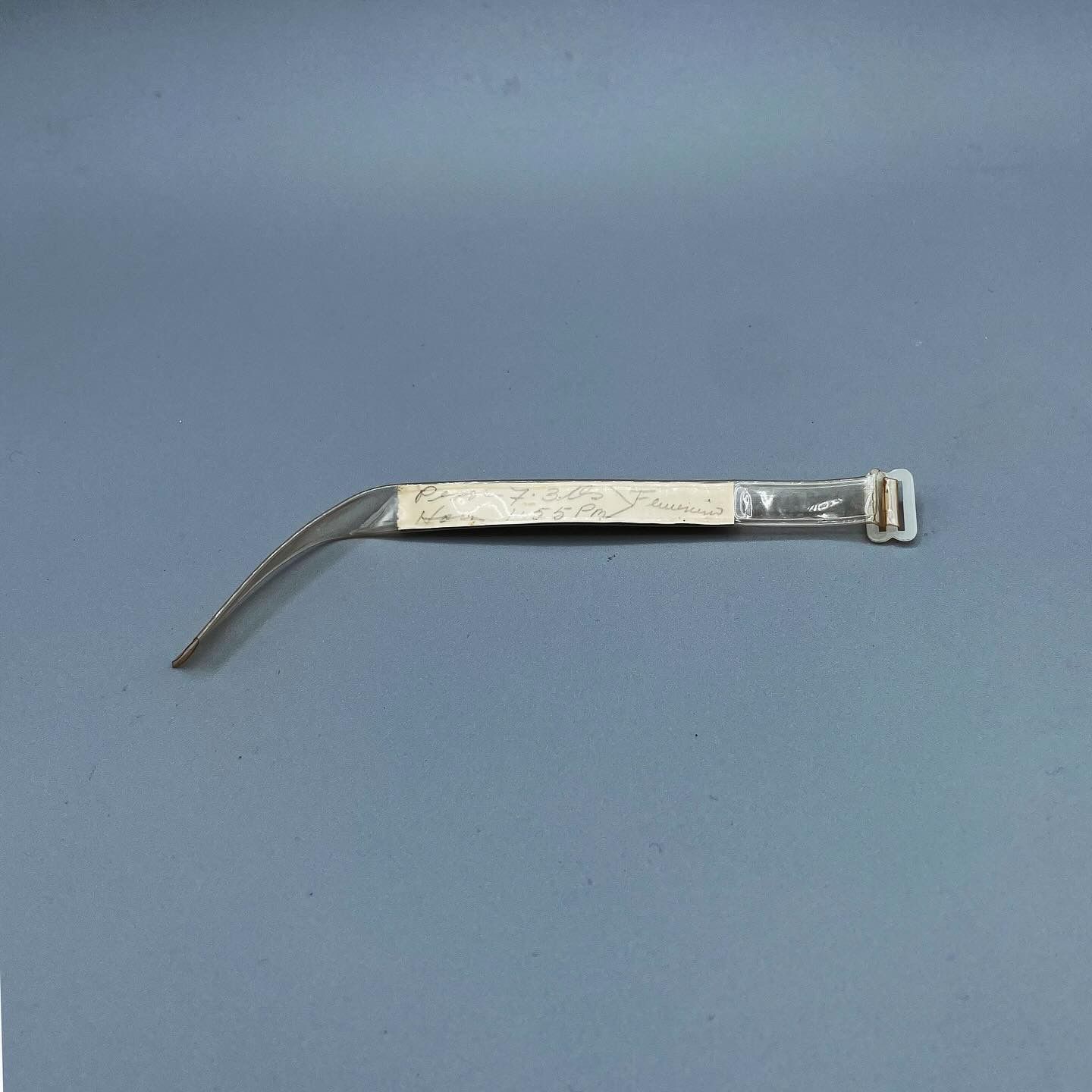
Manufactured plastic-and-paper hospital newborn ID bracelet issued in a Havana maternity hospital on September 1, 1974, bearing the mother's name and clinical history number in handwritten ink under a clear cover, with original plastic buckle closure.
The form is what María A. Cabrera Arús describes in her Cuba Material blog as a "manilla original," manufactured specifically for the purpose, distinguishing it from the improvised, nylon-strip bracelets she documents from the preceding year.
The inscription identifies the mother of the newborn (standard Cuban maternity-hospital practice of the period), not the infant directly.Use
ID beloged to María R. Cabrera ArúsCollection
The Cabrera Arús family collection, María A. Arús Caraballo collectionMade/Created
Date made
9/1/1974Time Period
1970sPlace
City
HavanaCountry
CubaRegion
Caribbean, Central AmericaInscription/Signature/Marks
Transcription
NameLanguage
EnglishMaterial/Technique
InkNotes
The printed form fields are in English while the handwritten content is in Spanish.Type
NoteLocation
One sideTranscription
Maria Antonia - Aruz Caraballo - 35510Language
SpanishTranslation
Patients name and numberMaterial/Technique
PencilType
NoteLocation
Another sideTranscription
Peso 7,3 lbs. Hora 1:55 pm femeninoLanguage
SpanishTranslation
Weight 7.3 lbs. Time 1:55 pm FemaleMaterial/Technique
PencilCondition
Overall Condition
Very GoodRelationships
Related Person or Organization
Person or Organization
María R. Cabrera Arús, María A. Arús Caraballo, Hospital Materno Infantil Ramón González CoroPerson or Organization
MINSAPNotes
producerRelated Places
Place
City
HavanaCountry
CubaRegion
Caribbean, Central AmericaResearch Notes
Notes
María A. Cabrera Arús's Cuba Material blog post "Brazaletes de identidad para recién nacidos" (August 4, 2024, cubamaterial.com) discusses this and another bracelet from her family together with additional examples from 1980. Her analysis observes that:
- Her own 1973 bracelet was "improvised" — made from nylon repurposed from another medical implement and secured with a knot
- Her sister's 1974 bracelet — the present object — is a "manilla original", i.e., a purpose-manufactured product, much shorter than the improvised version
- The transition between 1973 and 1974 thus appears to mark a turn from improvisation to standardized hospital supply within Cuban obstetric practice
The 1974 bracelet is therefore positioned at an important inflection point in Cuban maternal-infant healthcare material culture.Notes
Newborn identification practices in Latin American maternity hospitals in this period typically recorded the mother's identifying information (name, clinical history number, sometimes date/time and weight of birth) rather than naming the infant directly — because the legal name of the newborn would often not be registered with the civil registry until days or weeks later. The bracelet's job is to ensure the baby cannot be confused with another mother's child during the hospital stay. The inscription here — mother's name + clinical history number "355-10" — fits this standard practice exactly. Comparable Spanish-American hospital practices are documented in studies like Lomuto et al., "Identificación del recién nacido y medidas de prevención…" (Hospital Sardá, Buenos Aires), which describes the same maternal-identifier convention.Created By
María A. Cabrera ArúsCreate Date
August 4, 2024Updated By
María A. Cabrera ArúsUpdate Date
June 18, 2026