Name/Title
Name Pendant necklace with openwork floral medallion and bead dropsEntry/Object ID
2025.1.98Description
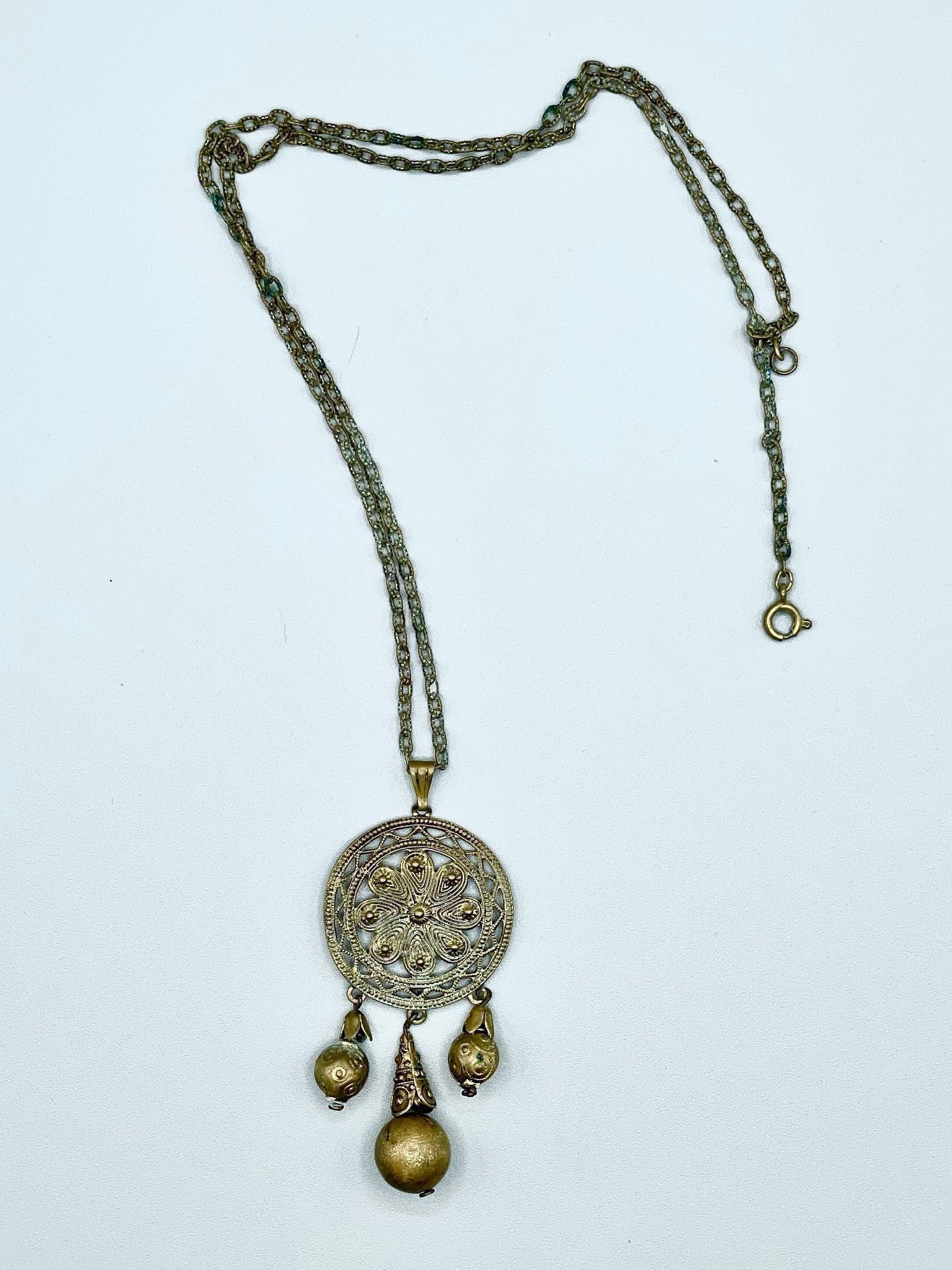
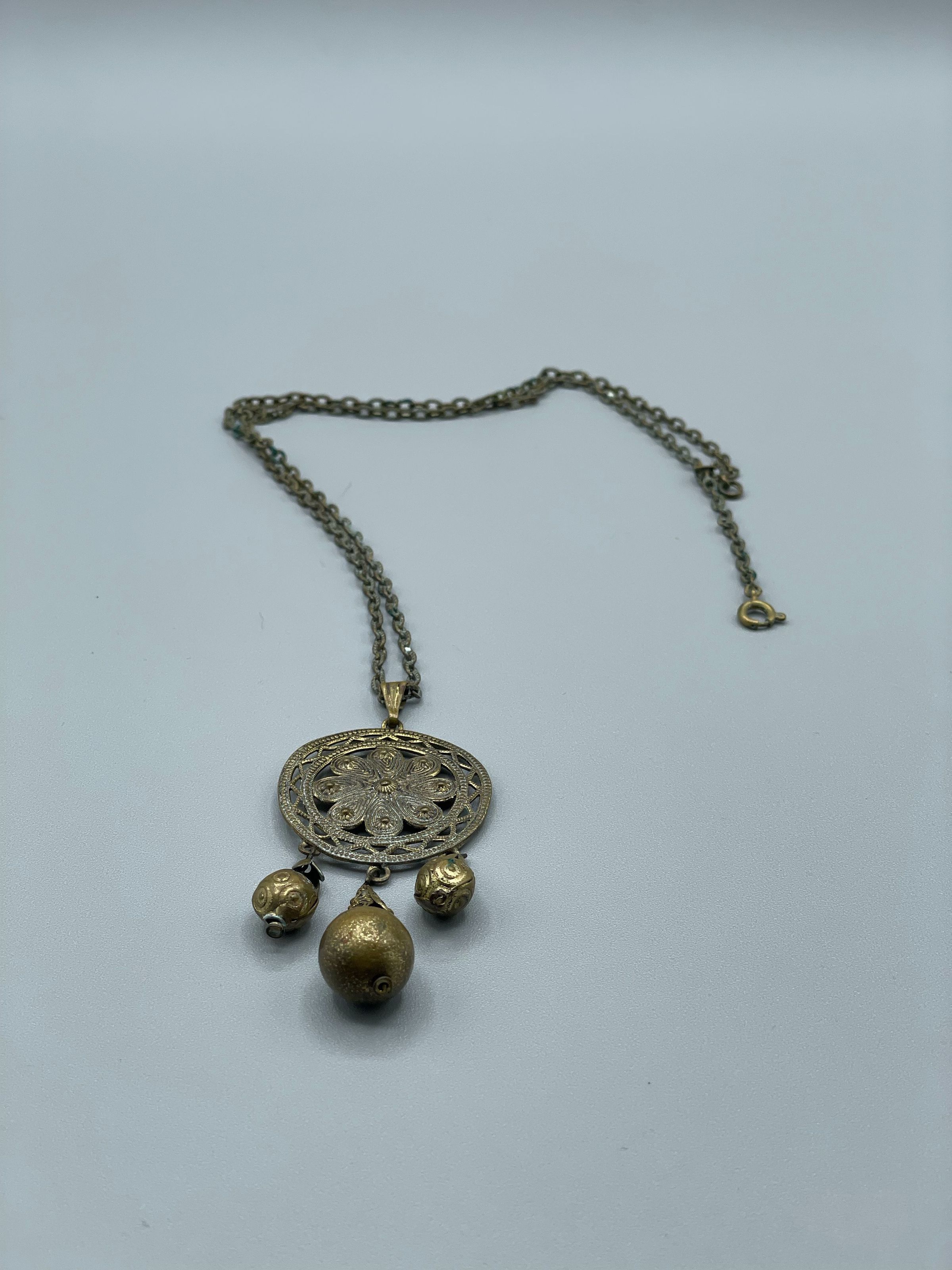
A costume necklace consisting of a cable-link chain with a spring-ring clasp, supporting a circular openwork pendant. The pendant is gilt base metal worked in a filigree-style manner: a central raised rosette of stylized petals or teardrops surrounded by a lattice/openwork border within a beaded rim. The pendant hangs from a decorative bail. Three drops dangle from the lower edge — two smaller ornamented spherical beads flanking a larger plain spherical bead suspended from a fluted, cone-shaped cap — giving the piece a pendulous, somewhat folk- or revival-style character. The metal throughout has a warm gold tone. The chain shows extensive blue-green corrosion (verdigris) along its length, indicating an oxidizing copper-alloy base metal beneath the gilding; the pendant retains more of its gilt finish. General wear, dulling, and tarnish are consistent with age and use.Item Type
NecklaceContext
Bought in Le Trianon by María A. Arús Caraballo and used by her and by María A. Cabrera Arús.Collection
The Cabrera Arús family collection, María A. Arús Caraballo collectionMaterials
Material Notes
Materials
Gilt copper-alloy / gold-tone base metal (chain, pendant, beads, clasp); evidence of verdigris corrosion confirms a copper-bearing alloy rather than solid precious metal.
Technique
Cast and/or stamped openwork pendant with applied raised ornament (imitating filigree); cable-link chain; spring-ring clasp; suspended bead drops on small jump rings. Surface gilded/plated.Relationships
Related Person or Organization
Person or Organization
María A. Arús CaraballoNotes
ownerPerson or Organization
María A. Cabrera ArúsNotes
wearerRelated Places
Place
City
HavanaCountry
CubaRegion
Caribbean, Central AmericaNotes
use, purchasePlace
State/Province
New JerseyCountry
U.S.A.Continent
North AmericaNotes
useResearch Notes
Notes
The folk/revival filigree styling was a popular mid-century fashion idiom.Notes
The style could also predate 1959, and nothing on the object fixes it.Created By
María A. Cabrera ArúsCreate Date
November 22, 2025Updated By
María A. Cabrera ArúsUpdate Date
June 14, 2026