Notes
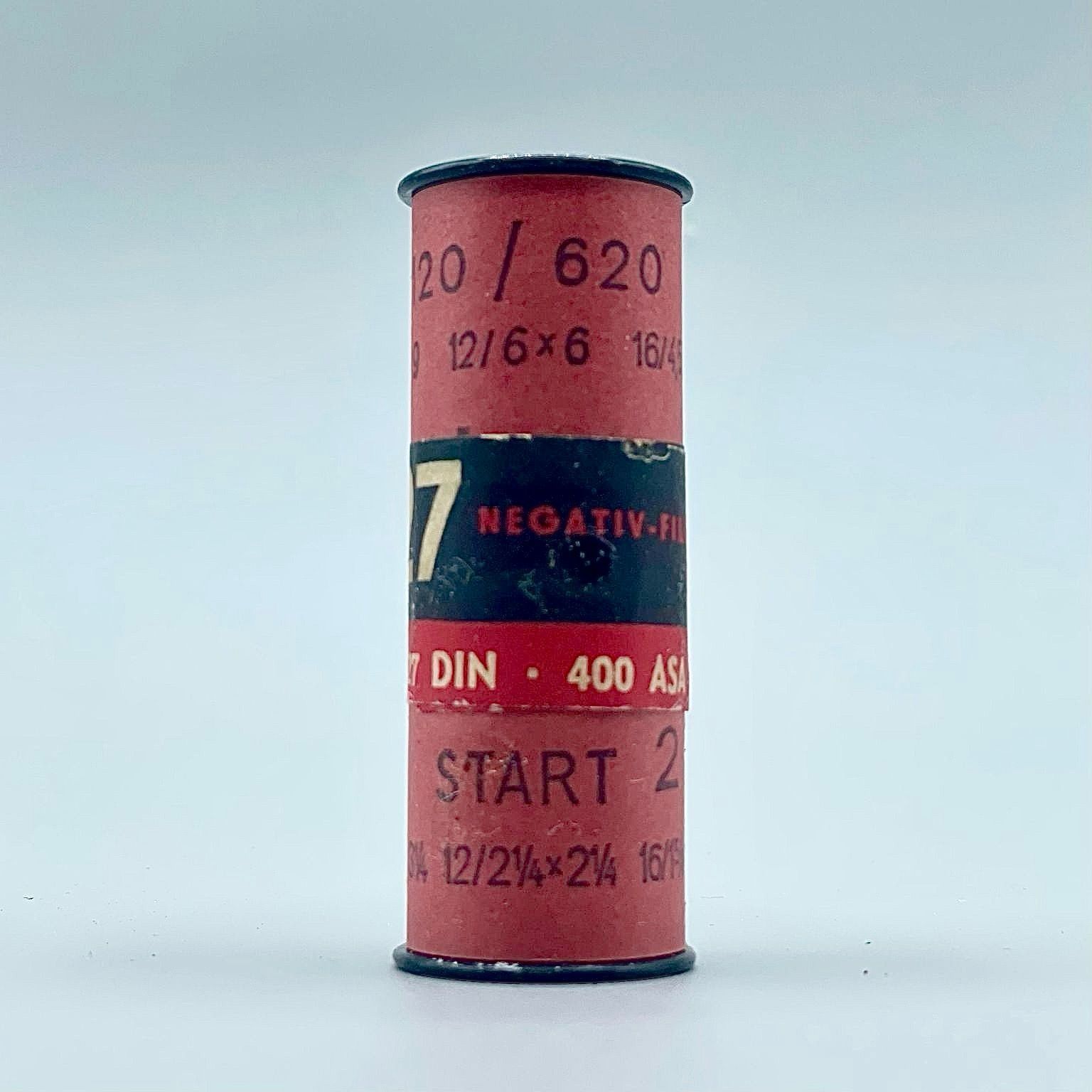
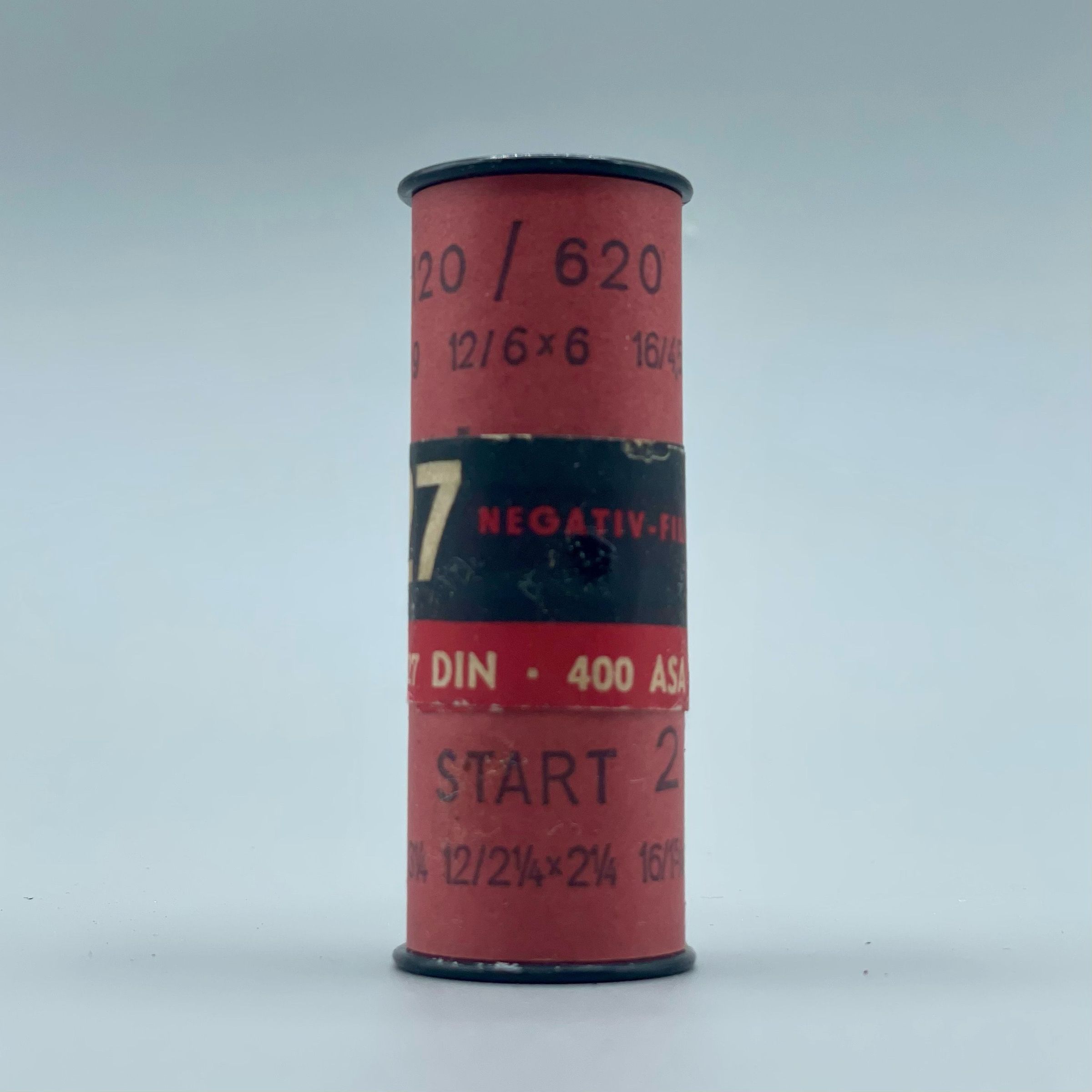
ORWO NP 27 was the East German state film factory's high-speed (ISO 400) panchromatic black-and-white negative film, comparable to the Western Kodak Tri-X and Ilford HP4/HP5 of the same era. It was produced at VEB Filmfabrik Wolfen in the GDR, with "superpanchromatic" sensitization making it suitable for both daylight and incandescent-light shooting; it was offered in 127, 620, 35mm, 120, 220, and large-format sheet-film versions. According to the ORWO 1989 master catalog, the NP 27 was described as "a panchromatic black-and-white negative film with high sensitivity, good resolving power, relatively fine grain, and wide exposure latitude". The 1978 ORWO catalog explained that the film's superpanchromatic sensitization made it especially suitable for photography under incandescent-lamp light, and many ORWO export labels carried a "TROPICAL" annotation indicating production for hot-climate markets — a Cuba-relevant detail worth checking on this roll.Notes
The visible label style — red wrapper with black "Negativ-Film" band, prominent "27" type number, bilingual German/English text, and DIN/ASA dual rating — is consistent with ORWO NP 27 packaging from the 1970s and into the 1980s. Without a visible emulsion number or expiration date the precise year cannot be pinpointed, but the 1970s–1980s range is well-supported. ORWO packaging styles changed at least once in this period, with some 1980s versions adopting a more orange/red and white scheme; a careful comparison with dated comparables in the museum-digital.de Wolfen Film Museum collection could narrow the date if needed.Notes
East Germany was one of Cuba's most important COMECON trading partners after the USSR. East German exports to Cuba included a wide range of consumer goods — photographic materials and cameras (especially Praktica 35mm SLRs, which dominated mid-century Cuban camera ownership), Pentacon cameras and lenses, ORWO films, optical instruments (Carl Zeiss Jena), kitchenware, machinery, vehicles, and pharmaceuticals. ORWO films were widely distributed in Cuban state retail outlets (the Empresa de Suministros para la Industria Cinematográfica y similar agencies handled professional supplies; consumer photographic film was sold at state photo-supply shops and bookstores).