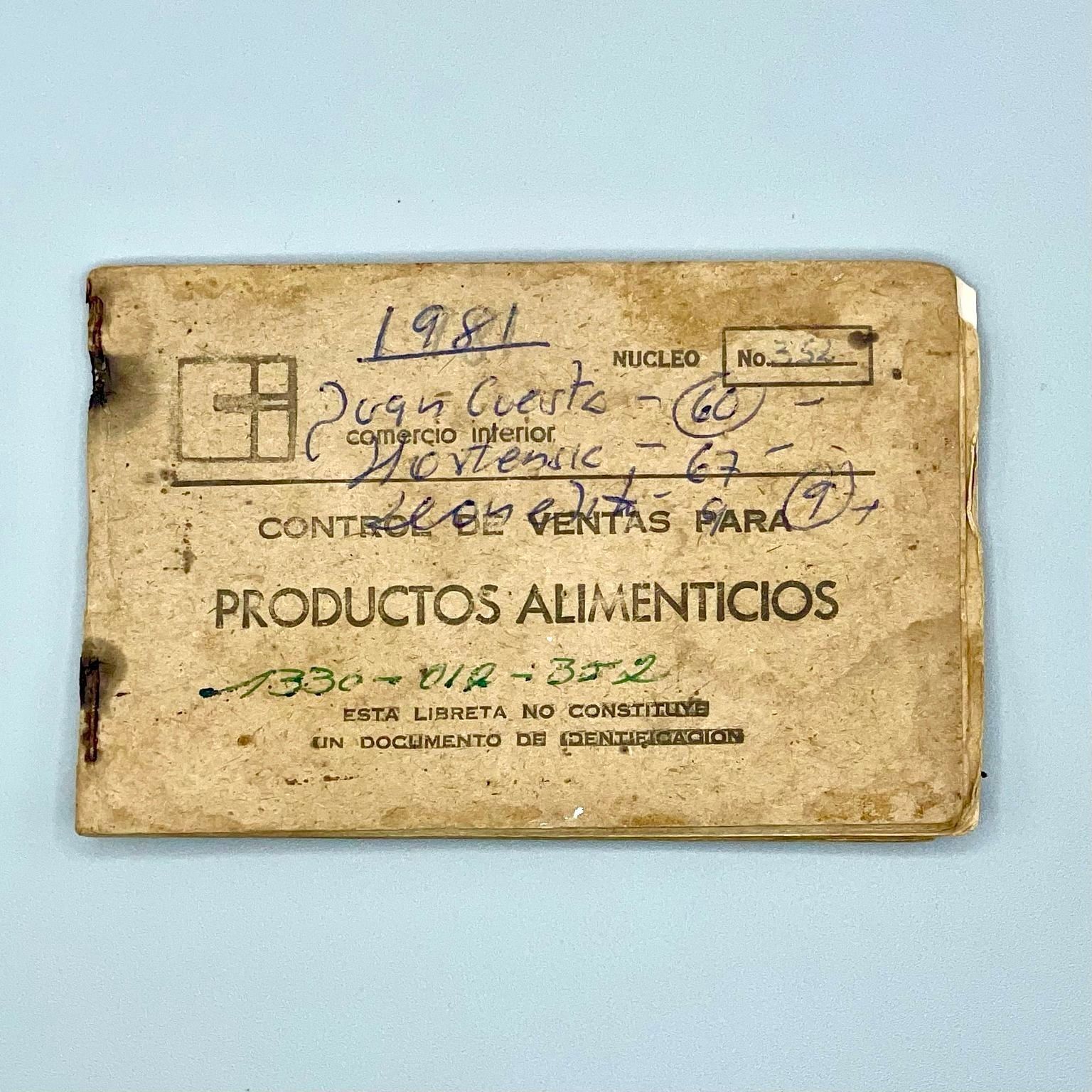
Ration book (libreta de abastecimiento) — "Control de Ventas para Productos Alimenticios," Comercio Interior
Entry/Object ID
2025.11.6
Description
A small stapled paper booklet, the cover printed with the Comercio Interior logo and the title "CONTROL DE VENTAS PARA PRODUCTOS ALIMENTICIOS," a "NÚCLEO No." field, and the printed disclaimer "ESTA LIBRETA NO CONSTITUYE UN DOCUMENTO DE IDENTIFICACIÓN." The cover is filled in by hand in pen: the year "1981," the núcleo (household) number, a registration code, and a list of household members with accompanying figures. Heavily aged.
Acquisition
Accession
2025.11
Acquisition Method
Purchase
Made/Created
Manufacturer
MINCIN
Date made
1981
Time Period
1980s
Place
Country
Cuba
Region
Caribbean, Central America
Inscription/Signature/Marks
Notes
Printed: Comercio Interior logo; "comercio interior"; "CONTROL DE VENTAS PARA PRODUCTOS ALIMENTICIOS"; "NÚCLEO No. ___"; "ESTA LIBRETA NO CONSTITUYE UN DOCUMENTO DE IDENTIFICACIÓN."
Handwritten: "1981"; "Núcleo No. 352"; registration code "1330 - 012 - 352"; household members' names with age
Materials
Material Notes
Materials: Printed paper/light-card cover; stapled paper interior leaves.
Technique: Offset/letterpress-printed booklet, completed by hand in ballpoint pen.
Condition
Overall Condition
Poor
Relationships
Related Person or Organization
Person or Organization
MINCIN
Research Notes
Notes
Type/significance: the libreta is among the most emblematic objects of everyday material life in revolutionary Cuba — the booklet through which each núcleo (registered household) buys its rationed canasta básica at subsidized prices at state bodegas. Instituted in March 1962 amid shortages and U.S. economic pressure, it remained central to Cuban daily provisioning for decades. A 1981 example documents the system at the height of the socialist period.
Notes
Structure: the "núcleo" is the household registration unit; the cover codes (núcleo number and registration string) tie the booklet to a specific household in the consumer registry.