Name/Title
Set of Hand-Embroidered Linen Napkins/Coasters with Floral MotifEntry/Object ID
2025.1.398Description
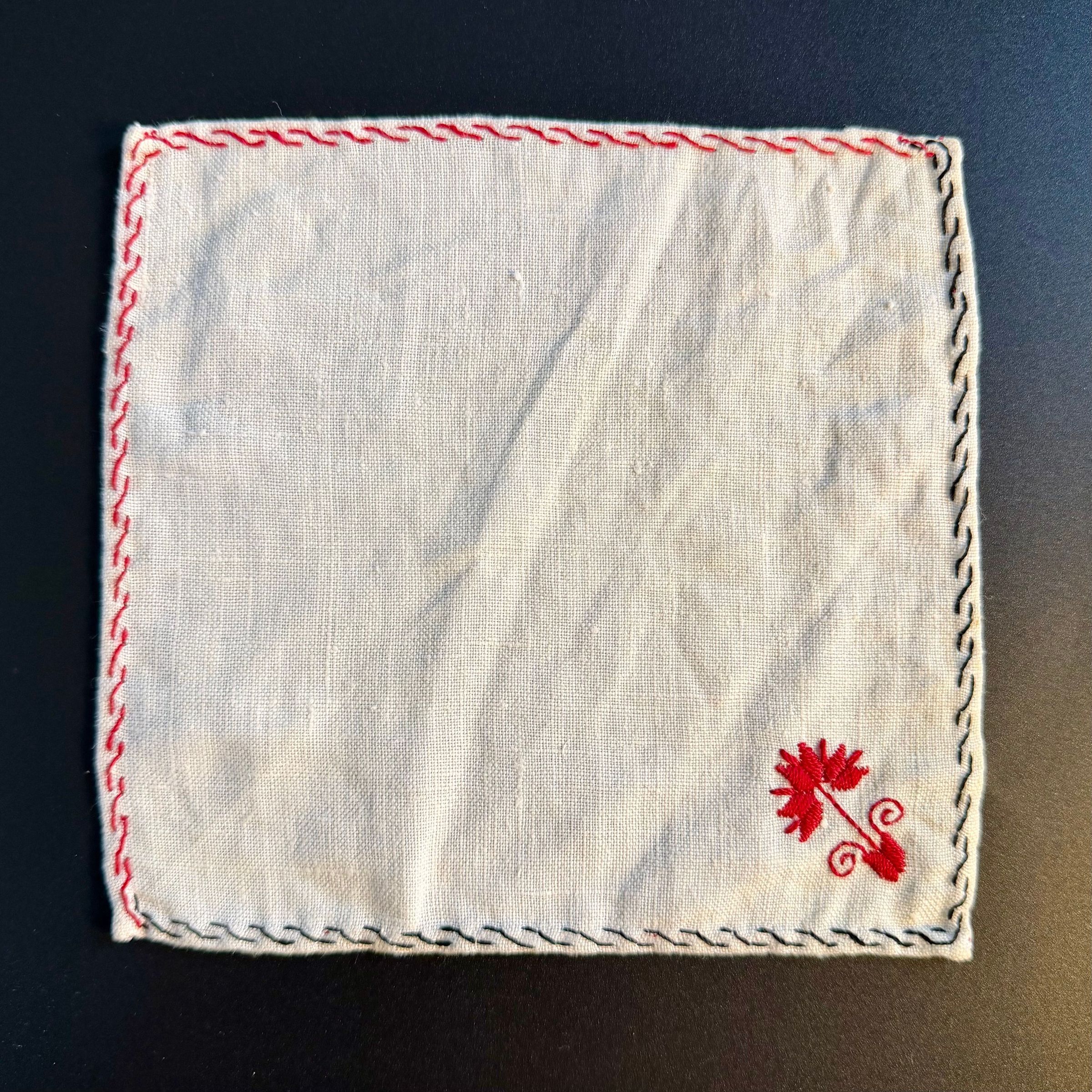
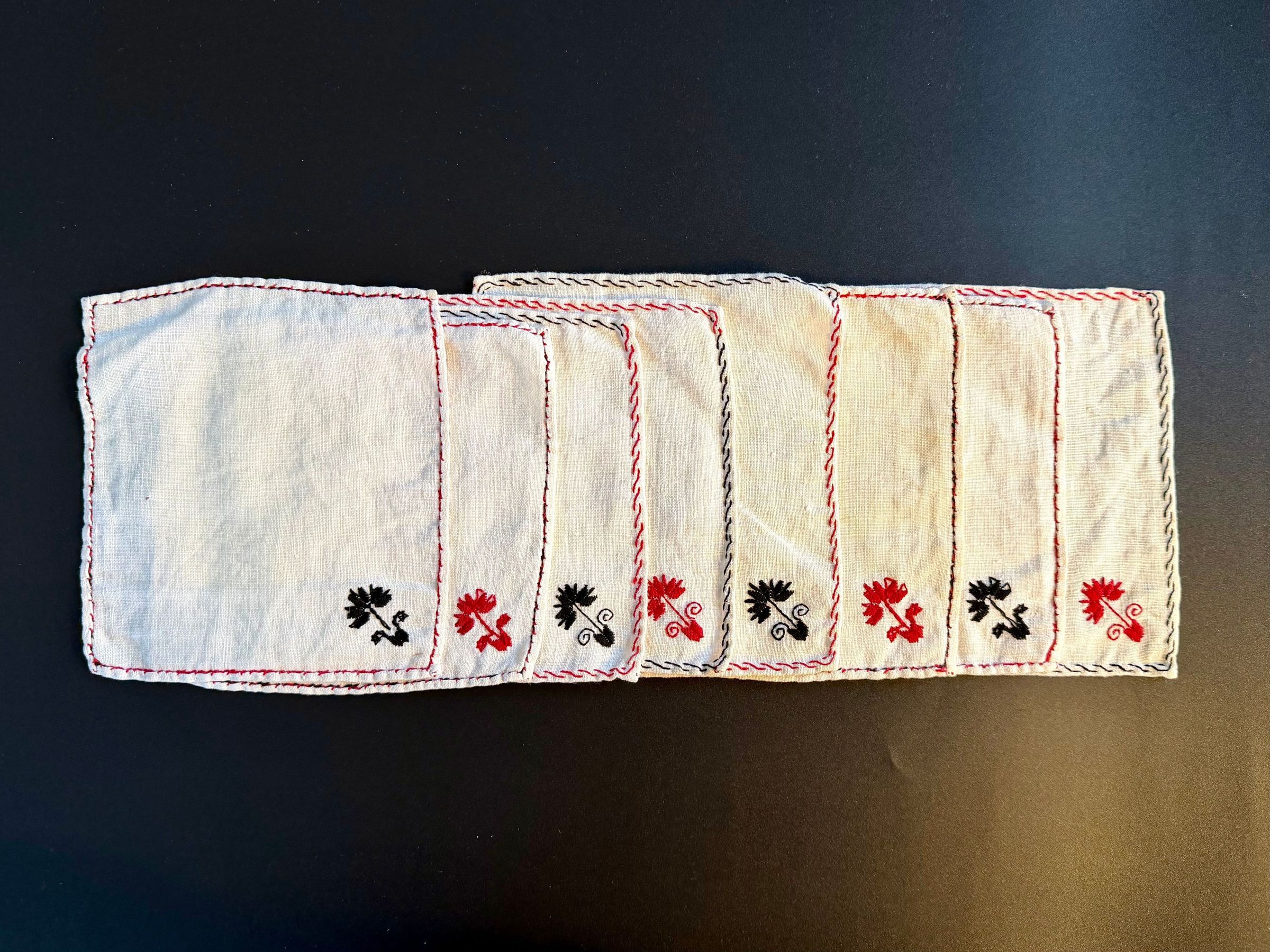
Set of eight small square textiles of plain-weave white/cream linen (or linen-cotton), each hand-embroidered in one corner with a small stylized floral sprig and finished on all four sides with a decorative whip-stitched (overcast/twisted) edge. The embroidery and edging alternate between red and black thread across the set — individual pieces combine red and black edging, and the corner motif is worked in red on some pieces and black on others.Textile Type
NapkinUse
Belonged to Gertrudis Caraballo GálvezContext
Hand-worked domestic table/decorative linens of this kind (needlework, labores) were common household objects across many cultures, including in Cuba, where home embroidery was a widespread domestic practice. Whether this particular set was made in Cuba, imported, or acquired there cannot be determined from the object itself, as it bears no maker's mark, label, or inscription. Its place in the Cuba Material collection therefore depends on documented provenance.Collection
Gertrudis Caraballo Gálvez collecition, The Cabrera Arús family collectionParts
Set of 8 matching squaresMaterials
Material
FabricMaterial Notes
Plain-weave linen or linen-cotton ground; cotton/stranded embroidery floss (red and black). Fiber identification to be confirmedRelationships
Related Person or Organization
Person or Organization
Gertrudis Caraballo GálvezRelated Places
Place
City
HavanaCountry
CubaRegion
Caribbean, Central AmericaNotes
useResearch Notes
Notes
No intrinsic evidence of origin or date; provenance documentation is essential to place this within the collection scope.
The red-and-black palette, the motif, and the all-hand construction are very characteristic of Central/Eastern European or Balkan folk embroidery (Hungarian, Romanian, Slovak, or similar traditions).Notes
The handwoven-looking ground, the fully hand-stitched edges with no machine hemming, the natural yellowing and soft creasing, and the folk style itself are consistent with a piece made in the first half-to-middle of the 20th century.Created By
María A. Cabrera ArúsCreate Date
July 1, 2026Updated By
María A. Cabrera ArúsUpdate Date
July 1, 2026